Paradromics blog post on intracortical BCIs vs. ECoG (electrocorticography)
https://www.paradromics.com/blog/intracortical-versus-ecog-bci-modalities Note that for restoring vision, intracortical BCIs do not necessarily offer better performance than noninvasive VASS
https://www.artificialvision.com/neuralink.htm #ICMS #VASS #BCI #NeuroTech
Intracortical vs. ECoG | When going deeper pays off
Intracortical vs. ECoG: Discover why implant depth is the key determinant of BCI modality performance and why intracortical devices deliver richer neural signals, larger vocabularies, and superior outcomes for high-functioning brain-computer interfaces.
Paradromics blog post on intracortical BCIs vs. ECoG (electrocorticography)
www.paradromics.com/blog/intraco... Note that for restoring vision, intracortical BCIs do not necessarily offer better performance than noninvasive VASS
www.artificialvision.com/neuralink.htm #ICMS #VASS #BCI #NeuroTechIntracortical vs. ECoG | When ...Intracortical vs. ECoG | When going deeper pays off
Intracortical vs. ECoG: Discover why implant depth is the key determinant of BCI modality performance and why intracortical devices deliver richer neural signals, larger vocabularies, and superior outcomes for high-functioning brain-computer interfaces.
Of course this is all fun and interesting, but can we bring such scientific findings to practical relevance? How? Meaningful technological options have moved well beyond what is by default present in your natural multisensory environment
https://www.youtube.com/watch?v=jE3ElPNA21g #BCI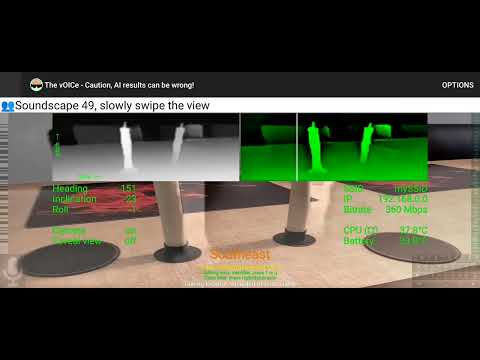
The vOICe sensory substitution for the blind, now with AI depth view
Of course this is all fun and interesting, but can we bring such scientific findings to practical relevance? How? Meaningful technological options have moved well beyond what is by default present in your natural multisensory environment
www.youtube.com/watch?v=jE3E... #BCIThe vOICe sensory substitution...The vOICe sensory substitution for the blind, now with AI depth view
🚨 NEWS: Il chip neurale cinese è realtà. L'Europa rischia il sorpasso anche nel cervello?
Ecco i punti chiave in breve:
💡 A giugno 2026 la Cina ha approvato il primo chip cerebrale invasivo al mondo. Non è un test: è autorizzazione per uso clinico. Mentre l’Occidente discute di etica, Pechino autorizza. Il divario tecnol...
🚀 LINK: https://meteoraweb.com/analisi-dei-dati-e-metriche/il-chip-neurale-cinese-e-realta-leuropa-rischia-il-sorpasso-anche-nel-cervello
#bCI #pMIItalia #neurotecnologia #cinaChipCerebrale #geopoliticaTecnologica
Review article: Restoring vision and touch with cortical microstimulation
https://www.nature.com/articles/s44222-026-00449-z #BCI #NeuroTech #blindness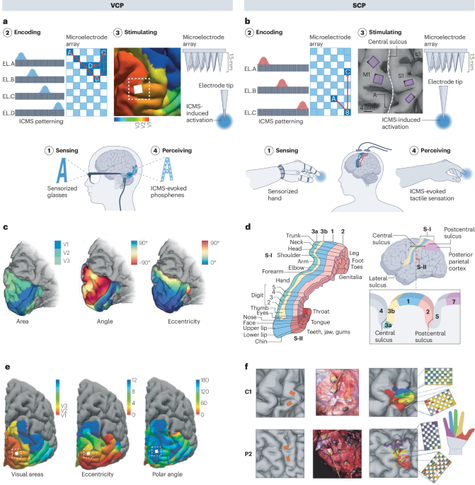
Restoring vision and touch with cortical microstimulation | Nature Reviews Bioengineering
The restoration of sensory function following injury or disease represents a critical challenge in neuroengineering. Sensory neuroprostheses, particularly those targeting the primary visual (V1) and somatosensory (S1) cortices, promise to bypass damaged afferent pathways and reintroduce sensory percepts through direct cortical stimulation. Building on foundational insights from non-human primate research, epicortical and intracortical microstimulation has been used to evoke artificial visual and tactile experiences in early human trials. In this Review, we examine the state of cortical sensory prostheses, focusing on visual and somatosensory applications. We compare neural encoding strategies for touch and vision, discuss the technical and clinical requirements of cortical stimulation, and evaluate the qualitative advantages of these devices over conventional assistive technologies. We also highlight emerging directions, including biomimetic encoding, multisensory integration and alternative implant sites, that could enhance the fidelity and usability of future interfaces. Together, these developments mark a critical step towards clinically viable, high-resolution restoration of naturalistic sensation. Cortical sensory prostheses aim to restore vision and touch by stimulating primary visual and somatosensory cortices. This Review examines shared challenges and principles underlying visual and somatosensory restoration, comparing encoding strategies, technical and clinical requirements, and emerging approaches that advance high-fidelity, functional percepts across both modalities.
Restoring vision and touch with cortical microstimulation | Nature Reviews Bioengineering
The restoration of sensory function following injury or disease represents a critical challenge in neuroengineering. Sensory neuroprostheses, particularly those targeting the primary visual (V1) and somatosensory (S1) cortices, promise to bypass damaged afferent pathways and reintroduce sensory percepts through direct cortical stimulation. Building on foundational insights from non-human primate research, epicortical and intracortical microstimulation has been used to evoke artificial visual and tactile experiences in early human trials. In this Review, we examine the state of cortical sensory prostheses, focusing on visual and somatosensory applications. We compare neural encoding strategies for touch and vision, discuss the technical and clinical requirements of cortical stimulation, and evaluate the qualitative advantages of these devices over conventional assistive technologies. We also highlight emerging directions, including biomimetic encoding, multisensory integration and alternative implant sites, that could enhance the fidelity and usability of future interfaces. Together, these developments mark a critical step towards clinically viable, high-resolution restoration of naturalistic sensation. Cortical sensory prostheses aim to restore vision and touch by stimulating primary visual and somatosensory cortices. This Review examines shared challenges and principles underlying visual and somatosensory restoration, comparing encoding strategies, technical and clinical requirements, and emerging approaches that advance high-fidelity, functional percepts across both modalities.
(YouTube) Science Corporation is moving in the direction of smartglasses. Perhaps a next version can run The vOICe for Android?
https://www.youtube.com/watch?v=mzYYaZjOfE4 Project Next-gen Glasses; "PRIMA glasses — smaller, lighter, and designed to be worn all day";
#BCI #NeuroTech #blindness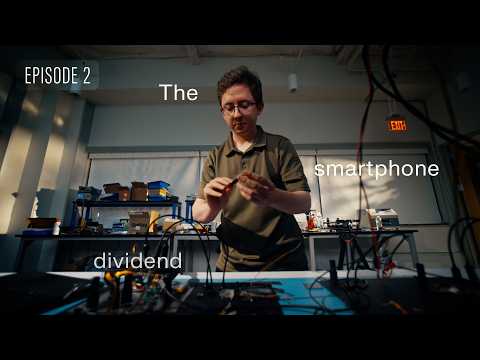
Project Next-gen Glasses | Ep2: The smartphone dividend
(YouTube) Science Corporation is moving in the direction of smartglasses. Perhaps a next version can run The vOICe for Android?
www.youtube.com/watch?v=mzYY... Project Next-gen Glasses; "PRIMA glasses — smaller, lighter, and designed to be worn all day";
#BCI #NeuroTech #blindnessProject Next-gen Glasses | Ep2...Project Next-gen Glasses | Ep2: The smartphone dividend
الصين تُسارع مسيرة تطوير واجهات الدماغ‑الحاسوب (BCI) لتقابل Neuralink وغيرها.
- شركات صينية تعلن عن استثمارات ضخمة للقراءة والكتابة العصبية.
- التطبيقات المستهدفة تشمل الطب، الدفاع، وربما تحسين القدرات البشرية.
- الدعم الحكومي يعرّفها كأولوية استراتيجية للابتكار.
#تقنية #BCI #الصين #Neuralink #ابتكار
🔗 https://news.google.com/rss/articles/CBMiO0FVX3lxTE5lM2xuT1hnX1B5RlB3dk1LRDlZbVZiT2dBWEk5eEMyd3hrTUVkQ19tSXluczBLTmxMQ0t3?oc=5
 The vOICe vision BCI 🧠🇪🇺
 The vOICe vision BCI 🧠🇪🇺
 Meteora Web
 Global Feed