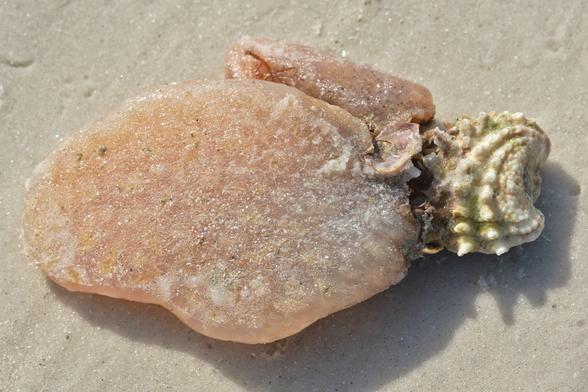
Las salpas, unos tunicados transparentes que se desplazan expulsando agua. Pueden llegar a vivir en colonias más grandes que las de krill. #mar #sea #ocean #oceano #tunicate #tunicado
El tunicado depredador (Megalodicopia hians) no se alimenta por filtración, sino que atrapa a las presas incautas que se acercan a su sifón. #tunicate #tunicado
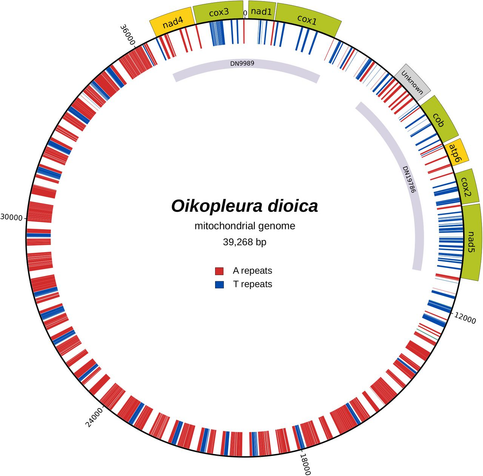
Our team at #OIST published the first complete #mitochondrial #genome for an #appendicularian #tunicate, #Oikopleura dioica. Its non-coding region is unusually large and repetitive. We plan to sequence more genomes from related species to reveal patterns of evolutionary conservation that will help elucidating function of the unannotated regions. https://doi.org/10.1093/gbe/evae182
Tracing Homopolymers in Oikopleura dioica’s mitogenome

Abstract. Oikopleura dioica is a planktonic tunicate (Appendicularia class) found extensively across the marine waters of the globe. The genome of a single

OUP Academic

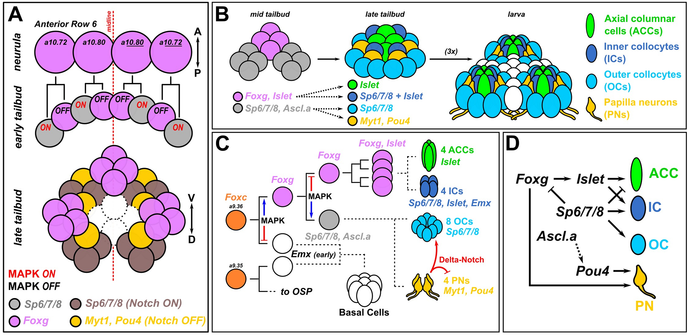
The papillae of Ciona, a marine, non-vertebrate #tunicate, have many functions crucial for their biphasic lifestyle. This #PLOSBiology study describes different papillae cell types and how they contribute to #development of the larvae.
https://plos.io/3PoXmDw

Specification of distinct cell types in a sensory-adhesive organ important for metamorphosis in tunicate larvae

Ciona is a marine, non-vertebrate tunicate, whose papillae have many functions crucial for their biphasic lifestyle, which transitions between motile larva and sessile adult. These authors investigate the development of different Ciona papillae cell types and transcription factor patterns that contribute to attachment, patterning and metamorphosis of the larvae.
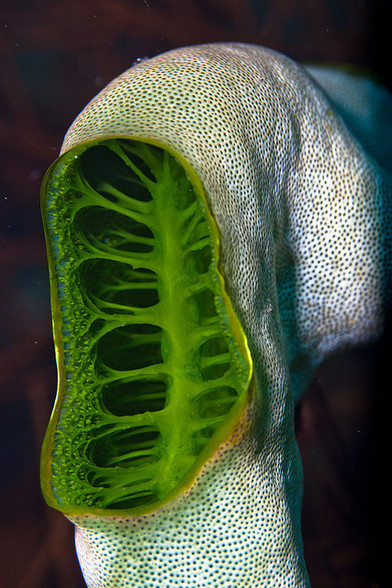
El tunicado colonial Didemnum molle presenta un intenso color verde gracias a las cianobacterias fotosintéticas Prochloron didemni con las que comparte una relación simbiótica.📷prilfish #cyanobacteria #cianobacterias #tunicate #tunicado #mar #sea #oceano #ocean
Hembra del crustáceo anfípodo mediterráneo Phronima sedentaria en el interior de un tunicado, donde cría. Las hembras miden 42 mm, en comparación con los 15 mm de los machos, que tienen antenas más largas. #crustacea #tunicate #tunicado
El apendiculario o larváceo gigante Bathochordaeus stygius vive en una casa relativamente grande formada por redes mucosas. Tiene dos filtros que atrapan partículas grandes y pequeñas, siendo estas últimas las que come. Cuando el filtro se obstruye, el larváceo abandona la casa. #tunicate #tunicado

“If a #tunicate body plan was already established [at 500 million years ago], and the tunicates are actually the sister group of #vertebrates, then vertebrates may be older as well”
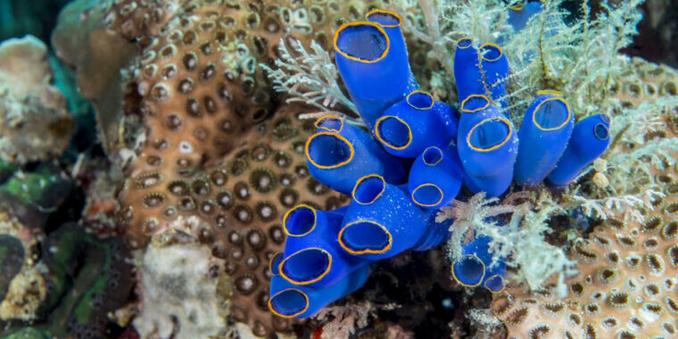

https://www.science.org/content/article/half-billion-year-old-sea-squirt-could-push-back-origins-vertebrates-including-humans

Bizarre ancient #sea creature brings evolution mystery to the surface
A new #tunicate #fossil, a close relative of vertebrates, is half a billion years old. There is now strong evidence that #tunicates are the closest relatives to #vertebrates, but a mystery still surrounds them. How did they evolve, and what did they evolve from? A 500 million-year-old fossil is now telling us more about the #evolution of these peculiar life forms. https://arstechnica.com/science/2023/07/bizarre-ancient-sea-creature-brings-evolution-mystery-to-the-surface/
Bizarre ancient sea creature brings evolution mystery to the surface

A new tunicate fossil, a close relative of vertebrates, is half a billion years old.

Ars Technica