Temporal Mechanics: D-Theory as a Critical Upgrade to Our Understanding of the Nature of Time by Alex M. Vikoulov | Now available as an Audible audiobook

Ecstadelic Media Group releases Temporal Mechanics: D-Theory as a Critical Upgrade to Our Understanding of the Nature of Time, The Seminal Papers series (Vol.I) by Alex M. Vikoulov as an Audible audiobook in addition to a recently released Kindle eBook (P

ecstadelic.net

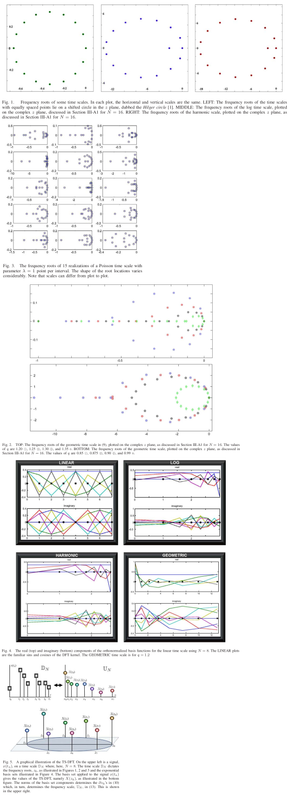
from "Time scale discrete Fourier transforms" by John M. Davis, Ian A. Gravagne, and Robert J. Marks (2010)

https://ieeexplore.ieee.org/document/5442859?utm_source=dlvr.it&utm_medium=mastodon

#math #timescales

Time scale discrete Fourier transforms

The discrete and continuous Fourier transforms are applicable to discrete and continuous time signals respectively. Time scales allows generalization to to any closed set of points on the real line. Discrete and continuous time are special cases. Using the Hilger exponential from time scale calculus, the discrete Fourier transform (DFT) is extended to signals on a set of points with arbitrary spacing. A time scale D <sub xmlns:mml="http://www.w3.org/1998/Math/MathML" xmlns:xlink="http://www.w3.org/1999/xlink">N</sub> consisting of N points in time is shown to impose a time scale (more appropriately dubbed a frequency scale), U <sub xmlns:mml="http://www.w3.org/1998/Math/MathML" xmlns:xlink="http://www.w3.org/1999/xlink">N</sub> , in the Fourier domain The time scale DFT's (TS-DFT's) are shown to share familiar properties of the DFT, including the derivative theorem and the power theorem. Shifting on a time scale is accomplished through a boxminus and boxplus operators. The shifting allows formulation of time scale convolution and correlation which, as is the case with the DFT, correspond to multiplication in the frequency domain.

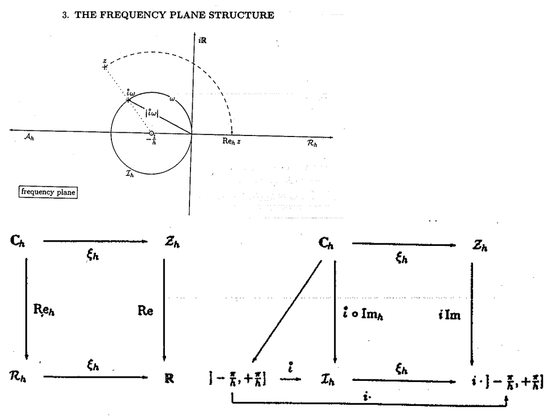
Special Functions, Laplace and Fourier Transform on Measure Chains

Google Books

Heute zusammen mit einem Kollegen auf Messwerte ge-eyeballt.

"Hm, die Zeitstempel sind einen nahezu konstant großen Wert auseinander"

"Wie groß ist denn das Delta?"

"Hm, das ist in Nanosekunden, also... </Kopfrechnen-Geräusche> so ca 37 Sekunden?"

"UTC-TAI-Offset?"

"Gnarf..."

Und mal wieder hat mir Teamwork eine mehrtägige Suche erspart. #dreamteam

#Timescales #GPS #TAI #UTC #gPTP

From their abstract:
"Emerging evidence suggests that understanding of #timescales may be important in resolving this issue, but that further work is needed to understand the role of adhesive strengthening across scales."

Same the conclusion as in our theory paper https://doi.org/10.1371/journal.pcbi.1009812 : the interplay of #cadherin #adhesion & cortical #actomyosin timescales triggers emergent phenomena in terms of #tissue mechanics. If one adds #mechanotransduction on top of that then expect awesome effects.

Adhesion-regulated junction slippage controls cell intercalation dynamics in an Apposed-Cortex Adhesion Model

Author summary During development tissues undergo dramatic shape changes to build and reshape organs. In many instances, these tissue-level deformations are driven by the active reorganisation of the constituent cells. This intercalation process involves multiple cell neighbour exchanges, where an interface shared between two cells is removed and a new interface is grown. The key molecular players involved in neighbour exchanges, such as contractile motors proteins and adhesion complexes, are now well-known. However, how their physical properties facilitate the process remains poorly understood. For example, how do cells maintain sufficient adhesive contact while actively uncoupling from one another? Then, how does a new interface grow in a contractile environment? Many existing biophysical models cannot answer such questions, due to representing shared cell interfaces as discrete elements that cannot uncouple. In this paper, we develop a model that represents cell cortices as contractile rope-loops coupled by adhesions. We outline the conditions required for successful neighbour exchanges, in terms of the properties of the known molecules that drive the process. The model predicts that tissue dynamics depend strongly on the ability of neighbouring cortices to slip relative to one another, which is regulated by adhesion turnover.

Eco-evolution from deep time to contemporary dynamics: the role of timescales and rate modulators

Eco-evolutionary dynamics, or eco-evolution for short, are thought to involve rapid demography (ecology) and equally rapid phenotypic changes (evolution) leading to novel, emergent system behaviours. This focus on contemporary dynamics is likely due to accumulating evidence for rapid evolution, from classical laboratory microcosms and natural populations, including the iconic Trinidadian guppies. We argue that this view is too narrow, preventing the successful integration of ecology and evolution. While maintaining that eco-evolution involves emergence, we highlight that this may also be true for slow ecology and evolution which unfold over thousands or millions of years, such as the feedbacks between riverine geomorphology and plant evolution. We thereby integrate geomorphology and biome-level feedbacks into eco-evolution, significantly extending its scope. Most importantly, we emphasize that eco-evolutionary systems need not be frozen in state-space: We identify modulators of ecological and evolutionary rates, like temperature or sensitivity to mutation, which can synchronize or desynchronize ecology and evolution. We speculate that global change may increase the occurrence of eco-evolution and emergent system behaviours which represents substantial challenges for prediction. Our perspective represents an attempt to integrate ecology and evolution across disciplines, from gene-regulatory networks to geomorphology and across timescales, from contemporary dynamics to deep time.

arXiv.org