 Rebecca's Reading Room
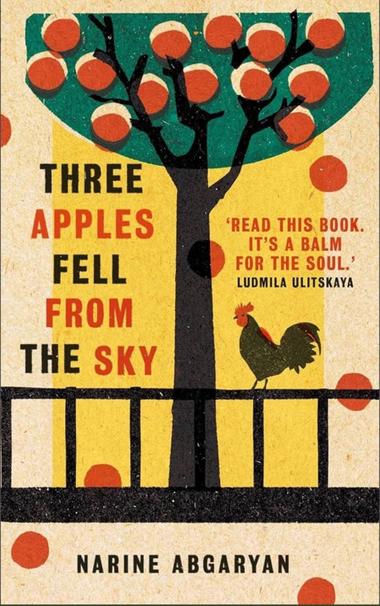
Three Apples Fell from the Sky by Narine Abgaryan
And three apples fell from heaven:
one for the storyteller,
one for the listener,
and one for the eavesdropper.”
This traditional Armenian phrase appears at the end of many folktales. It is both a blessing and an invitation. It reminds us that stories belong not only to those who tell them, but also to those who listen and quietly carry them forward. It is also the perfect doorway into Narine Abgaryan’s novel Three Apples Fell from the Sky, a book that celebrates storytelling, mythology, community, and the quiet resilience of ordinary people.
The novel begins in a way few readers expect. On a Friday afternoon, after the sun has passed its highest point and begins its gentle descent across the valley, an elderly woman named Anatolia Sevoyants calmly prepares for her death.
Before lying down, she carefully completes the small duties of the household. She waters the kitchen garden. She scatters food for the chickens and leaves a little extra, just in case the neighbours do not discover her body immediately. She stores the remaining food in the cellar. She lays out her burial clothes and places an envelope of money on the table to cover funeral expenses.
Only then does she open the window wide so that her soul will not become trapped in the room after it leaves her body. Finally she lies down on her bed, folds her arms across her chest, and prepares to breathe her last. It is a scene that is solemn, practical, and deeply human. What struck me most when I first encountered this opening was not despair, but the quiet dignity with which life and death are woven into the daily rhythms of the village.
From this remarkable beginning, the novel slowly opens outward to reveal the people who inhabit this small Armenian mountain village. Their lives are shaped by shared memories, neighbourly disputes, long standing friendships, and the quiet understanding that survival often depends on community. Life has not been easy for them. Yet the villagers endure with humour, stubborn hope, and a deep sense of belonging to one another. In this way, the village itself becomes the heart of the story.
What stayed with me most when I read the book several years ago was the resilience of Anatolia and her neighbours, particularly the way the village responds to hardship and conflict.
The title of the novel comes from a centuries old Armenian storytelling tradition. At the end of many Armenian folktales, storytellers conclude with the blessing: “And three apples fell from heaven: one for the storyteller, one for the listener, and one for the one who overheard the tale.” The apples symbolize the shared nature of storytelling. A story does not belong only to the teller. It also belongs to those who listen and to those who carry the story forward.
Narine Abgaryan’s novel draws deeply from this tradition. Like a tale passed through generations, the story unfolds through many voices, each adding its own memory, humour, and sorrow to the larger tapestry of village life.
When I first read this novel, I became fascinated with the role of the translator, Lisa C. Hayden, and the translation itself. Stories such as this carry the rhythms of their homeland. They hold the humour, the proverbs, and the emotional cadences of a culture. Translating them into another language requires great care so that the spirit of the original story is not lost. Through translation, readers far beyond Armenia are invited into this mountain village and into the lives of the people who inhabit it. In many ways, translation becomes another act of storytelling. It allows a story rooted in one place to travel across cultures and generations.
My Takeaways
Stories have always been the thread that holds communities together. Long before modern media, storytelling preserved memory, wisdom, and identity. In Narine Abgaryan’s novel, every villager carries a fragment of the collective story, and together those fragments form the living memory of the village.
Resilience in this novel does not appear as grand heroism. Instead it is found in small acts of care, patience, and humour. The villagers endure hardship not through dramatic gestures, but through their quiet determination to continue living together.
Conflict also exists within the village, as it does in any community. Yet disagreement does not destroy the deeper bonds that connect the people who live there. The novel gently reminds us that belonging often grows stronger when people learn to navigate their differences.
Finally, the novel reveals the extraordinary power of translation. Through the careful work of translators, readers across the world are invited into a small Armenian village and into a cultural tradition that might otherwise remain unknown to them. Three Apples Fell from the Sky reminds us that stories, like the apples in the old Armenian saying, are meant to be shared.
Rebecca
#FictionSalon #FolkloricFiction #RebeccaSReadingRoom #ThreeApplesFellFromTheSky #Translation