Explore the thrilling mechanics of essential Aquarium Heaters. Readers learn to calculate optimal wattage, regulate precise water temperatures, master safe placement strategies. Uncover the fascinating truth behind total thermal stability. Build a thriving, completely stable aquatic ecosystem safely.
🌡️🔌🐠🌊🛡️
#AquariumHeater #ThermalStability #AquariumHobby #FishTankSetup #ExotasticEarth
https://exotastic.earth/2026/03/26/aquarium-heater-a-guide-to-the-lifeline-of-tropical-species/?utm_source=mastodon&utm_medium=jetpack_social

“TI” a vital element driving the future of graphic design
"TI" stands for Titanium, a special metal known for being strong, light, and resistant to rust. It has an atomic number of 22 and an atomic weight of 47.867 g/mol, giving it unique features that are important in many high-performance uses. Titanium has a density of 4.502 g/cm³ at 20°C, melts at 1668°C (3034°F), and boils at 3287°C (5949°F). This metal can exist in different forms, with oxidation states including +4, +3, +2, +1, 0, -1, and -2. Its electronegativity on the Pauling scale is 1.54.
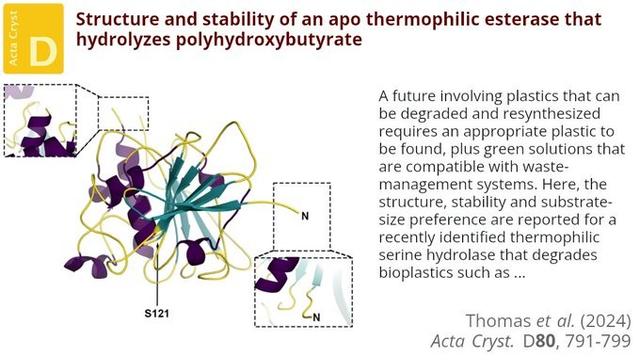
The structure, stability and substrate preference of a thermophilic bioplastic-degrading enzyme were determined, with implications for bioplastic degradation in waste management
#SerineHydrolases #BioplasticDegradation #ThermalStability https://doi.org/10.1107/S2059798324009707
Structure and stability of an apo thermophilic esterase that hydrolyzes polyhydroxybutyrate
A future involving plastics that can be degraded and resynthesized requires an appropriate plastic to be found, plus green solutions that are compatible with waste-management systems. Here, the structure, stability and substrate-size preference are reported for a recently identified thermophilic serine hydrolase that degrades bioplastics such as polyhydroxybutyrate and other polymers.
 The AquaRepto Hobbyist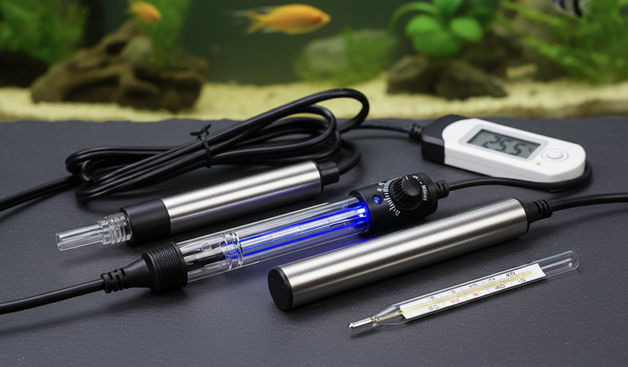
 tekginger
 StructuralBiology