
Unlocking AI’s full potential requires operational excellence

Talk of AI is inescapable. It’s often the main topic of discussion at board and executive meetings, at corporate retreats, and in the media. A record 58% of S&P 500 companies mentioned AI in their second-quarter earnings calls, according to Goldman Sachs. But it’s difficult to walk the talk. Just 5% of generative AI pilots are driving measurable profit-and-loss impact, according to a recent MIT study. That means 95% of generative AI pilots are realizing zero return, despite significant attention and investment. Although we’re nearly three years past the watershed moment of ChatGPT’s public release, the vast majority of organizations are stalling out in AI. Something is broken. What is it? Date from Lucid’s AI readiness survey sheds some light on the tripwires that are making organizations stumble. Fortunately, solving these problems doesn’t require recruiting top AI talent worth hundreds of millions of dollars, at least for most companies. Instead, as they race to implement AI quickly and successfully, leaders need to bring greater rigor and structure to their operational processes. Operations are the gap between AI’s promise and practical adoption I can’t fault any leader for moving as fast as possible with their implementation of AI. In many cases, the existential survival of their company—and their own employment—depends on it. The promised benefits to improve productivity, reduce costs, and enhance communication are transformational, which is why speed is paramount. But while moving quickly, leaders are skipping foundational steps required for any technology implementation to be successful. Our survey research found that more than 60% of knowledge workers believe their organization’s AI strategy is only somewhat to not at all well aligned with operational capabilities. AI can process unstructured data, but AI will only create more headaches for unstructured organizations. As Bill Gates said, “The first rule of any technology used in a business is that automation applied to an efficient operation will magnify the efficiency. The second is that automation applied to an inefficient operation will magnify the inefficiency.” Where are the operations gaps in AI implementations? Our survey found that approximately half of respondents (49%) cite undocumented or ad-hoc processes impacting efficiency sometimes; 22% say this happens often or always. The primary challenge of AI transformation lies not in the technology itself, but in the final step of integrating it into daily workflows. We can compare this to the “last mile problem” in logistics: The most difficult part of a delivery is getting the product to the customer, no matter how efficient the rest of the process is. In AI, the “last mile” is the crucial task of embedding AI into real-world business operations. Organizations have access to powerful models but struggle to connect them to the people who need to use them. The power of AI is wasted if it’s not effectively integrated into business operations, and that requires clear documentation of those operations. Capturing, documenting, and distributing knowledge at scale is critical to organizational success with AI. Yet our survey showed only 16% of respondents say their workflows are extremely well-documented. The top barriers to proper documentation are a lack of time, cited by 40% of respondents, and a lack of tools, cited by 30%. The challenge of integrating new technology with old processes was perfectly illustrated in a recent meeting I had with a Fortune 500 executive. The company is pushing for significant productivity gains with AI, but it still relies on an outdated collaboration tool that was never designed for teamwork. This situation highlights the very challenge our survey uncovered: Powerful AI initiatives can stall if teams lack modern collaboration and documentation tools. This disconnect shows that AI adoption is about more than just the technology itself. For it to truly succeed enterprise-wide, companies need to provide a unified space for teams to brainstorm, plan, document, and make decisions. The fundamentals of successful technology adoption still hold true: You need the right tools to enable collaboration and documentation for AI to truly make an impact. Collaboration and change management are hidden blockers to AI implementation A company’s approach to AI is perceived very differently depending on an employee’s role. While 61% of C-suite executives believe their company’s strategy is well-considered, that number drops to 49% for managers and just 36% for entry-level employees, as our survey found. Just like with product development, building a successful AI strategy requires a structured approach. Leaders and teams need a collaborative space to come together, brainstorm, prioritize the most promising opportunities, and map out a clear path forward. As many companies have embraced hybrid or distributed work, supporting remote collaboration with digital tools becomes even more important. We recently used AI to streamline a strategic challenge for our executive team. A product leader used it to generate a comprehensive preparatory memo in a fraction of the typical time, complete with summaries, benchmarks, and recommendations. Despite this efficiency, the AI-generated document was merely the foundation. We still had to meet to debate the specifics, prioritize actions, assign ownership, and formally document our decisions and next steps. According to our survey, 23% of respondents reported that collaboration is frequently a bottleneck in complex work. Employees are willing to embrace change, but friction from poor collaboration adds risk and reduces the potential impact of AI. Operational readiness enhances your AI readiness Operations lacking structure are preventing many organizations from implementing AI successfully. We asked teams about their top needs to help them adapt to AI. At the top of their lists were document collaboration (cited by 37% of respondents), process documentation (34%), and visual workflows (33%). Notice that none of these requests are for more sophisticated AI. The technology is plenty capable already, and most organizations are still just scratching the surface of its full potential. Instead, what teams want most is ensuring the fundamentals around processes, documentation, and collaboration are covered. AI offers a significant opportunity for organizations to gain a competitive edge in productivity and efficiency. But moving fast isn’t a guarantee of success. The companies best positioned for successful AI adoption are those that invest in operational excellence, down to the last mile. This content was produced by Lucid Software. It was not written by MIT Technology Review’s editorial staff.

Pure Science News
Unlocking AI’s full potential requires operational excellence

Talk of AI is inescapable. It’s often the main topic of discussion at board and executive meetings, at corporate retreats, and in the media. A record 58% of S&P 500 companies mentioned AI in their second-quarter earnings calls, according to Goldman Sachs. But it’s difficult to walk the talk. Just 5% of generative AI pilots are driving measurable profit-and-loss impact, according to a recent MIT study. That means 95% of generative AI pilots are realizing zero return, despite significant attention and investment. Although we’re nearly three years past the watershed moment of ChatGPT’s public release, the vast majority of organizations are stalling out in AI. Something is broken. What is it? Date from Lucid’s AI readiness survey sheds some light on the tripwires that are making organizations stumble. Fortunately, solving these problems doesn’t require recruiting top AI talent worth hundreds of millions of dollars, at least for most companies. Instead, as they race to implement AI quickly and successfully, leaders need to bring greater rigor and structure to their operational processes. Operations are the gap between AI’s promise and practical adoption I can’t fault any leader for moving as fast as possible with their implementation of AI. In many cases, the existential survival of their company—and their own employment—depends on it. The promised benefits to improve productivity, reduce costs, and enhance communication are transformational, which is why speed is paramount. But while moving quickly, leaders are skipping foundational steps required for any technology implementation to be successful. Our survey research found that more than 60% of knowledge workers believe their organization’s AI strategy is only somewhat to not at all well aligned with operational capabilities. AI can process unstructured data, but AI will only create more headaches for unstructured organizations. As Bill Gates said, “The first rule of any technology used in a business is that automation applied to an efficient operation will magnify the efficiency. The second is that automation applied to an inefficient operation will magnify the inefficiency.” Where are the operations gaps in AI implementations? Our survey found that approximately half of respondents (49%) cite undocumented or ad-hoc processes impacting efficiency sometimes; 22% say this happens often or always. The primary challenge of AI transformation lies not in the technology itself, but in the final step of integrating it into daily workflows. We can compare this to the “last mile problem” in logistics: The most difficult part of a delivery is getting the product to the customer, no matter how efficient the rest of the process is. In AI, the “last mile” is the crucial task of embedding AI into real-world business operations. Organizations have access to powerful models but struggle to connect them to the people who need to use them. The power of AI is wasted if it’s not effectively integrated into business operations, and that requires clear documentation of those operations. Capturing, documenting, and distributing knowledge at scale is critical to organizational success with AI. Yet our survey showed only 16% of respondents say their workflows are extremely well-documented. The top barriers to proper documentation are a lack of time, cited by 40% of respondents, and a lack of tools, cited by 30%. The challenge of integrating new technology with old processes was perfectly illustrated in a recent meeting I had with a Fortune 500 executive. The company is pushing for significant productivity gains with AI, but it still relies on an outdated collaboration tool that was never designed for teamwork. This situation highlights the very challenge our survey uncovered: Powerful AI initiatives can stall if teams lack modern collaboration and documentation tools. This disconnect shows that AI adoption is about more than just the technology itself. For it to truly succeed enterprise-wide, companies need to provide a unified space for teams to brainstorm, plan, document, and make decisions. The fundamentals of successful technology adoption still hold true: You need the right tools to enable collaboration and documentation for AI to truly make an impact. Collaboration and change management are hidden blockers to AI implementation A company’s approach to AI is perceived very differently depending on an employee’s role. While 61% of C-suite executives believe their company’s strategy is well-considered, that number drops to 49% for managers and just 36% for entry-level employees, as our survey found. Just like with product development, building a successful AI strategy requires a structured approach. Leaders and teams need a collaborative space to come together, brainstorm, prioritize the most promising opportunities, and map out a clear path forward. As many companies have embraced hybrid or distributed work, supporting remote collaboration with digital tools becomes even more important. We recently used AI to streamline a strategic challenge for our executive team. A product leader used it to generate a comprehensive preparatory memo in a fraction of the typical time, complete with summaries, benchmarks, and recommendations. Despite this efficiency, the AI-generated document was merely the foundation. We still had to meet to debate the specifics, prioritize actions, assign ownership, and formally document our decisions and next steps. According to our survey, 23% of respondents reported that collaboration is frequently a bottleneck in complex work. Employees are willing to embrace change, but friction from poor collaboration adds risk and reduces the potential impact of AI. Operational readiness enhances your AI readiness Operations lacking structure are preventing many organizations from implementing AI successfully. We asked teams about their top needs to help them adapt to AI. At the top of their lists were document collaboration (cited by 37% of respondents), process documentation (34%), and visual workflows (33%). Notice that none of these requests are for more sophisticated AI. The technology is plenty capable already, and most organizations are still just scratching the surface of its full potential. Instead, what teams want most is ensuring the fundamentals around processes, documentation, and collaboration are covered. AI offers a significant opportunity for organizations to gain a competitive edge in productivity and efficiency. But moving fast isn’t a guarantee of success. The companies best positioned for successful AI adoption are those that invest in operational excellence, down to the last mile. This content was produced by Lucid Software. It was not written by MIT Technology Review’s editorial staff.

Pure Science News
When Fusion Sensors Fail, AI Reads Between the Lines

Pure Science News
When Fusion Sensors Fail, AI Reads Between the Lines

Pure Science News
Arvinas and Pfizer seek a new home for protein degrader drug

Companies offer bifunctional cancer drug vepdegestrant to new partners after disappointing trial results

Pure Science News
Arvinas and Pfizer seek a new home for protein degrader drug

Companies offer bifunctional cancer drug vepdegestrant to new partners after disappointing trial results

Pure Science News
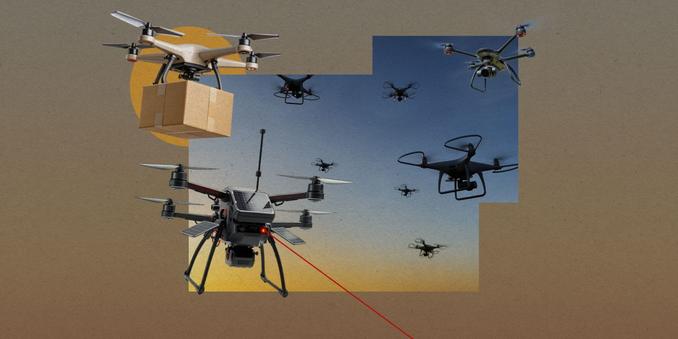
The US may be heading toward a drone-filled future

On Thursday, I published a story about the police-tech giant Flock Safety selling its drones to the private sector to track shoplifters. Keith Kauffman, a former police chief who now leads Flock’s drone efforts, described the ideal scenario: A security team at a Home Depot, say, launches a drone from the roof that follows shoplifting suspects to their car. The drone tracks their car through the streets, transmitting its live video feed directly to the police.  It’s a vision that, unsurprisingly, alarms civil liberties advocates. They say it will expand the surveillance state created by police drones, license-plate readers, and other crime tech, which has allowed law enforcement to collect massive amounts of private data without warrants. Flock is in the middle of a federal lawsuit in Norfolk, Virginia, that alleges just that. Read the full story to learn more.  But the peculiar thing about the world of drones is that its fate in the US—whether the skies above your home in the coming years will be quiet, or abuzz with drones dropping off pizzas, inspecting potholes, or chasing shoplifting suspects—pretty much comes down to one rule. It’s a Federal Aviation Administration (FAA) regulation that stipulates where and how drones can be flown, and it is about to change. Currently, you need a waiver from the FAA to fly a drone farther than you can see it. This is meant to protect the public and property from in-air collisions and accidents. In 2018, the FAA began granting these waivers for various scenarios, like search and rescues, insurance inspections, or police investigations. With Flock’s help, police departments can get waivers approved in just two weeks. The company’s private-sector customers generally have to wait 60 to 90 days. For years, industries with a stake in drones—whether e-commerce companies promising doorstep delivery or medical transporters racing to move organs—have pushed the government to scrap the waiver system in favor of easier approval to fly beyond visual line of sight. In June, President Donald Trump echoed that call in an executive order for “American drone dominance,” and in August, the FAA released a new proposed rule. The proposed rule lays out some broad categories for which drone operators are permitted to fly drones beyond their line of sight, including package delivery, agriculture, aerial surveying, and civic interest, which includes policing. Getting approval to fly beyond sight would become easier for operators from these categories, and would generally expand their range.  Drone companies, and amateur drone pilots, see it as a win. But it’s a win that comes at the expense of privacy for the rest of us, says Jay Stanley, a senior policy analyst with the ACLU Speech, Privacy and Technology Project who served on the rule-making commission for the FAA. “The FAA is about to open up the skies enormously, to a lot more [beyond visual line of sight] flights without any privacy protections,” he says. The ACLU has said that fleets of drones enable persistent surveillance, including of protests and gatherings, and impinge on the public’s expectations of privacy. If you’ve got something to say about the FAA’s proposed rule, you can leave a public comment (they’re being accepted until October 6.) Trump’s executive order directs the FAA to release the final rule by spring 2026. This story originally appeared in The Algorithm, our weekly newsletter on AI. To get stories like this in your inbox first, sign up here.

Pure Science News
The US may be heading toward a drone-filled future

On Thursday, I published a story about the police-tech giant Flock Safety selling its drones to the private sector to track shoplifters. Keith Kauffman, a former police chief who now leads Flock’s drone efforts, described the ideal scenario: A security team at a Home Depot, say, launches a drone from the roof that follows shoplifting suspects to their car. The drone tracks their car through the streets, transmitting its live video feed directly to the police.  It’s a vision that, unsurprisingly, alarms civil liberties advocates. They say it will expand the surveillance state created by police drones, license-plate readers, and other crime tech, which has allowed law enforcement to collect massive amounts of private data without warrants. Flock is in the middle of a federal lawsuit in Norfolk, Virginia, that alleges just that. Read the full story to learn more.  But the peculiar thing about the world of drones is that its fate in the US—whether the skies above your home in the coming years will be quiet, or abuzz with drones dropping off pizzas, inspecting potholes, or chasing shoplifting suspects—pretty much comes down to one rule. It’s a Federal Aviation Administration (FAA) regulation that stipulates where and how drones can be flown, and it is about to change. Currently, you need a waiver from the FAA to fly a drone farther than you can see it. This is meant to protect the public and property from in-air collisions and accidents. In 2018, the FAA began granting these waivers for various scenarios, like search and rescues, insurance inspections, or police investigations. With Flock’s help, police departments can get waivers approved in just two weeks. The company’s private-sector customers generally have to wait 60 to 90 days. For years, industries with a stake in drones—whether e-commerce companies promising doorstep delivery or medical transporters racing to move organs—have pushed the government to scrap the waiver system in favor of easier approval to fly beyond visual line of sight. In June, President Donald Trump echoed that call in an executive order for “American drone dominance,” and in August, the FAA released a new proposed rule. The proposed rule lays out some broad categories for which drone operators are permitted to fly drones beyond their line of sight, including package delivery, agriculture, aerial surveying, and civic interest, which includes policing. Getting approval to fly beyond sight would become easier for operators from these categories, and would generally expand their range.  Drone companies, and amateur drone pilots, see it as a win. But it’s a win that comes at the expense of privacy for the rest of us, says Jay Stanley, a senior policy analyst with the ACLU Speech, Privacy and Technology Project who served on the rule-making commission for the FAA. “The FAA is about to open up the skies enormously, to a lot more [beyond visual line of sight] flights without any privacy protections,” he says. The ACLU has said that fleets of drones enable persistent surveillance, including of protests and gatherings, and impinge on the public’s expectations of privacy. If you’ve got something to say about the FAA’s proposed rule, you can leave a public comment (they’re being accepted until October 6.) Trump’s executive order directs the FAA to release the final rule by spring 2026. This story originally appeared in The Algorithm, our weekly newsletter on AI. To get stories like this in your inbox first, sign up here.

Pure Science News
New Sodium Battery Design Works Even at Subzero Temperatures

A new technique stabilizes a metastable form of sodium solid electrolyte, enabling all-solid-state sodium batteries to maintain performance even at subzero temperatures. All-solid-state batteries are considered a safe and powerful option for running electric vehicles, electronics, and even storing energy from the power grid. However, producing them relies heavily on lithium, a metal that is [...]

Pure Science News
New Sodium Battery Design Works Even at Subzero Temperatures

A new technique stabilizes a metastable form of sodium solid electrolyte, enabling all-solid-state sodium batteries to maintain performance even at subzero temperatures. All-solid-state batteries are considered a safe and powerful option for running electric vehicles, electronics, and even storing energy from the power grid. However, producing them relies heavily on lithium, a metal that is [...]

Pure Science News