The Road That Costs Everything
A Day in the Life
“Then Jesus said to His disciples, ‘If anyone desires to come after Me, let him deny himself, and take up his cross, and follow Me.’” — Matthew 16:24
When I read these words of Jesus, I am immediately confronted with how easily I soften them. We often speak of “bearing our cross” when referring to an illness, a difficult coworker, financial strain, or even the consequences of our own poor decisions. Yet when I walk closely with Jesus through Matthew 16, I realize He is speaking of something far more deliberate and far more costly. My cross is not simply what happens to me. It is God’s will for me—embraced voluntarily—no matter the price.
Jesus introduces the cross only after His disciples confess that He is the Christ (Matthew 16:16–21). That detail matters. He does not invite casual observers to suffer aimlessly. He invites convinced followers to participate in His redemptive work. The Greek word for “deny” is aparneomai, meaning to disown or renounce. Before I can follow Him, I must renounce the claim that my comfort, reputation, or preference is ultimate. Denying myself is not self-hatred; it is self-surrender. And then comes the cross.
Your cross, and mine, is not random hardship. Health problems, rebellious children, and financial pressures are real burdens, but Jesus does not label those as the cross. The cross is a chosen alignment with Christ’s redemptive purposes. Paul captures this in Philippians 3:10 when he writes of his desire to know Christ “and the fellowship of His sufferings.” The Greek term koinōnia means participation or partnership. Paul understood suffering not as meaningless pain but as shared labor in God’s saving work. In Colossians 1:24 he even says he rejoices in his sufferings because they serve the spiritual maturity of others. That kind of suffering is not imposed; it is embraced.
Dietrich Bonhoeffer wrote, “When Christ calls a man, He bids him come and die.” Those words may feel heavy, but they are clarifying. There is no Christianity without a cross. We often want to move quickly from “deny yourself” to “follow Me,” but Jesus places the cross squarely in between. There are aspects of God’s redemptive work that can only be accomplished through hardship endured for His sake. Just as Christ suffered to bring salvation, there will be moments when obedience costs us influence, convenience, or security so that others may encounter grace.
I have learned that I cannot endure such suffering unless I am deeply convinced that Jesus truly is the Christ. If I am uncertain about who He is, I will retreat at the first sign of discomfort. But once that relationship is settled—once I know He is the Messiah, the Son of God—then obedience becomes an act of trust rather than reluctant duty. The cross is introduced only after conviction is secured. That is mercy. Jesus does not overwhelm immature faith with unbearable cost.
In a culture that prizes comfort and self-expression, this teaching feels counterintuitive. Yet paradoxically, it is the pathway to life. Jesus continues in Matthew 16:25, “For whoever desires to save his life will lose it, but whoever loses his life for My sake will find it.” The word for life here is psuchē, meaning soul or true self. The cross does not erase me; it refines me. It aligns my life with eternal purposes rather than temporary satisfactions.
C.S. Lewis once observed, “Give up yourself, and you will find your real self. Lose your life and you will save it.” That is not poetic exaggeration; it is spiritual reality. When I refuse the cross, I cling to control and shrink my soul. When I embrace it, I participate in something larger than myself. My suffering, when offered to Christ, becomes a channel through which others may experience grace.
So what might your cross look like today? It may be the quiet choice to forgive when resentment feels justified. It may be speaking truth with gentleness when silence would protect your reputation. It may be investing in someone’s spiritual growth at the expense of your convenience. These are not dramatic displays of martyrdom; they are steady acts of redemptive obedience.
If you are waiting for a version of discipleship that never requires inconvenience or sacrifice, Jesus gently corrects that expectation. His own life was marked by suffering for the sake of others. As Isaiah prophesied, “He was despised and rejected by men, a Man of sorrows and acquainted with grief” (Isaiah 53:3). To follow Him is to walk in that same pattern—not as victims of circumstance, but as participants in grace.
For deeper study on this passage, see this helpful resource from The Gospel Coalition:
https://www.thegospelcoalition.org/article/what-does-it-mean-to-take-up-your-cross/
Today, as I consider a day in the life of Jesus, I realize that discipleship is not about admiration from a distance. It is about identification up close. It is about stepping into obedience that costs something, trusting that God uses even suffering to accomplish salvation in and through us.
The cross comes before the following. But once it is lifted, we discover that Christ Himself walks with us beneath its weight.
FEEL FREE TO COMMENT, SUBSCRIBE, AND REPOST, SO OTHERS MAY KNOW
#ChristianDiscipleship #denyingSelf #followingJesus #Matthew1624Devotion #redemptiveSuffering #sufferingWithChrist #takeUpYourCross ChristTexan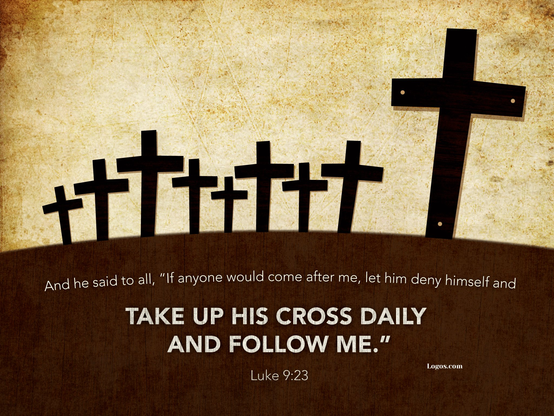
 Intentional Faith
