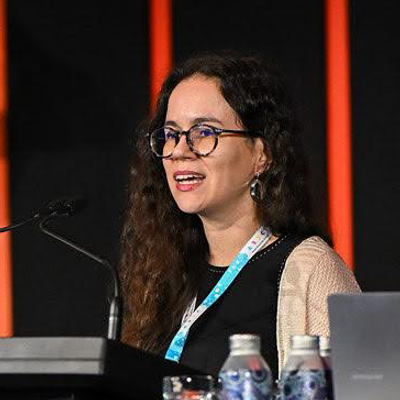
"Mastering the Art of Systematic Literature Review: Techniques, Tools, and Best Practices"
https://video.fernuni-hagen.de/Play/32378#!
– Vortrag für Studierende von Prof. Dr. Nosheen Fatima Warraich, Professorin am Institut für Informationsmanagement der University of the Punjab in Lahore (Pakistan) und Senior Fellow der Münsteraner Kolleg-Forschungsgruppe „Zugang zu kulturellen Gütern im digitalen Wandel“.
(https://www.uni-muenster.de/KFG-Zugang/person/warraich.html)
[via https://www.uni-muenster.de/KFG-Zugang/transfer/]
#SystematikLiteratureReviews #SystematicReviews #SLR
Mastering the Art of SLR: Techniques, Tools, and Best Practices

Mastering the Art of SLR: Techniques, Tools, and Best Practices Prof. Dr. Nosheen Fatima Warraich

FernUniversität in Hagen Videoportal
Comparison of Elicit AI and Traditional Literature Searching in Systematic Reviews using Four Case Studies | medRxiv
#artificialintelligence #SystematicReviews
https://www.medrxiv.org/content/10.1101/2025.06.17.25329772v1
Comparison of Elicit AI and Traditional Literature Searching in Systematic Reviews using Four Case Studies

Background: Elicit AI aims to simplify and accelerate the systematic review process without compromising accuracy. However, research on the performance of Elicit is limited. Objectives: To determine whether Elicit AI is a viable tool for systematic literature searches. Methods: We compared the included studies in four systematic reviews to those identified searching with Elicit. We calculated sensitivity, precision and observed patterns in the performance of Elicit. Results: Elicit had an average of 39.6% precision (26.7% - 46.2%) which was higher than the 7.55% average of the original reviews (0.65% - 14.7%). However, the sensitivity of Elicit was poor, averaging 37.9% (25.5% - 69.2%) compared to 93.5% (87.2% - 98.0%) in the original reviews. Elicit also identified some included studies not identified by the original searches. Discussion: At the time of this evaluation, Elicit did not search with high enough sensitivity to replace traditional literature searching. However, the high precision of searching in Elicit could prove useful for preliminary searches, and the unique studies identified mean that Elicit can be used by researchers as a useful adjunct. Conclusion: Whilst Elicit searches are currently not sensitive enough to replace traditional searching, Elicit is continually improving, and further evaluations should be undertaken as new developments take place. ### Competing Interest Statement The authors have declared no competing interest. ### Funding Statement This study did not receive any funding ### Author Declarations I confirm all relevant ethical guidelines have been followed, and any necessary IRB and/or ethics committee approvals have been obtained. Yes I confirm that all necessary patient/participant consent has been obtained and the appropriate institutional forms have been archived, and that any patient/participant/sample identifiers included were not known to anyone (e.g., hospital staff, patients or participants themselves) outside the research group so cannot be used to identify individuals. Yes I understand that all clinical trials and any other prospective interventional studies must be registered with an ICMJE-approved registry, such as ClinicalTrials.gov. I confirm that any such study reported in the manuscript has been registered and the trial registration ID is provided (note: if posting a prospective study registered retrospectively, please provide a statement in the trial ID field explaining why the study was not registered in advance). Yes I have followed all appropriate research reporting guidelines, such as any relevant EQUATOR Network research reporting checklist(s) and other pertinent material, if applicable. Yes All data produced in the present study are available upon reasonable request to the authors

medRxiv
Jetzt anmelden zum @DGIInfo -Workshop "Systematische #Forschungssynthesen – Methode und Aufgaben für #Bibliotheken" am 7. und 14. Juli. Der Workshop führt in die einzelnen Prozessschritte sowie die Datendokumentation und Qualitätsprüfung ein und stellt verschiedene Typen von #SystematicReviews vor. Die Teilnehmenden erhalten einen detaillierten Überblick über die Aufgaben bei einem Systematic Review und erproben einzelne Schritte in kleinen Übungen.
https://dgi-info.de/event/systematische-forschungssynthesen-methode-und-aufgaben-fuer-bibliotheken/
otto-SR | Automated Systematic Reviews with AI Agents https://ottosr.com #AI #SystematicReviews

If you attended the EAHIL 2025 conference and had the feeling that my 3 minute presentation about Zotero for systematic reviews went too fast (or if you are just interested in the topic), here is the link to watch the video : https://cest.la/e25

The links to the tools presented are included, just pause the video.

There is no audio (the video replaced a slidedeck), but the text of my presentation is in the description.

#eahil2025 #eahil #zotero #SystematicReview #SystematicReviews

Zotero for Systematic Reviews (EAHIL 2025)

PeerTube
RAG-Enhanced AI Systems Cut Oncology Review Timelines by 55%, New Studies Confirm

Recent validation studies demonstrate retrieval-augmented AI systems reducing systematic review times in oncology by 55% while maintaining 92% accuracy. Updated

Le Red Robot

Ever wondered what to do with the >80k citations of the PRISMA standards for #SystematicReviews and #MetaAnalysis?

I did a bibliometric analysis of authors who use PRISMA. Join my presentation next week:

https://social.cwts.nl/@cwts/114274695842290362

CWTS | Leiden University (@cwts@social.cwts.nl)

🦠 Does science rely on early career researchers for applying reporting standards and running more technical analyses? In our next seminar, @Aschniedermann@fediscience.org, external PhD candidate at CWTS and researcher at the German Centre for Higher Education Research and Science Studies (DZHW) will present results of a bibliometric analysis of biomedical research. 🎧 Make sure to join! 📅 Friday, 11.04.2025 | 3:00-4:15 PM (CEST) 📌 Online Check our website for more information 👉 https://www.universiteitleiden.nl/en/events/2025/04/keeping-up-with-its-own-standards-does-science-need-constant-rejuvenation

CWTS Mastodon

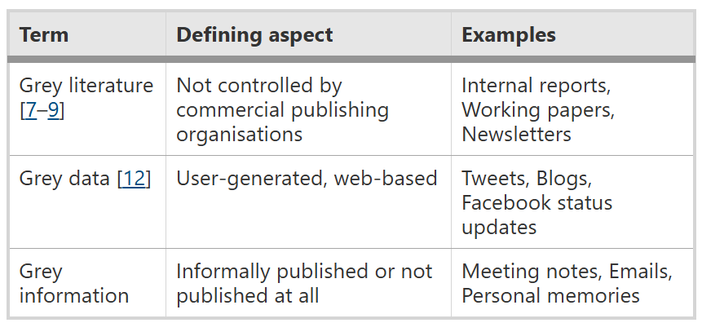
When we talk about grey literature, do we also consider grey information and grey data? I usually define it as conference papers, dissertations, and preprints only.

A worthwhile read on this topic: https://doi.org/10.1186/s13643-016-0337-y

#SystematicReview #SystematicReviews #SysRev #metaanalysis

Searching and synthesising ‘grey literature’ and ‘grey information’ in public health: critical reflections on three case studies - Systematic Reviews

Background Grey literature includes a range of documents not controlled by commercial publishing organisations. This means that grey literature can be difficult to search and retrieve for evidence synthesis. Much knowledge and evidence in public health, and other fields, accumulates from innovation in practice. This knowledge may not even be of sufficient formality to meet the definition of grey literature. We term this knowledge ‘grey information’. Grey information may be even harder to search for and retrieve than grey literature. Methods On three previous occasions, we have attempted to systematically search for and synthesise public health grey literature and information—both to summarise the extent and nature of particular classes of interventions and to synthesise results of evaluations. Here, we briefly describe these three ‘case studies’ but focus on our post hoc critical reflections on searching for and synthesising grey literature and information garnered from our experiences of these case studies. We believe these reflections will be useful to future researchers working in this area. Results Issues discussed include search methods, searching efficiency, replicability of searches, data management, data extraction, assessing study ‘quality’, data synthesis, time and resources, and differentiating evidence synthesis from primary research. Conclusions Information on applied public health research questions relating to the nature and range of public health interventions, as well as many evaluations of these interventions, may be predominantly, or only, held in grey literature and grey information. Evidence syntheses on these topics need, therefore, to embrace grey literature and information. Many typical systematic review methods for searching, appraising, managing, and synthesising the evidence base can be adapted for use with grey literature and information. Evidence synthesisers should carefully consider the opportunities and problems offered by including grey literature and information. Enhanced incentives for accurate recording and further methodological developments in retrieval will facilitate future syntheses of grey literature and information.

BioMed Central
Can anyone explain to me the relationship between the "SHOW ME the evidence" paper published in JBI Evidence Implementation, Campbell Systematic Reviews, Clinical and Public Health Guidelines, Cochrane, and Environmental Evidence in November, and the "Evidence Synthesis Infrastructure Collaborative"?
#EvidenceSynthesis #SystematicReviews