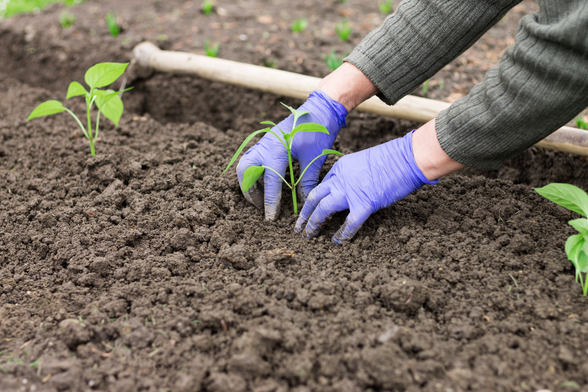
Giant sequoia clones from 3,000-year-old trees are taking root in Detroit
What governments and households are being asked to do in the oil crisis
Urban coyotes are denning next door: here’s what to know
Hummingbird migration 2026: when they’ll reach your garden and how to get ready
Scotland legalizes water cremation, giving families a greener third option
Bikes for Rent, Laptops to Charge
At its third meeting on 27 November 2025, the Student Parliament (StuPa) dealt with no fewer than 10 motions. Finally: digital thesis submission However, there was some good news right at the start: in 2026, theses will finally no longer have to be printed. The Student Representation (StuVe) had been working on this issue for a long time. Most recently, there was a StuPa decision on this matter at the initiative of the Social and Economic Sciences Student Council. Students who submit their […]https://stuve-bamberg.de/2026/02/17/bikes-for-rent-laptops-to-charge/
Here is the city-wide map of ΔNDVI for Calgary — the difference between the median summer NDVI (mid-May to mid-September) in 2024 vs 2025.
As in the previous post, the signal is quite clear:
2025 shows a systematic increase in vegetation index across almost the entire city, but some areas showing a decrease.
This pattern is consistent with what I see in the frequency distributions of median NDVI:
2025 has a broader, greener distribution — likely reflecting better moisture conditions and a more favourable growing season.
Working with ΔNDVI on a pixel-by-pixel scale (10 × 10 m) offers a much more detailed picture of how vegetation responds spatially, compared with community-level averages or city-wide summaries.
#NDVI #Sentinel2 #RemoteSensing #Calgary #GreennessOfCalgary #GIS #Rstats #DataAnalysis #ESA #UrbanEcology #Copernicus #CopernicusSentinel #SustainableDevelopment #SustainableUrbanDevelopment #Alberta #Canada #EnvironmentalMonitoring #GIS #Geospatial
🌿 A noticeable shift in the statistical distribution of median NDVI values for Calgary between 2024 and 2025.
🛰️ Both histograms are based on Sentinel-2 data with 10×10 m resolution, and each NDVI value represents the median for mid-May to mid-September.
The contrast is striking:
🔥 2024 shows a distribution shifted toward lower NDVI values → drier summer, weaker vegetation growth, more heat-stress periods.
🏡 2025 is clearly shifted to the right → stronger greenness, more moisture, and more stable summer conditions.
This kind of interannual comparison reveals how much the city’s ecosystems can vary from year to year — using nothing more than open satellite data and clean statistics.
#NDVI #Sentinel2 #RemoteSensing #Calgary #GreennessOfCalgary #GIS #Rstats #DataAnalysis #ESA #UrbanEcology #Copernicus #CopernicusSentinel #SustainableDevelopment #SustainableUrbanDevelopment #Alberta #Canada
The Role of Sewage Treatment Plants in Sustainable Urban Development
Have you ever thought about where the water goes after you flush the toilet or wash your dishes?
The truth is, when sewage goes untreated, it doesn’t just “go away.” It ends up in rivers, lakes, and groundwater — the very places we get our drinking water from.
For more visit: https://leenusindia.com/the-role-of-sewage-treatment-plants-in-sustainable-urban-development/
#sewagetreatmentplant, #supremepipedistributors, #smartdrainagesystem, #sustainableurbandevelopment, #pvcpipes
Call For Papers
AIMS Energy
Budgetary constraints to improving building performance.
#EnvironmentalDesign
#BuildingIndustry
#SustainableUrbanDevelopment
https://www.aimspress.com/aimse/article/6744/special-articles