 Keith Daggett
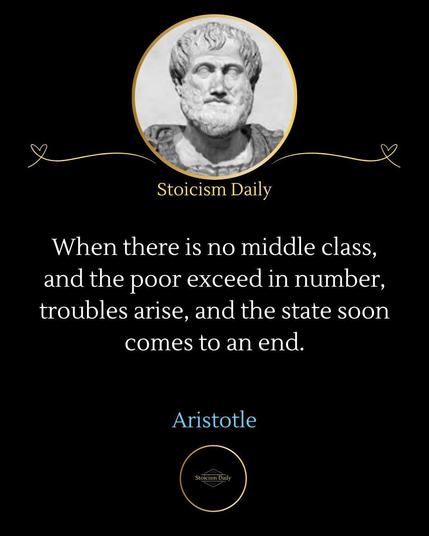
When there is no middle class, and the poor exceed in number, troubles arise, and the state soon comes to an end. — Aristotle
Aristotle highlights social balance as essential for stability. Extreme inequality creates tension, unrest, and potential collapse. The middle class serves as a stabilizing force between wealth and poverty. A strong, balanced society reduces the risk of exploitation and resentment. Economic disparity affects political power and social cohesion. Policies should aim to empower and support the middle class. Social harmony requires fairness and opportunity for all citizens. Excessive poverty fosters crime, instability, and loss of trust. Wealth concentration threatens democracy and justice. Aristotle warns that societal health depends on balance, not extremes. A thriving middle class promotes education, culture, and civic participation. Social cohesion is nurtured when all classes feel represented. Balanced societies are resilient and sustainable.
 Sanjay Mohindroo