#SciencePublication #AstroPython #AstronomySoftware #ScienceSoftware

Random #Debian Astro package of the week is python3-montagepy. MontagePy is a toolkit for assembling astronomical images into custom mosaics.

It uses algorithms that preserve the calibration and positional (astrometric) fidelity of the input images to deliver mosaics that meet user-specified parameters of projection, coordinates, and spatial scale. It supports all projections and coordinate systems in use in
1/2⤵

#SciencePublication #AstronomySoftware #ScienceSoftware

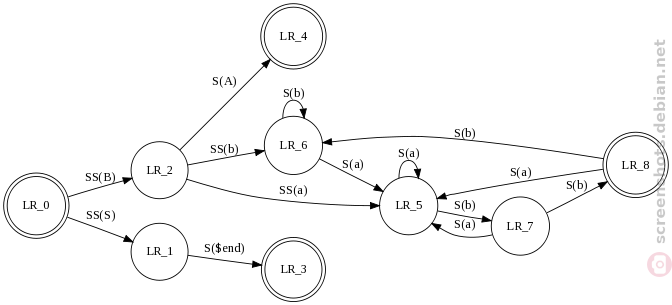
Random #Debian Astro package of the week is graphviz. Graph drawing addresses the problem of visualizing structural information by constructing geometric representations of abstract graphs and networks. Automatic generation of graph drawings has important applications in key technologies such as database design, software engineering, VLSI and network design and visual interfaces in other domains.
1/3⤵

#SciencePublication #AstronomySoftware #ScienceSoftware #DebianBookworm

Random #Debian Astro package of the week is texlive. The TeX Live software distribution offers a complete TeX system. It encompasses programs for typesetting, previewing and printing of TeX documents in many different languages, and a large collection of TeX macros and font libraries. . This metapackage provides a decent selection of the TeX Live packages which should suffice for the most common tasks. .
1/2⤵

#SciencePublication #AstroPython #AstronomySoftware #ScienceSoftware #DebianBookworm

Random #Debian Astro package of the week is python3-aplpy. APLpy is a Python module aimed at producing publication-quality plots of astronomical imaging data in FITS format. The module uses Matplotlib, a powerful and interactive plotting package. It is capable of creating output files in several graphical formats, including EPS, PDF, PS, PNG, and SVG.

https://aplpy.github.io/

APLpy Home Page

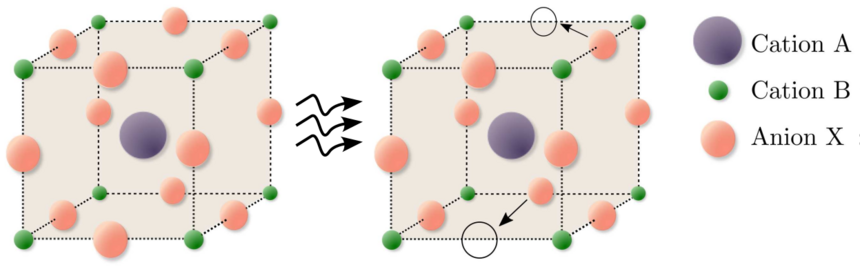
Exciting times in #SolarEnergy! #PerovskiteSolarCells shine brighter than ever as a green energy solution. Our publication adds valuable insights by a comparison of two ionic current densities, incorporating volume exclusion effects. #SciencePublication
https://link.springer.com/article/10.1007/s11082-023-05125-9
Volume exclusion effects in perovskite charge transport modeling - Optical and Quantum Electronics

Due to their flexible material properties, perovskite materials are a promising candidate for many semiconductor devices such as lasers, memristors, LEDs and solar cells. For example, perovskite-based solar cells have recently become one of the fastest growing photovoltaic technologies. Unfortunately, perovskite devices are far from commercialization due to challenges such as fast degradation. Mathematical models can be used as tools to explain the behavior of such devices, for example drift-diffusion equations portray the ionic and electric motion in perovskites. In this work, we take volume exclusion effects on ion migration within a perovskite crystal lattice into account. This results in the formulation of two different ionic current densities for such a drift-diffusion model – treating either the mobility or the diffusivity as density-dependent while the other quantity remains constant. The influence of incorporating each current density description into a model for a typical perovskite solar cell configuration is investigated numerically, through simulations performed using two different open source tools.

SpringerLink