#Holocaust / Lessons unlearned from a collective trauma
https://www.theguardian.com/world/article/2024/aug/13/israel-gaza-historian-omer-bartov
[...] Offer says that for him every child is a child, no matter whether he is in Gaza or here. I don’t feel like him. Our children here are more important to me. There is a shocking humanitarian disaster there, I understand that, but my heart is blocked and filled with our children and our hostages … There is no room in my heart for the children in Gaza, however shocking and terrifying it is and even though I know that war is not the solution.
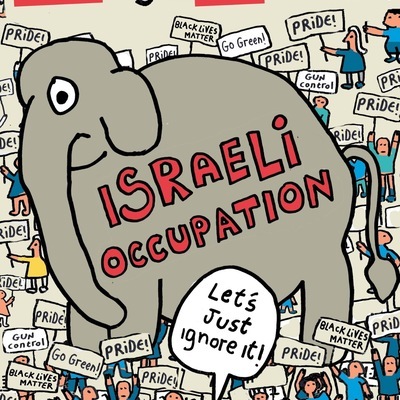
Steeping aside from Bartov’s article in the Guardian, for me this discourse evokes parallels with Israeli media's preoccupation with Judith Butler's stance in respect to Israel’s military response to the Hamas attack, which doesn’t ignore Israel's complex status as an occupier, and has been interpreted by some as a betrayal of “leftist internationalism.”
Israeli intellectuals like Eva Illouz and other, were very busy rebutting such criticism of Israel, especially coming from Jewish intellectuals but not limited to, in various Israeli publications— including rightwing rags like #Ynet, which just can’t have enough of her anti-left criticism, preaching to an audience of bots, judging by the comments left in the talkback section of most articles on that site.
It’s a trend which reflects on the familiar anr frustrating societal tendency in Israel to always seek reaffirmation of historical victimhood narratives (in the last decades extended to the Jews of North Africa and the Near East, for political reasons), even when in the contemporary geopolitical context the power dynamics have significantly shifted.
Then there’s this:
[…] Many of my friends recognise the injustice of the occupation, and, as Smilansky said, profess a “love for humanity”. But at this moment, under these circumstances, this is not what they are focused on. Instead, they feel that in the struggle between justice and existence, existence must win out, and in the struggle between one just cause and another – that of the Israelis and that of the Palestinians – it is our own cause that must be triumphant, no matter the price. To those who doubt this stark choice, the #Holocaust is presented as the alternative, however irrelevant it is to the current moment.
If to go back to the article, this exact perspective underscores the critical need for international intervention to restrain Israel. It's important to recognize that Israel has never truly faced an existential threat, and certainly not from Hamas in the current context. The narrative of existential danger, often invoked through references to the Holocaust, is indeed misplaced in the present situation, and serves to justify a #genocide.
From a broader perspective, the historical trajectory of international support for Israel, beginning with the British Balfour Declaration of 1917, has consistently prioritized Israeli interests over Palestinian rights. While the contemporary understanding suggests that the Balfour Declaration was initially intended as a limited memorandum of understanding, Zionist leaders (who were involved in its writing) successfully exploited it far beyond its original scope. Subsequently, the League of Nations, the United Nations, and the United States have largely overlooked Palestinian rights, consistently predicating any proposed solutions on guaranteeing Israel's security at the expense of the Palestinians' universally recognized right to self-determination on their own land.
This historical pattern of international bias has contributed to the current imbalance in power and rights, perpetuating a narrative that prioritizes one side's perceived security needs over the fundamental rights of the other.
@palestine
@israel
#IsraelWarCrimes
#HistoriaLachrymosa #JewishHistoriography
#SaloBaron
 דער קערפער פֿון השם
 bsmall2
 oatmeal