ST VL53L9CX direct Time-of-Flight 3D LiDAR supports 5cm to 9m range, 2.3K zones resolution
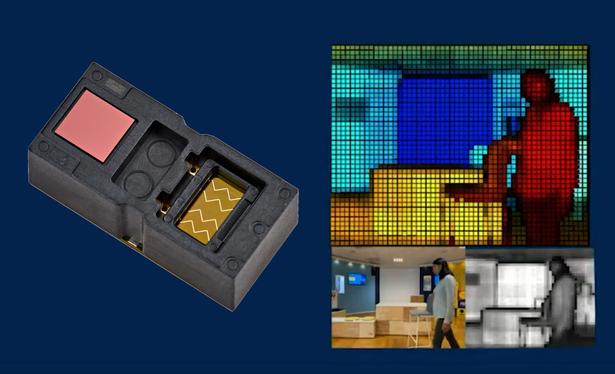
STMicroelectronics VL53L9CX, or VL53L9 for short, is the company's first direct Time-of-Flight (dToF) 3D LiDAR all-in-one module. It offers a sensing range of  5 centimeters to 9 meters, a wide 72º field of view, a resolution of 2.3K zones, and up to 100 Hz frame rate. ST's ToF sensors have gone a long way since we covered the VL53L0X sensor with a single zone and 2-meter range in 2017. Since then, the company has steadily improved its tiny ToF sensors with up to 64 zones and long range in recent sensors like the VL53L8CP. While the VL53L9CX is still tiny at 12.8 x 6.1 x 4.6 mm, it's in a class of its own, acting like a mini 3D scanner with 2268 zones, and will be used for a range of applications in robotics, industrial automation, smart buildings, AR/VR, and healthcare. ST VL53L9CX 3D ToF camera module specifications: Multizone ranging
CNX Software - Embedded Systems News
STMicro VD65G4 and VD55G4 0.56MP global shutter image sensors enable ultra-low-power always-on event-driven vision

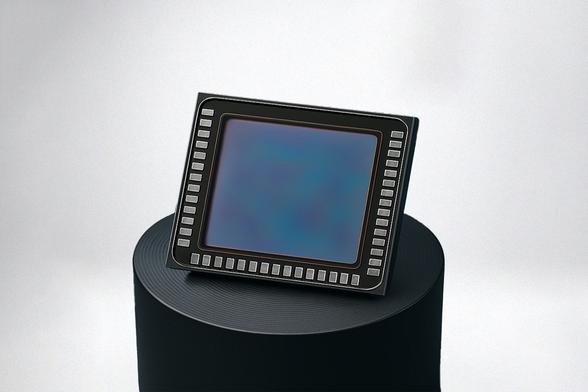
STMicroelectronics VD65G4 and VD55G4 are ultra-low-power 0.56-megapixel global shutter CMOS image sensors designed for battery-operated edge AI and always-on vision applications. The main difference between the two sensors is that the VD65G4 features a color RGB Bayer pattern, while the VD55G4 is a monochrome sensor designed to capture visible to near-infrared (NIR) light. Both sensors use a compact 1/9-inch optical format and a 2.16 µm pixel pitch, utilizing Back Side Illuminated (BSI), CDTI, and 3D stacking technologies to achieve a tiny 2.73 x 2.16 mm bare-die footprint. STMicro VD65G4 and VD55G4 specifications: Resolution – 0.56 MP (804 x 704) Chroma VD65G4 – RGB Bayer (RGGB). VD55G4  – Monochrome (Clear, Visible to NIR). Optical Characteristics – 1/9-inch (2.3mm) optical format with a 30° linear CRA and close to 1:1 aspect ratio. Pixel Technology – 2.16 µm x 2.16 µm pixel size utilizing global shutter, BSI, CDTI, and 3D stacking. Frame Rates

CNX Software - Embedded Systems News
ST ST64UWB Cortex-M85 ultra-wideband SoC supports IEEE 802.15.4z and 802.15.4ab UWB standards, radar sensing

STMicroelectronics ST64UWB Arm Cortex-M85 ultra-wideband (UWB) SoC family supports both the current IEEE 802.15.4z and the upcoming IEEE 802.15.4ab UWB standards for longer-range, more reliable positioning and secure proximity-based interactions. It mainly targets digital car keys, hands-free access, and smart-device detection. The family includes the ST64UWB-A100 (automotive entry), ST64UWB-A500 (automotive premium), and ST64UWB-C100 (industrial/smart home), all built on an 18 nm FD-SOI process that improves the RF link budget by ~3 dB, yielding roughly 50% additional range beyond what IEEE 802.15.4ab alone provides. The automotive-focused A-series offers ASIL-A(B) safety support, while the ST64UWB-C100 targets consumer and commercial applications. ST64UWB family specifications: MCU Core 32-bit Arm Cortex-M85 CPU with DP-FPU, MVE, and ETM Frequency Up to 100 MHz (ST64UWB-C100, ST64UWB-A100) Up to 256 MHz (ST64UWB-A500) Memory/Storage Integrated PCM Memory SRAM and Back-up SRAM Wireless Connectivity Ultra-wideband (UWB) Radio IEEE 802.15.4z-2020 and IEEE 802.15.4ab support UWB channels 5, 6, 8, 9, 10,

CNX Software - Embedded Systems News
📢NPArevolut°R📢 Bulletin ST Micro Grenoble: Voir en PDF le bulletin du 10 mars 2026 📢NPA-R #Grenoble #STMicro #Bulletin #NPA

Bulletin ST Micro Grenoble
Bulletin ST Micro Grenoble - NPA Révolutionnaires

Voir en PDF le bulletin du 10 mars 2026

NPA Révolutionnaires
STMicro STM32C5 entry-level, 144 MHz Cortex-M33 MCU features up to 1MB flash, 256KB SRAM, Ethernet, CAN Bus

Not to be confused with the just-released STM32U3B5/C5 ultra-low-power MCUs, the entry-level STM32C5 Arm Cortex-M33 MCU family is designed for industrial sensors, smart home devices, electronic locks, thermostats, wearables, robotic actuators, and computer peripherals. The MCUs are manufactured using ST's 40 nm flash process, clocked at up to 144 MHz, and feature 128 KB to 1 MB of flash and up to 256 KB of SRAM, with a dynamic power consumption of <80 µA/MHz. Key features include Ethernet, USB, OctoSPI, CAN bus, DMA, and various peripherals, including ADCs, comparators, and an op-amp. Security is also enhanced, with the series targeting SESIP3 and PSA Certified Level 3 through features such as side-channel attack-resistant crypto, Hardware Unique Keys (HUK), and a Coupling and Chaining Bridge (CCB) for secure key storage. STM32C5 key features and specifications: MCU core Arm Cortex-M33 32-bit CPU @ 144 MHz with single-precision FPU, DSP instructions, and MPU Up

CNX Software - Embedded Systems News
STM32U3B5/C5 ultra-low-power MCU features 640 KB RAM, 2 MB Flash, and HSP accelerator to run AI without batteries

STMicroelectronics has added two members to the STM32U3 ultra-low-power Arm Cortex-M33 microcontroller family: the STM32U3B5 and STM32U3C5 MCUs get more resources with up to 640 KB SRAM and 2 MB flash, as well as an HSP (hardware signal processor) accelerator to run AI/ML workloads without batteries, just using energy harvesting. The new chips are still clocked at up to 96 MHz, benefit from a near-threshold design (down to 0.65 V), allowing a power consumption of just 117 Coremark/mW in active mode, and can operate up to 105°C ambient temperature. They come with one additional group of interfaces, bringing the total to four SPI and I2C, two I3C and CAN-FD, and five UARTs, as well as five more 16-bit timers, for a total of 10. The STM32U3C5 also includes a cryptocore to accelerate encryption and decryption operations, and supports the CCB (Coupling and Chaining Bridge) hardware security feature, both of which

CNX Software - Embedded Systems News
STMicroelectronics Stellar P3E quad-core Arm Cortex-R52+ automotive MCU features Neural-ART AI accelerator

STMicroelectronics has introduced the Stellar P3E, the first automotive MCU with an embedded Neural-ART AI accelerator, designed to simplify X-in-1 Electronic Control Units (ECUs) by consolidating powertrain functions like the inverter, on-board charger (OBC), and DC-DC converter into a single module. The MCU enables smart sensing, predictive maintenance, and virtual sensor applications without the cost and complexity of a separate SoC. The microcontroller features four 500 MHz Arm Cortex-R52+ cores with 19.5 MB of xMemory, which is based on phase-change memory (PCM), offering roughly twice the density of embedded flash. The chip integrates multiple ADC channels for precise sensing, high-resolution PWM down to 102 ps for fine motor control, and 10 timer modules for deterministic real-time operation. Connectivity options include Gigabit Ethernet and CAN-XL, for high-speed, low-latency in-vehicle communication. Stellar P3E (SR6P3EC4/SR6P3EC6) specifications: MCU – SR6P3EC4 / SR6P3EC6 CPU Cores – 4x Arm Cortex‑R52+ cores at up to 500 MHz;

CNX Software - Embedded Systems News

And finally, for now, a look at a live Q&A session the #Arduino team did alongside representatives from #Qualcomm, #STMicro, and #EdgeImpulse - mostly about the new Arduino UNO Q and the App Lab, but naturally fielding a *lot* of questions about the new terms and conditions and whether Arduino's moving away from its open source ethos (again.)

https://www.hackster.io/news/arduino-hosts-q-a-on-the-arduino-uno-q-once-again-states-its-100-commitment-to-open-source-ethos-b99d96c3f08d

#News #Technology #Microcontroller #DevelopmentBoard #Embedded #Hackster

Arduino Hosts Q&A on the Arduino UNO Q, Once Again States Its "100% Commitment" to Open Source Ethos

Representatives from Arduino, Qualcomm, Edge Impulse, and STMicro answer the community's questions — and seek to allay fears.

Hackster.io
STMicro ST25DA-C is the first NFC chip with Matter support

ST ST25DA-C is an NFC chip with built-in support for the latest Matter 1.5 protocol, enabling easier installation of smart devices on home networks, including lighting, access control, security cameras, or any IoT device. NFC here is used as an alternative to Bluetooth LE or QR core commissioning. NFC tap-to-pair functionality enables users to tap an NFC tag code on a device with their smartphone to securely and easily add it to their Matter-compatible app(s) and network(s). Besides batteryless commissioning, the ST25DA-C chip can also be used for firmware updates over I2C (Matter OTA), and secure storage for keys & certificates. ST25DA-C secure NFC tag specifications: Contact interface 1.62 V to 3.3 V supply voltage range ESD protection Human body model (HBM): 6 kV for digital and antenna pads Charge device model (CDM): 1 kV based on a STMicroelectronics module I2C serial interface up to 400 kHz Contactless interface Power

CNX Software - Embedded Systems News