OsazuwaAkonedo Audio ~ NewsLongThread @7PM 23-5

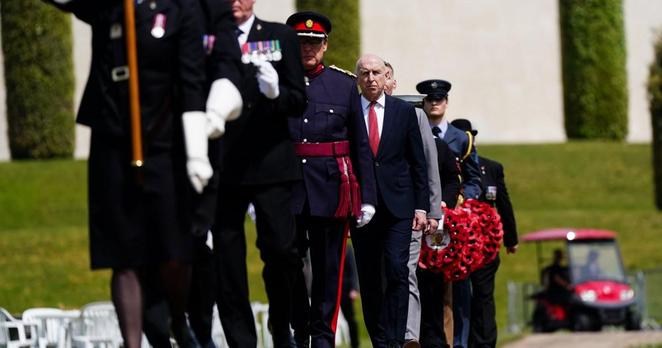
Woman Cries Out Over Army Cover Up Soldier Who Kill Hubby On Val Day In Edo #army #Benin #Edo #Nwosu #Obumneme #Police #Soldier  #OsazuwaAkonedo...

https://osazuwaakonedo.news/osazuwaakonedo-audio-newslongthread-7pm-23-5/

OsazuwaAkonedo Audio ~ NewsLongThread @7pm 23-5

#Abubakar #Aduwawa #AFN #Agbebaku #Agbonika #Ahmed #Ajimi #Akujiobi #Alex #Ali #Anambra #Angwan #Apata #APC #army #Arnold #Atiku #AwoOmamma #Babagana #Bakin #Barbir #Bauchi #Bayo #Benin #Benisheikh #Benue #Biu #Blessing #Bola #Borno #BOSYA #Braimah #Buratai #Caleb #Canada #Chad #Chadian #Chimaobi #Chobe #Dachomo #Damaturu #Deby #Disu #Donald #Edo #Farin #Ferin #Gada #Gadabiu #Gari #Gwong #Iperu #Itno #KAA #Kaga #Kagarko #Kahir #Kaigama #LP #Moore #Ndume #Ngamdu #Ngoshe #Olatunbosun #Oluyede #Owan #Riley #Rilwan #Rukuba #Ruwa #Samaila #Teboga #Terminus #Tina #Umuezeali #UNIJOS #Waye #Ezekiel #Fubara #Gwoza #Ibrahim #Idriss #Igp #Imo #Jos #Kaduna #Kano #Kashim #Katsina #Kebbi #Mahamat #Maiduguri #Mike #Musa #Mutfwang #Nassarawa #Nwosu #Obi #Obumneme #Ogun #Ohio #Olufemi #Onanuga #OsazuwaAkonedo #Oseni #Oyo #PDP #Peter #Plateau #Police #Pulka #Rivers #Sahel #Sani #Shettima #Siminalayi #Sokoto #Soldier #Tinubu #Trump #Tukur #UBA #UK #US #USA #Zamfara #Zulum

OsazuwaAkonedo

Body Types of Medieval Soldiers

Medieval soldiers and warriors are, especially in fantasy, often stereotyped with having different physiques. Knights are seen as the hulking He-Man types wielding giant broadswords, while archers are slender weeds of men staying safe at range.

Reality was more often the opposite. Certainly, there were very varied body types in each profession, but some will have gravitated more towards certain types. Just as racing horses were slender while draft horses are stocky and large, so would professions relying on mechanical strength – such as archery – select towards people with large body while others would be more appropriate for individuals with more slender build.

Biomechanics

Basic reason for these differences are in fact biomechanics. Different actions require different types of biomechanical actions. For example, throwing a spear or wielding a two-handed weapon (spear or a longsword) is dependant more on speed than on strength. On the flip side, weapons such as longbow or club are dependant entirely on strength. And these characteristics require diametrically opposite biomechanical properties.

Speed is facilitated by having little mass away from the joint. Long thin muscle effects less force over a greater distance but more leverage, and leverage is further increased by having a long forearm. Power leverage is increased by shortening the forearm as well as the muscle itself. Decreasing the length of proximal as well as distal limb segment decreases speed and increases force. It is thus obvious why stocky individuals are seen as strong – that is because they are strong. A tall slender individual of the same weight will have approximately same total work capacity (due to similar muscle bulk) but the shape of muscles and skeletal leverages will prevent him from exerting as much force at any given moment.

Unarmed fighting can be roughly separated in two types: striking (punching and kicking) and wrestling. Striking relies on leverage to produce acceleration, and thus favors a more lanky body type. Striking or “ballistic” type of fighting places emphasis on mobility and agility to keep range, and avoidance of retaliation. Thus it favors combatants who are taller due to reach and potentially weaker than their opponents. Wrestling places a premium on momentary strength and thus places a premium on large muscle build combined with power leverages in skeleton, and would thus favor a stocky body type.

The first described hominid weapons were of a bludgeoning type, designed to crush part of a body – most typically the skull – rather than penetrating deeply into the body. Bludgeoning does not require any specialized application of energy – a slower moving strike with heavier weapon will produce as much damage as a quicker moving strike with a lighter weapon, so long as both remain within certain limits. Therefore, the total amount of energy embedded in the weapon and thus total amount of muscular work determine its effectiveness. As a consequence, the determining factor in body structure is aggressor’s total amount of bulk.

Sharp and projectile weapons however introduced selective factors other than total muscle bulk. Lethality of a thrown projectile depends mostly on its penetration, which depends on velocity. With thrown projectiles, velocity of the projectile depends entirely on speed leverages in user’s body. This leads to situation where linear body type is the most efficient type of weapon manipulation. As a result of this, more linear races would have advantage in survival: this is likely one of reasons why modern humans outcompeted the Neanderthals. Neanderthals, being built for strength, did not have speed and agility required for using spears.

Linearity of build continued to be optimal for survival until development of the spear thrower. Spear thrower served to artificially increase length of the limb and thus velocity of spear. Spear throwers were developed by populations whose laterality of build meant that they were not optimal for spear usage. As such, spear throwers never found its way to Africa, where very linear populations had no need for them.

Next major invention was bow, which in many ways was the opposite of spear. While velocity is desired in both spear and bow, mechanics of producing this velocity are diametrically opposite. With spear, velocity is produced through leverage. Bow, by contrast, imparts velocity onto arrow through elastic energy, and speed at which the bow is drawn makes no difference. The critical factor is the maximum pulling force which the arm can exert just before the arrow is released. The archer requires power leverage in the arm, which is favored by short limb segments as well as short and thick muscles. Bow most likely spread most quickly among peoples who were of short stature and relatively mesomorphic, and later selection would make these traits even more pronounced. Use of bow would favor the individuals whose laterality of build was well expressed in the shoulder and upper extremity. Indeed, the most famous bow users – Mongols – were invariably short, stocky and with wide shoulders. Meanwhile the extremely linear people of East Africa never adopted the bow, largely because they were physically unsuited to its usage.

Ectomorph’s adaptation to the bow is to increase its length – e.g. longbow. This allows the same potential energy to be stored over greater distance, but with considerable loss of efficiency as thickness of the bow and longer limbs create a greater moment of inertia. And to transfer greater proportion of stored energy to the arrow, mass of the arrow has to be increased.

General Principles

Slimmer people would rely on speed, mobility and quick closing actions to defeat their opponents. This includes harrassing cuts and trusts that allow them to stay at distance until a closing action presents itself. Tall and lean people will fight more aggressively, using their advantage in reach, mobility and endurance to wear down the opponent.

Tall, heavily built people work best on defense, waiting for the opponent’s attack before counter-cutting. They can use their reach in this manner, and also try and get to grips, using their weight to control opponent’s weapon. While they may attempt to fight aggressively, trying to overwhelm the opponent with sheer strength, this would not work well in actual battle as it would leave them quickly exhausted and vulnerable.

Short and heavily built people work also best on defense, and on the offense they work best if they manage to get to the grappling range and wrestle down the opponent.

Long and relatively light weapons are best for lankier people – this means spears and longswords, as well as two-handed weapons in general (polearms, including polehammers). Two-handed weapons rely on leverage far more than strength, which means that long limbs are an advantage. It is not impossible for slightly-built people to use one-handed weapons such as maces or axes, but this means sacrificing many of their advantages.

Heavily built as well as overweight people can have significant success with sword and shield – so long as the fight does not last long. They are in general better able to use one-handed weapons than slimmer people, as these weapons rely on strength – particularly forearm strength – instead of leverage. However, they more easily become winded should the fight drag out.

In general, however, knowledge, footwork and fitness are more important than body type for majority of hand-to-hand weapons.

Knights

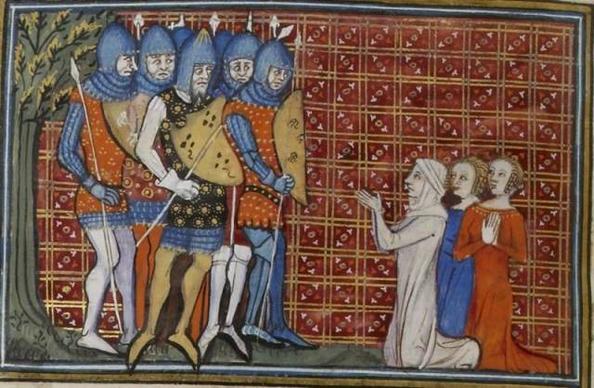
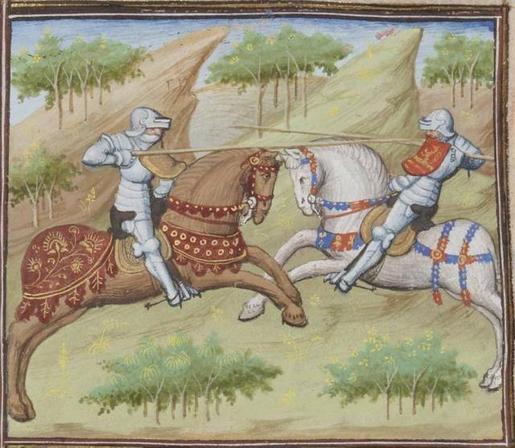
Mother’s milk in fiction apparently consists of protein and steroids, and knights seen there more often than not approximate a mutant child of Arnold Schwarzenegger, Brian Shaw and King Kong. Yet when one actually looks at medieval depictions – illustrations and descriptions alike – it is incredibly difficult to find huge men capable of bench pressing horses. Knights as actually depicted are in fact very slender even when wearing armor.

Ideal knights in reality were closest to what would be considered an “ottermode” or twinkish build. Their diet and form of exercise was more conductive towards endurance, agility and functional strength than to building mass. And it is possible (to an extent) to train for increased strength without increasing mass, by improving muscle fiber activation rate. Bruce Lee for example was extremely strong despite not having much mass, and people can indeed be extremely strong while still looking skinny – like this guy.

Knights did do a lot of rigorous training – sword fighting, jousting, wrestling, swimming, running, gymnastics; and they did all of that both out of armor and in the armor. Jean le Maingre mentions rock climbing, climbing the underside of a ladder using just the arms and jumping onto the horse, all in full armor. While this is just one example, it can be assumed that most knights did follow something similar for their training. Knights would train, practice, exercise and even sleep with armor (when in combat zone). They will have in fact made a conscious effort not to be too bulky, as too much muscle will have slowed them down and made them tire out more easily. Instead, dense wiry build focusing on agility and endurance will have been ideal.

Secretum Secretorum describes an ideal physique as broad chest and back, well-built shoulders and long legs. This is basically what would be considered a swimmer’s build today: a well developed yet slender physique, likely well defined due to low body fat. Calves however were very well developed. Even the knights walked a lot, and when walking in pre-modern footwear, it is necessary to walk basically on the toes – which would develop the calves. And when swordfighting it is in any case necessary to center weight on the balls of the feet for better mobility, which again means that calf strength is required.

There are other descriptions supporting this. Literature in general distinguishes “noble” physique from that of the laborers, farm hands or blacksmiths. Peasants were expected to be burly, while knights were expected to be agile and graceful.

Account of Roman military by a late 14th century writer shows this thought:

As does the book of the courtier:

Johannes Lichtenauer, a prominent medieval figure in the German School of Swordsmanship, considered the ideal knight to be small and concord in stature, focusing on stamina instead of strength. A knight should rather be agile than strong, nimble than muscular, and have good muscular coordination skills rather than brute force. Most of all, he should be intelligent. Strong and well-built men were better put to use as archers; but more on archers later.

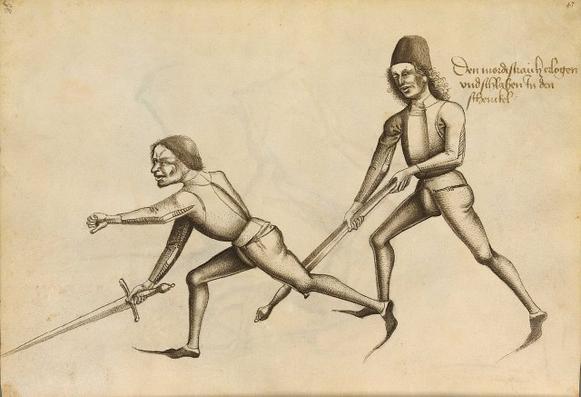
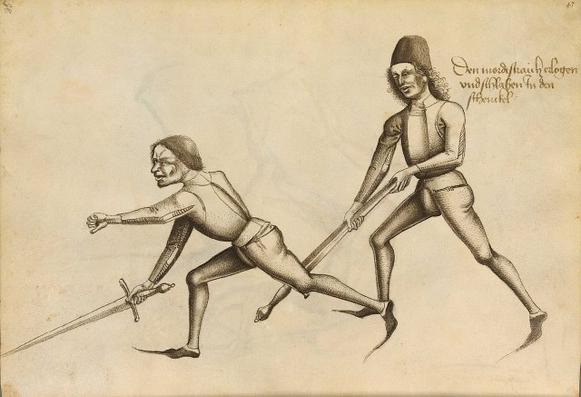
Illustrations in Talhoffer’s fectbuch show fighters to be very slim. Other manuals also support this, with slim but toned physiques being typical. Rather than bodybuilders, knights will have looked like distance cyclers (e.g. Lance Armstrong) or distance swimmers.

Other writers such as 12th century Andreas Capellanus distinguished between displeasing stocky bodies of peasants and beautiful bodies of nobles. Similarly, late 13th / early 14th century writer Ramon Llull said that anyone too fat was not fit to be a knight – and he was correct, as will be seen later. By the 14th century, both literature and men’s fashion reflected the idea of athletic, powerful yet slim, build. The titular verdant cavalier in Sir Gawain and the Green Knight is broad of chest and slender of waist, and Chaucer’s Sir Thopas with his “sydes smale” (slender waist) goes riding over hill and dale. Period clothing is likewise constructed to give the impression of a broad chest and shoulders and a tiny waist.

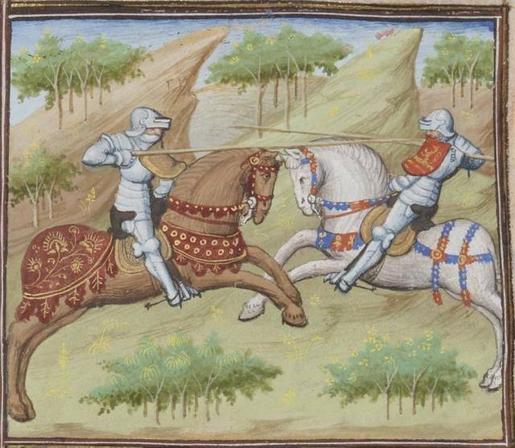
Physics also support knights not being huge. Typical knightly weapons do not in fact require much strength to use effectively. Lance needs enough strength to be held in face of impact, but this can also be solved through the usage of lance arrest, which would mean that a knight would merely need enough strength to direct it. Spear too is a weapon that relies on agility more than strength as is the sword – both would need to be used very quickly in order to get through gaps in armor. Even the stereotypical “strongman” weapons did not in fact require much strength to use. With weapons such as a polehammer or a pollaxe, leverage was more significant than strength. Single-handed warhammers did require more strength, but not that much either – warhammer would weight around 1 kg (2 lbs), and was a far more efficient weapon than a prehistoric club. For comparison, two-handed polehammer (Lucerne hammer) weighted no more than 5 kg (11 lbs), and typically less. Even mace does not really require much strength. Suit of armor weighted 18 to 25 kg but was worn all over the body.

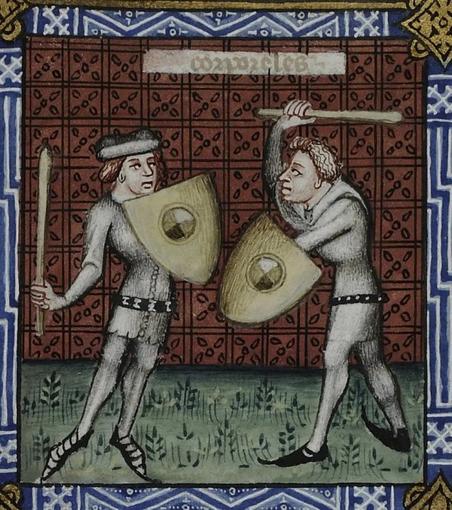
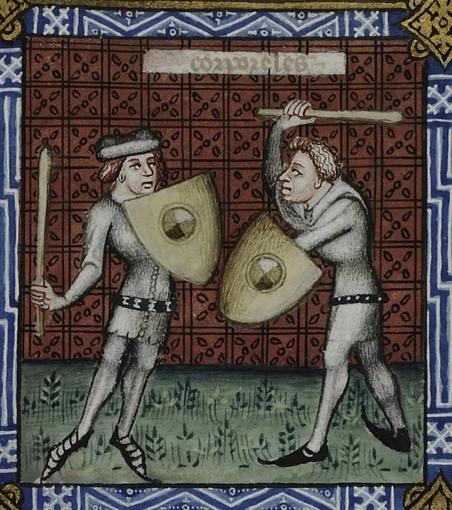
In fact, having too much muscle can be a drawback when using certain weapons. Large chest can get in the way of some guards such as Ochs guard and other guards where wrists cross over. Large people generally do better with sword and shield combination which allows them to use their mass to their advantage – but by 14th century, shields were relatively rarely used. While Arnold’s Conan may be a cult classic, little known fact is that Arnold had to lose a lot of muscle mass in order to be able to play Conan effectively – and even so, he only just barely made it.

In addition, fights between armored opponents – or even unarmored opponents – were not won by person that was stronger. A polehammer, a spear or a sword do not require much force to kill – and polehammer does not require much force to penetrate armor either. Fight was won by the fighter who tired out first or by fighter who made a mistake first – which often was the fighter who tired out first. If victory is not achieved within the first minute, it will be achieved by whoever manages to tire out the opponent. And armor and weapons were worn entire day when in combat zone. Thus stamina and coordination were the most important things when fighting, followed by speed. Large mass – even if it was a muscle – means tiring out more quickly, and is thus a bad thing.

With endurance being the most important attribute of a knight, followed by agility, ideal body build would be one that would maximize these attributes. This means that ideal physique would be lean with no extra weight to carry on long marches, and enough muscle to do the job but not so much that it would slow the knight down or require too much calories.

Jousting itself requires all-around fitness similar to that of football (soccer) and tennis players. Modern jouster Roy Murray was found to have body fat percentage of 7,72%, with maximum oxygen consumption similar to that of a top tennis player, core stability better than a professional swimmer and alignment and balance comparable to leading acrobats.

And of course, armor also shows that knigts were in fact rather slender. Surviving examples of medieval plate armor – especially Gothic armor – have broad shoulders, extremely slim waist and slender legs, and are overall made for people of slender build. By and large, there is simply no space to squeeze in a bodybuilder without cutting chunks off him beforehand. Gothic plate armor could fit Bruce Lee or even a fashion model far better than it would somebody like Arnold Schwarzenegger. Even Goliath in medieval depictions is shown as tall but skinny.

First armor was made for Duke of Tyrol when he was in his late 40s or early 50s (around 1470). Second armor is mid-15th century German armor made of disparate pieces.

Both armors show narrow waist, thigh gap and overall slender build – characteristics quite opposed to roided up bodybuilders of fiction.

Being huge and strong was not a requirement for battle – squires accompanied knights to the battlefield despite still being teenagers (14 – 18/21). Biologically, even a strong and fit 14 – 17 years old would always lose in a physical contest to somebody aged 18 or above. Testosterone gives man more muscle and greater strength for his size, as well as superior speed, quickness, reflexes, muscle coordination, aggressiveness, and even eyesight. Yet even many knights were teenagers or young adults, whose stature is naturally more slight than that of older adults. Fact that Harold Godwinson, when visiting Normandy prior to the Hastings campaign was capable of wearing his armour and carrying another armoured man on his back, was considered exceptional – meaning it was above the typical expected strength.

Standard of strength was simply being able to lift himself up into the saddle in full armor and equipment (minus the lance). When Knights Templar had fasted significantly enough during the 12th century that they were said to be “incapable of lifting themselves to their saddles in their armour” and this was seen as a very troubling sign of how the trend of fasting was effecting the men. In terms of skillset, modern pentathlete would be the closest to what a knight needed to do.

They were however not pint-sized. Average male height in early Middle Ages was 173,4 cm (5’8”), and then declined, with a low of 167 cm (5’5” – 5’6”) in 17th – 18th centuries. For comparison, average male height today is 175,3 cm in England, 175,4 cm in Germany and 175,6 cm in France. Knights themselves would be slightly above the average as they had better diet than average person. Even so, average knight will likely have been around the size of an American Civil War Union soldier: 5’8” and 135 lbs. Possibly taller but not much heavier, as suits of armor seen in museums are oftentimes incorrectly “compressed”, making them look much shorter than actual people who had worn them were.

In short: an ideal knight was a warrior who had skill, agility, stamina and tenacity to last in a fight. Rather than The Mountain or Conan, ideal knight by medieval standards was in fact built much like Link from Legend of Zelda: well developed shoulders, tiny waist, long and slim legs. In modern terms, long distance swimmers likely have the build that is closest to that of an ideal knight.

Of course, above is only an idealized picture. It can be assumed that knights would tend towards it simply because those who were closer to the ideal would – on average – perform better in their duties as knights, but logic and history both show that ideal was not a hard and a fast rule. This too is shown by armor – there are indeed some pieces of armor made for men of thicker build, such as the following:

Thus while most knights might to a degree tend towards the ideal, there will still have been a wide array of body sizes and shapes. Knights could in fact range in build from members of a boy band to English rugby players.

But they will not have been fat. Aside from the combat performance (too much fat on the body can in fact negatively impact endurance), also important were knightly ideals and morals: a member of a knightly class was supposed to both be able to afford large amounts of food and also to exercise enough restraint to not eat it all himself. Instead, excess food will have been given to the poor – starting with knight’s own serfs (in case of landed knights).

Reason why fictional knights are often huge is because modern expectations are conditioned by myth (hundred pound swords wielded by ignorant brutes!), self-flattery (what we value in our athletes is what everybody always must have valued in their warriors) and denial (the fat American behind doesn’t represent the pinnacle of the human fighting physique?).

Pikemen

Byzantine as well as early modern manuals required pikemen to be primarily brave and stalwart. Physically, youth, size and strength were characteristics required of soldiers required to fight in a shield wall. Men picked for Byzantine heavy infantry were described by Emperor Nikephoros as “large in stature and no more than forty years of age”.

The biggest and strongest of them were chosen to serve as pikemen (menavlotoi) as they had the necessary strength and courage to handle their pikes – 3 to 4 meters long – against enemy cavalry charge. Physical strength was also important because, unlike what some historians may say, heavy cavalry could, would and did charge and physically impact into lines of steadfast infantry. In such conditions, infantry had to have weapons with reach longer than those of the cavalry, but also men strong enough to handle such weapons, keep them set as securely as possible, and also be able (as much as possible) to survive impact of a charging war horse should it get past the pike points.

In general, pikemen will have required decent upper body strength, as handling 18 ft long pikes – typically without lance rest that knights used and without help of a charging horse – cannot have been an easy affair. Pikes themselves are heavy, and effectively using them in combat without horse assisting required a lot of full body movement – one had to thrust, parry and even swing with the pike.

Pikemen were also supposed to engage each other. And while Earl of Manchester website states that push of the pike did not really happen, some historical illustrations – such as engraving by Hans Holbein the Younger, early 16th century, seen below – depict precisely such a situation.

If it did happen, then even contests between pike blocks may have required significant strength.

Archers

Archers are the opposite case of knights. Fantasy archers are often described as slender, even feminine – and oftentimes girls are given bows to use. And while hunting bows indeed do not require much strength to use, such bows are virtually useless in warfare.

In reality, war bows require a lot of strength to use, especially in the back. Unlike knights whose weapons depend mostly on agility, archery is nearly exclusively a feat of strength – especially so when shooting at an army as opposed to a singular target. Ideal physique for shooting a war bow is broad chest and short(ish) arms. While archers would not necessarily have huge arms, their back muscles will have been extremely developed. An average war longbow had a draw weight of 150 lbs. Some examples had draw weight of up to 180 lbs (82 kg), though these may have been used for training. For comparison, average draw of today’s recurve archer is 49,5 lbs for men and 40,7 lbs for women. Strongest bows used regularly today, those for hunting big game like elk and bears, are around 75 lbs draw weight.

(This, by the way, also means that holding the drawn bow as if it were a cocked rifle is bullshit: a drawn crossbow can be used that way, since string is held mechanically locked in place, but an archer cannot hold bow drawn for any significant length of time. Process is basically aim > draw > immediately release. Archers may be able to hold drawn string for up to 20 seconds or so, but not significantly longer, and doing so would in any case be unnecessarily tiring).

Of course, if archers are using crossbows instead of bows, then requirement for physical strength is significantly lessened. While crossbows can have much higher draw weights than bows, they are also drawn mechanically – be it by a goat’s leg or by a windlass – which significantly reducess the force required to draw it. As a result, unlike a bowman, a crossbowman has few physical limitations on using the crossbow – so long as he has two hands and two legs.

Light Infantry / Skirmishers / Javeliners

One type of troops where slender build would be the most advantageous are the javeliners, especially light javelin troops acting as skirmishers. Javelin, as noted, is best used by individuals of linear build.

Moreover, skirmishing troops are the type of troops which is generally expected to perform the most movement – particularly running – on the battlefield. Large amount of bodily mass would be a disadvantage in such a role, as it would be unnecessarily tiring – even a large amount of muscle. Instead, slim and very linear build would be preferred.

LINKS

https://www.youtube.com/watch?v=SDVzDHx6TZY

https://books.google.hr/books?id=Gx4uDwAAQBAJ&pg=PT627&lpg=PT627&dq=ectomorph+spear+throwing&source=bl&ots=8nqCjTVw3S&sig=ACfU3U13uERjtKH-ZYKLLDBi7mXlAplTag&hl=hr&sa=X&ved=2ahUKEwjq2bjo9MjiAhXpl4sKHRS4AisQ6AEwD3oECAcQAQ#v=onepage&q=ectomorph%20spear%20throwing&f=false

#archerBodyType #bodyBuild #bodyType #knight #knightBodyType #knights #medieval #medievalWeaponsAndBodyType #soldier #weaponsAndBodyType
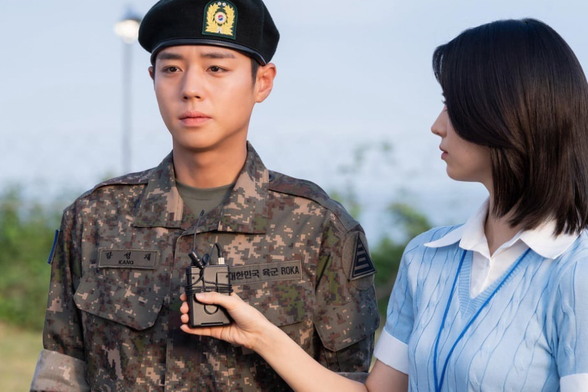
3 Times Park Ji Hoon Proved Himself In Episodes 7-8 Of "The Legend Of Kitchen Soldier" - KpopNewsHub – Latest K-Pop News, Idols & Korean Entertainment

With all the latest things that happened, Kang Sung Jae (Park Ji Hoon) has earned his stripes at the Gangrim Outpost. As the chef with the Midas touch who has

Kpop News Hub
"Doctor On The Edge" Ratings Rise For 2nd Episode As "The Legend Of Kitchen Soldier" Remains No. 1 - KpopNewsHub – Latest K-Pop News, Idols & Korean Entertainment

ENA’s new drama “Doctor on the Edge” is on the rise!

Kpop News Hub

Body Types of Medieval Soldiers

Medieval soldiers and warriors are, especially in fantasy, often stereotyped with having different physiques. Knights are seen as the hulking He-Man types wielding giant broadswords, while archers are slender weeds of men staying safe at range.

Reality was more often the opposite. Certainly, there were very varied body types in each profession, but some will have gravitated more towards certain types. Just as racing horses were slender while draft horses are stocky and large, so would professions relying on mechanical strength – such as archery – select towards people with large body while others would be more appropriate for individuals with more slender build.

Biomechanics

Basic reason for these differences are in fact biomechanics. Different actions require different types of biomechanical actions. For example, throwing a spear or wielding a two-handed weapon (spear or a longsword) is dependant more on speed than on strength. On the flip side, weapons such as longbow or club are dependant entirely on strength. And these characteristics require diametrically opposite biomechanical properties.

Speed is facilitated by having little mass away from the joint. Long thin muscle effects less force over a greater distance but more leverage, and leverage is further increased by having a long forearm. Power leverage is increased by shortening the forearm as well as the muscle itself. Decreasing the length of proximal as well as distal limb segment decreases speed and increases force. It is thus obvious why stocky individuals are seen as strong – that is because they are strong. A tall slender individual of the same weight will have approximately same total work capacity (due to similar muscle bulk) but the shape of muscles and skeletal leverages will prevent him from exerting as much force at any given moment.

Unarmed fighting can be roughly separated in two types: striking (punching and kicking) and wrestling. Striking relies on leverage to produce acceleration, and thus favors a more lanky body type. Striking or “ballistic” type of fighting places emphasis on mobility and agility to keep range, and avoidance of retaliation. Thus it favors combatants who are taller due to reach and potentially weaker than their opponents. Wrestling places a premium on momentary strength and thus places a premium on large muscle build combined with power leverages in skeleton, and would thus favor a stocky body type.

The first described hominid weapons were of a bludgeoning type, designed to crush part of a body – most typically the skull – rather than penetrating deeply into the body. Bludgeoning does not require any specialized application of energy – a slower moving strike with heavier weapon will produce as much damage as a quicker moving strike with a lighter weapon, so long as both remain within certain limits. Therefore, the total amount of energy embedded in the weapon and thus total amount of muscular work determine its effectiveness. As a consequence, the determining factor in body structure is aggressor’s total amount of bulk.

Sharp and projectile weapons however introduced selective factors other than total muscle bulk. Lethality of a thrown projectile depends mostly on its penetration, which depends on velocity. With thrown projectiles, velocity of the projectile depends entirely on speed leverages in user’s body. This leads to situation where linear body type is the most efficient type of weapon manipulation. As a result of this, more linear races would have advantage in survival: this is likely one of reasons why modern humans outcompeted the Neanderthals. Neanderthals, being built for strength, did not have speed and agility required for using spears.

Linearity of build continued to be optimal for survival until development of the spear thrower. Spear thrower served to artificially increase length of the limb and thus velocity of spear. Spear throwers were developed by populations whose laterality of build meant that they were not optimal for spear usage. As such, spear throwers never found its way to Africa, where very linear populations had no need for them.

Next major invention was bow, which in many ways was the opposite of spear. While velocity is desired in both spear and bow, mechanics of producing this velocity are diametrically opposite. With spear, velocity is produced through leverage. Bow, by contrast, imparts velocity onto arrow through elastic energy, and speed at which the bow is drawn makes no difference. The critical factor is the maximum pulling force which the arm can exert just before the arrow is released. The archer requires power leverage in the arm, which is favored by short limb segments as well as short and thick muscles. Bow most likely spread most quickly among peoples who were of short stature and relatively mesomorphic, and later selection would make these traits even more pronounced. Use of bow would favor the individuals whose laterality of build was well expressed in the shoulder and upper extremity. Indeed, the most famous bow users – Mongols – were invariably short, stocky and with wide shoulders. Meanwhile the extremely linear people of East Africa never adopted the bow, largely because they were physically unsuited to its usage.

Ectomorph’s adaptation to the bow is to increase its length – e.g. longbow. This allows the same potential energy to be stored over greater distance, but with considerable loss of efficiency as thickness of the bow and longer limbs create a greater moment of inertia. And to transfer greater proportion of stored energy to the arrow, mass of the arrow has to be increased.

General Principles

Slimmer people would rely on speed, mobility and quick closing actions to defeat their opponents. This includes harrassing cuts and trusts that allow them to stay at distance until a closing action presents itself. Tall and lean people will fight more aggressively, using their advantage in reach, mobility and endurance to wear down the opponent.

Tall, heavily built people work best on defense, waiting for the opponent’s attack before counter-cutting. They can use their reach in this manner, and also try and get to grips, using their weight to control opponent’s weapon. While they may attempt to fight aggressively, trying to overwhelm the opponent with sheer strength, this would not work well in actual battle as it would leave them quickly exhausted and vulnerable.

Short and heavily built people work also best on defense, and on the offense they work best if they manage to get to the grappling range and wrestle down the opponent.

Long and relatively light weapons are best for lankier people – this means spears and longswords, as well as two-handed weapons in general (polearms, including polehammers). Two-handed weapons rely on leverage far more than strength, which means that long limbs are an advantage. It is not impossible for slightly-built people to use one-handed weapons such as maces or axes, but this means sacrificing many of their advantages.

Heavily built as well as overweight people can have significant success with sword and shield – so long as the fight does not last long. They are in general better able to use one-handed weapons than slimmer people, as these weapons rely on strength – particularly forearm strength – instead of leverage. However, they more easily become winded should the fight drag out.

In general, however, knowledge, footwork and fitness are more important than body type for majority of hand-to-hand weapons.

Knights

Mother’s milk in fiction apparently consists of protein and steroids, and knights seen there more often than not approximate a mutant child of Arnold Schwarzenegger, Brian Shaw and King Kong. Yet when one actually looks at medieval depictions – illustrations and descriptions alike – it is incredibly difficult to find huge men capable of bench pressing horses. Knights as actually depicted are in fact very slender even when wearing armor.

Ideal knights in reality were closest to what would be considered an “ottermode” or twinkish build. Their diet and form of exercise was more conductive towards endurance, agility and functional strength than to building mass. And it is possible (to an extent) to train for increased strength without increasing mass, by improving muscle fiber activation rate. Bruce Lee for example was extremely strong despite not having much mass, and people can indeed be extremely strong while still looking skinny – like this guy.

Knights did do a lot of rigorous training – sword fighting, jousting, wrestling, swimming, running, gymnastics; and they did all of that both out of armor and in the armor. Jean le Maingre mentions rock climbing, climbing the underside of a ladder using just the arms and jumping onto the horse, all in full armor. While this is just one example, it can be assumed that most knights did follow something similar for their training. Knights would train, practice, exercise and even sleep with armor (when in combat zone). They will have in fact made a conscious effort not to be too bulky, as too much muscle will have slowed them down and made them tire out more easily. Instead, dense wiry build focusing on agility and endurance will have been ideal.

Secretum Secretorum describes an ideal physique as broad chest and back, well-built shoulders and long legs. This is basically what would be considered a swimmer’s build today: a well developed yet slender physique, likely well defined due to low body fat. Calves however were very well developed. Even the knights walked a lot, and when walking in pre-modern footwear, it is necessary to walk basically on the toes – which would develop the calves. And when swordfighting it is in any case necessary to center weight on the balls of the feet for better mobility, which again means that calf strength is required.

There are other descriptions supporting this. Literature in general distinguishes “noble” physique from that of the laborers, farm hands or blacksmiths. Peasants were expected to be burly, while knights were expected to be agile and graceful.

Account of Roman military by a late 14th century writer shows this thought:

As does the book of the courtier:

Johannes Lichtenauer, a prominent medieval figure in the German School of Swordsmanship, considered the ideal knight to be small and concord in stature, focusing on stamina instead of strength. A knight should rather be agile than strong, nimble than muscular, and have good muscular coordination skills rather than brute force. Most of all, he should be intelligent. Strong and well-built men were better put to use as archers; but more on archers later.

Illustrations in Talhoffer’s fectbuch show fighters to be very slim. Other manuals also support this, with slim but toned physiques being typical. Rather than bodybuilders, knights will have looked like distance cyclers (e.g. Lance Armstrong) or distance swimmers.

Other writers such as 12th century Andreas Capellanus distinguished between displeasing stocky bodies of peasants and beautiful bodies of nobles. Similarly, late 13th / early 14th century writer Ramon Llull said that anyone too fat was not fit to be a knight – and he was correct, as will be seen later. By the 14th century, both literature and men’s fashion reflected the idea of athletic, powerful yet slim, build. The titular verdant cavalier in Sir Gawain and the Green Knight is broad of chest and slender of waist, and Chaucer’s Sir Thopas with his “sydes smale” (slender waist) goes riding over hill and dale. Period clothing is likewise constructed to give the impression of a broad chest and shoulders and a tiny waist.

Physics also support knights not being huge. Typical knightly weapons do not in fact require much strength to use effectively. Lance needs enough strength to be held in face of impact, but this can also be solved through the usage of lance arrest, which would mean that a knight would merely need enough strength to direct it. Spear too is a weapon that relies on agility more than strength as is the sword – both would need to be used very quickly in order to get through gaps in armor. Even the stereotypical “strongman” weapons did not in fact require much strength to use. With weapons such as a polehammer or a pollaxe, leverage was more significant than strength. Single-handed warhammers did require more strength, but not that much either – warhammer would weight around 1 kg (2 lbs), and was a far more efficient weapon than a prehistoric club. For comparison, two-handed polehammer (Lucerne hammer) weighted no more than 5 kg (11 lbs), and typically less. Even mace does not really require much strength. Suit of armor weighted 18 to 25 kg but was worn all over the body.

In fact, having too much muscle can be a drawback when using certain weapons. Large chest can get in the way of some guards such as Ochs guard and other guards where wrists cross over. Large people generally do better with sword and shield combination which allows them to use their mass to their advantage – but by 14th century, shields were relatively rarely used. While Arnold’s Conan may be a cult classic, little known fact is that Arnold had to lose a lot of muscle mass in order to be able to play Conan effectively – and even so, he only just barely made it.

In addition, fights between armored opponents – or even unarmored opponents – were not won by person that was stronger. A polehammer, a spear or a sword do not require much force to kill – and polehammer does not require much force to penetrate armor either. Fight was won by the fighter who tired out first or by fighter who made a mistake first – which often was the fighter who tired out first. If victory is not achieved within the first minute, it will be achieved by whoever manages to tire out the opponent. And armor and weapons were worn entire day when in combat zone. Thus stamina and coordination were the most important things when fighting, followed by speed. Large mass – even if it was a muscle – means tiring out more quickly, and is thus a bad thing.

With endurance being the most important attribute of a knight, followed by agility, ideal body build would be one that would maximize these attributes. This means that ideal physique would be lean with no extra weight to carry on long marches, and enough muscle to do the job but not so much that it would slow the knight down or require too much calories.

Jousting itself requires all-around fitness similar to that of football (soccer) and tennis players. Modern jouster Roy Murray was found to have body fat percentage of 7,72%, with maximum oxygen consumption similar to that of a top tennis player, core stability better than a professional swimmer and alignment and balance comparable to leading acrobats.

And of course, armor also shows that knigts were in fact rather slender. Surviving examples of medieval plate armor – especially Gothic armor – have broad shoulders, extremely slim waist and slender legs, and are overall made for people of slender build. By and large, there is simply no space to squeeze in a bodybuilder without cutting chunks off him beforehand. Gothic plate armor could fit Bruce Lee or even a fashion model far better than it would somebody like Arnold Schwarzenegger. Even Goliath in medieval depictions is shown as tall but skinny.

First armor was made for Duke of Tyrol when he was in his late 40s or early 50s (around 1470). Second armor is mid-15th century German armor made of disparate pieces.

Both armors show narrow waist, thigh gap and overall slender build – characteristics quite opposed to roided up bodybuilders of fiction.

Being huge and strong was not a requirement for battle – squires accompanied knights to the battlefield despite still being teenagers (14 – 18/21). Biologically, even a strong and fit 14 – 17 years old would always lose in a physical contest to somebody aged 18 or above. Testosterone gives man more muscle and greater strength for his size, as well as superior speed, quickness, reflexes, muscle coordination, aggressiveness, and even eyesight. Yet even many knights were teenagers or young adults, whose stature is naturally more slight than that of older adults. Fact that Harold Godwinson, when visiting Normandy prior to the Hastings campaign was capable of wearing his armour and carrying another armoured man on his back, was considered exceptional – meaning it was above the typical expected strength.

Standard of strength was simply being able to lift himself up into the saddle in full armor and equipment (minus the lance). When Knights Templar had fasted significantly enough during the 12th century that they were said to be “incapable of lifting themselves to their saddles in their armour” and this was seen as a very troubling sign of how the trend of fasting was effecting the men. In terms of skillset, modern pentathlete would be the closest to what a knight needed to do.

They were however not pint-sized. Average male height in early Middle Ages was 173,4 cm (5’8”), and then declined, with a low of 167 cm (5’5” – 5’6”) in 17th – 18th centuries. For comparison, average male height today is 175,3 cm in England, 175,4 cm in Germany and 175,6 cm in France. Knights themselves would be slightly above the average as they had better diet than average person. Even so, average knight will likely have been around the size of an American Civil War Union soldier: 5’8” and 135 lbs. Possibly taller but not much heavier, as suits of armor seen in museums are oftentimes incorrectly “compressed”, making them look much shorter than actual people who had worn them were.

In short: an ideal knight was a warrior who had skill, agility, stamina and tenacity to last in a fight. Rather than The Mountain or Conan, ideal knight by medieval standards was in fact built much like Link from Legend of Zelda: well developed shoulders, tiny waist, long and slim legs. In modern terms, long distance swimmers likely have the build that is closest to that of an ideal knight.

Of course, above is only an idealized picture. It can be assumed that knights would tend towards it simply because those who were closer to the ideal would – on average – perform better in their duties as knights, but logic and history both show that ideal was not a hard and a fast rule. This too is shown by armor – there are indeed some pieces of armor made for men of thicker build, such as the following:

Thus while most knights might to a degree tend towards the ideal, there will still have been a wide array of body sizes and shapes. Knights could in fact range in build from members of a boy band to English rugby players.

But they will not have been fat. Aside from the combat performance (too much fat on the body can in fact negatively impact endurance), also important were knightly ideals and morals: a member of a knightly class was supposed to both be able to afford large amounts of food and also to exercise enough restraint to not eat it all himself. Instead, excess food will have been given to the poor – starting with knight’s own serfs (in case of landed knights).

Reason why fictional knights are often huge is because modern expectations are conditioned by myth (hundred pound swords wielded by ignorant brutes!), self-flattery (what we value in our athletes is what everybody always must have valued in their warriors) and denial (the fat American behind doesn’t represent the pinnacle of the human fighting physique?).

Pikemen

Byzantine as well as early modern manuals required pikemen to be primarily brave and stalwart. Physically, youth, size and strength were characteristics required of soldiers required to fight in a shield wall. Men picked for Byzantine heavy infantry were described by Emperor Nikephoros as “large in stature and no more than forty years of age”.

The biggest and strongest of them were chosen to serve as pikemen (menavlotoi) as they had the necessary strength and courage to handle their pikes – 3 to 4 meters long – against enemy cavalry charge. Physical strength was also important because, unlike what some historians may say, heavy cavalry could, would and did charge and physically impact into lines of steadfast infantry. In such conditions, infantry had to have weapons with reach longer than those of the cavalry, but also men strong enough to handle such weapons, keep them set as securely as possible, and also be able (as much as possible) to survive impact of a charging war horse should it get past the pike points.

In general, pikemen will have required decent upper body strength, as handling 18 ft long pikes – typically without lance rest that knights used and without help of a charging horse – cannot have been an easy affair. Pikes themselves are heavy, and effectively using them in combat without horse assisting required a lot of full body movement – one had to thrust, parry and even swing with the pike.

Pikemen were also supposed to engage each other. And while Earl of Manchester website states that push of the pike did not really happen, some historical illustrations – such as engraving by Hans Holbein the Younger, early 16th century, seen below – depict precisely such a situation.

If it did happen, then even contests between pike blocks may have required significant strength.

Archers

Archers are the opposite case of knights. Fantasy archers are often described as slender, even feminine – and oftentimes girls are given bows to use. And while hunting bows indeed do not require much strength to use, such bows are virtually useless in warfare.

In reality, war bows require a lot of strength to use, especially in the back. Unlike knights whose weapons depend mostly on agility, archery is nearly exclusively a feat of strength – especially so when shooting at an army as opposed to a singular target. Ideal physique for shooting a war bow is broad chest and short(ish) arms. While archers would not necessarily have huge arms, their back muscles will have been extremely developed. An average war longbow had a draw weight of 150 lbs. Some examples had draw weight of up to 180 lbs (82 kg), though these may have been used for training. For comparison, average draw of today’s recurve archer is 49,5 lbs for men and 40,7 lbs for women. Strongest bows used regularly today, those for hunting big game like elk and bears, are around 75 lbs draw weight.

(This, by the way, also means that holding the drawn bow as if it were a cocked rifle is bullshit: a drawn crossbow can be used that way, since string is held mechanically locked in place, but an archer cannot hold bow drawn for any significant length of time. Process is basically aim > draw > immediately release. Archers may be able to hold drawn string for up to 20 seconds or so, but not significantly longer, and doing so would in any case be unnecessarily tiring).

Of course, if archers are using crossbows instead of bows, then requirement for physical strength is significantly lessened. While crossbows can have much higher draw weights than bows, they are also drawn mechanically – be it by a goat’s leg or by a windlass – which significantly reducess the force required to draw it. As a result, unlike a bowman, a crossbowman has few physical limitations on using the crossbow – so long as he has two hands and two legs.

Light Infantry / Skirmishers / Javeliners

One type of troops where slender build would be the most advantageous are the javeliners, especially light javelin troops acting as skirmishers. Javelin, as noted, is best used by individuals of linear build.

Moreover, skirmishing troops are the type of troops which is generally expected to perform the most movement – particularly running – on the battlefield. Large amount of bodily mass would be a disadvantage in such a role, as it would be unnecessarily tiring – even a large amount of muscle. Instead, slim and very linear build would be preferred.

LINKS

https://www.youtube.com/watch?v=SDVzDHx6TZY

https://books.google.hr/books?id=Gx4uDwAAQBAJ&pg=PT627&lpg=PT627&dq=ectomorph+spear+throwing&source=bl&ots=8nqCjTVw3S&sig=ACfU3U13uERjtKH-ZYKLLDBi7mXlAplTag&hl=hr&sa=X&ved=2ahUKEwjq2bjo9MjiAhXpl4sKHRS4AisQ6AEwD3oECAcQAQ#v=onepage&q=ectomorph%20spear%20throwing&f=false

#archerBodyType #bodyBuild #bodyType #knight #knightBodyType #knights #medieval #medievalWeaponsAndBodyType #soldier #weaponsAndBodyType
Park Ji Hoon Must Feed His Unit With Barely Any Supplies In “The Legend Of Kitchen Soldier” - KpopNewsHub – Latest K-Pop News, Idols & Korean Entertainment

Park Ji Hoon will face an increasingly chaotic crisis in the upcoming episode of “The Legend of Kitchen Soldier.”

Kpop News Hub
"Doctor On The Edge" Premieres With Strong Ratings + "The Legend Of Kitchen Soldier" Rises To No. 1 - KpopNewsHub – Latest K-Pop News, Idols & Korean Entertainment

“Doctor on the Edge” has joined the Monday-Tuesday ratings race!

Kpop News Hub
Park Ji Hoon Must Work With Intimidating Kang Ha Kyung In “The Legend Of Kitchen Soldier” - KpopNewsHub – Latest K-Pop News, Idols & Korean Entertainment

tvN’s “The Legend Of Kitchen Soldier” has shared new stills ahead of its upcoming episode.

Kpop News Hub
3 Defining Moments In Episodes 5-6 Of "The Legend Of Kitchen Soldier" - KpopNewsHub – Latest K-Pop News, Idols & Korean Entertainment

At this point, Kang Sung Jae (Park Ji Hoon) has become the poster boy of Gangrim Outpost. His reputation as a chef, preparing meals that go beyond what is

Kpop News Hub