Odessa festival 1998: music as a means for emancipation – 2022: democracy Ukraine under attack

In 2014 the Ukrainians ousted their autocratic, Russian oriented president Viktor Yanukovych. Now their hard-won freedom is under attack from Vladimir Putin. In 1998 people I met at the festival Two Days & Two Nights of New Music in Odessa told me they believed hearing music from the West would ultimately be their path to democracy. Here is the article I wrote for the September issue 1998 of the British magazine The Wire.

Odessa, May 1998

For the fourth year in succession Odessa, city of the Potemkin Steps, was the scene of the festival Two Days and Two Nights of New Music this April. Crammed into a discotheque and sitting at tables, a massive crowd listened to the latest music from East and West.

An exuberant sun is shining when a group of some twenty musicians from all over Europe arrive at Odessa Airport. We are met by Karmella Tsepkolenko, artistic director of the festival, and members of the organizing Renaissance Foundation. This in turn is funded by the American Soros Foundation – there is no money for culture in Ukraine. Yet in a brochure the recently re-elected mayor Hurvitz brazenly claims all the credits for the festival.

GRAND BUT DILAPIDATED CONSERVATOIRE

Later that evening we are treated to an abundant meal, washed down with lots of vodka and champagne. The official reception takes place at the local conservatoire the next morning. The once grand, but now dilapidated building breathes a lively atmosphere. Here there will be masterclasses and workshops in the three days preceding the festival, so that the students have a chance to come into direct contact with musicians and composers from Europe and the former Soviet Union.

The workshops attract many students, yet are slightly disappointing. German composer Ernst-Helmuth Flammer gives a dense lecture on the measure in which Bruckner and Mahler point forward to new music. The interpreter monotonously recites the Russian translation, while the students take notes half-heartedly, or sneak out. French saxophonist Pierre-Stéphane Meugé arrives almost an hour late, and hasn’t prepared anything at all.

THE STATE THINKS FOR YOU

But when English trombone player Barrie Webb rolls up his sleeves to give a true old fashioned masterclass, only one student appears to have prepared something. After this, the workshop of Dutch pianist Kees Wieringa is a relief. He is working on a fiercely difficult repetitive piece by Simeon ten Holt, and the students crowd round the two pianos.

The Odessa Conservatoire (restored after 1998)

Yet also Wieringa acknowledges that only one student actually practised the score he sent them months in advance. Seemingly the students have an enormous craving for new music, but somehow it’s as if they expect that by merely listening intently, they will automatically master the techniques. The Russian composer Alexander Radvilovich explains: ‘People in the East have still not learnt to take responsibility. During the soviet regime the state thought for them. This not only explains their lax attitude, but also the fact that they don’t dare complain when somebody gives a shitty masterclass.’

NON-INTELLECTUAL

Friday afternoon, at 4 pm the festival bursts loose. The Ukrainian Marine Orchestra opens with Frederic Rzewski’s Coming together. Could it be more symbolic? The venue looks a bit like the Amsterdam Paradiso, but is about twice as big. The stage stretches out into the hall, and is surrounded by tables and chairs. It is packed with a very mixed crowd. Not the specialised, intellectualist audience we are so used to in western Europe, but a healthy mix of old and young, of people who are curious about new music. The girl who serves our breakfast in the morning is present, too.

The programme is very varied and carefully composed. It continually starts with a soloist, followed by a duo fighting a musical ‘duel’, after which larger ensembles play. The entire spectrum of 20th century composition is covered. We hear large and sudden intervals in the constructivist music of Elliott Carter’s Canon for three (saxophones).

Kazakhstan composer Rachid Kallimullin adopts a lyric-expressionist tone in his solo for viola A Sinner’s Monologue; Barrie Webb performs Giacinto Scelsi’s meditative Three pezzi; Martin Bresnick’s string quartet betrays Minimalist influences, while elements of pop music can be traced in the pulsating rhythms of Dutch composer Jacob ter Veldhuis and Siberian composer Roman Stolyar.

RELAXED AND INFORMAL

The atmosphere is relaxed and informal, and it is by no means an insult if you have a chat with your neighbour. The bar remains open during concerts, and the audience sits in the dark while the performers are lit by coloured spots. Smoking however is prohibited, and it is touching to see how the crowd squeeze in and out of the hall in the short intervals between performances, for a breath of fresh air or a smoke.

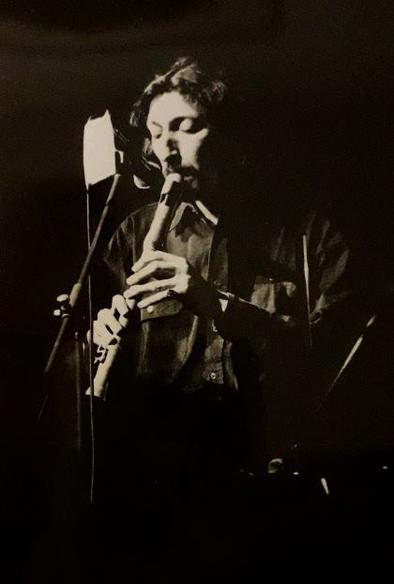
Roman Stolyar performing his own music

Narrative pieces, especially if presented theatrically, are cheered enthusiastically, while the more intellectual works only draw a meagre applause. In Odessa classical music has not yet been turned into a religion, so the people react straight from their hearts. Violist Paul Silverthorne assesses: ‘You have to go out and grab their attention. If you play without inspiration for one second, you lose them. This is very stimulating, for it makes you play far more intensely.’

Climax of the festival is the French saxophone quartet Xasax, who present refreshingly stirring music by composers such as François Rossé and Ernest H. Papier. In the latter’s Axe à quatre the foursome carry out their prescribed dance steps with such alacrity that the audience goes berserk and demand several encores. In their interpretation even Schoenberg swings.

HIGH ARTISTIC LEVEL

The artistic level of all the performers, from both East and West, is strikingly high. Unfortunately the music from the East, with twenty out of eighty compositions, is slightly underrepresented. This is a shame, for I wouldn’t like to have missed the splendidly nervous string quartet Consequences of Ukrainian composer Alexander Krasotov, nor the lively Sempre Ostinato of Rumanian Cornel Taranu in which a busily gesticulating clarinet is bedded in evocative rustling chords on the strings of a piano.

The same goes for the mysterious-dramatic octet Beyond the white boundary of Ukrainian Ludmilla Samodaieva. She, however says: ‘For us it is important the festival brings music from the West, so we can define our position. Anyway, the share of music from the East is already larger than in the previous editions.’ Integration takes time, after all, and this festival is doing the best it can. When Sunday morning at five o’clock the last note is sounded, the hall is still packed with people. They’ll have to survive for a whole year on what this festival presents in new music. An inconceivable thought for us, spoiled westerners.

NEW MUSIC PAVES THE WAY TO CHANGE

Asked what this festival means for the people in Odessa, critic Ute Kilter, who presents her own tv-programme on culture, states: ‘By being confronted with new music and musicians from the West, slowly but inevitably a new way of thinking will seep into people’s consciousness.’

‘We will gradually learn to be more aware of our own responsibilities towards life. This is of immense importance to bring about changes in our politically and socially totally corrupted and mafia-controlled country. Eventually we will therefore become a civilised nation.’

Through the contact with people from the East, we on the other hand, may find our way back to what music is about: emotion and vitality.

https://www.youtube.com/watch?v=xDeQVaoTvJM

In my programme An Ox on the Roof of Sunday 6 March 5 pm I will exclusively play music by Ukrainian composers. After airing the transmission remains available for listening online.

#AlexanderRadvilovich #KarmellaTsepkolenko #LudmillaSamodaieva #RomanStolyar #TwoDaysAndTwoNightsOfNewMusic #UteKilter

Russian composer Roman Stolyar writes B-ut-c-h-a: ‘I can’t remain silent on the war against Ukraine’

Shocked on learning how Russian soldiers had ruthlessly killed innocent civilians in the Ukrainian city of Bucha in March 2022, Roman Stolyar composed B-ut-c-h-a for piano and strings. Though he offered the score as a free download, the piece has not yet been performed. – Interview with a musician who dares speak out against Putin’s war on Ukraine in the face of severe oppression and the threat of hefty fines or even imprisonment. 

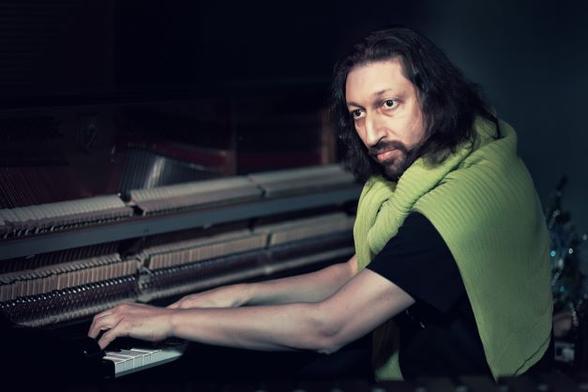
Roman Stolyar (c) Oleg Obukhov

I met the Siberian composer and improvising musician Roman Stolyar (Novosibirsk, 1967) at the festival Two Days and Two Nights of New Music in Odessa in 1998. Musicians from former Soviet countries shared their hope that cultural exchange with the West would help pave their way to freedom and democracy. However, the ethnic wars in former Yugoslavia kept raging on, and ever since Vladimir Putin came to power in 1999, he has been tightening his grip on what he considers to be Russia’s righful territories.

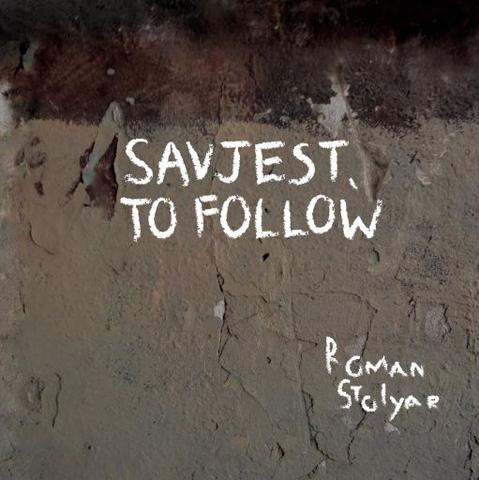
Still it came as a shock when the Russian Army invaded Ukraine on 24 February 2022. Like many artists and musicians, Stolyar at once decided to follow his conscience and go out on the streets to condemn the war. Poignant coincidence: on 1 March, barely a week after the invasion, the release of his latest CD Savjest, To Follow was scheduled. It contains four improvisations inspired by the Yugoslav wars; ‘savjest’ is Serbian for ‘conscience’.

What made you decide to dedicate a CD to the wars in former Yugoslavia?

In July 2021, I spent ten days in the city of Zenica in Bosnia and Herzegovina, participating in the theatre workshop series A Beloved Enemy. It was my first visit to Bosnia, a country I knew very little about. But the more I talked to the locals, the greater my shock. It was beyond my conception how profoundly and tragically the bloody war of thirty years ago was still dividing people. I asked myself: where was I when this tragedy unfolded? How come I had no idea that these terrible things could take place?

It is one thing to read about past and current wars in the newspapers, but it’s something else entirely when you talk to people who lived through them. A few months after my return to Saint Petersburg, I suddenly felt a strong impulse to talk about the Bosnian tragedy through music. This was during an improvisation concert: the moment I hit the piano keyboard I knew that what I was going to play would reflect on the Bosnian war. Later the recording of this performance became the first track of the album.

However, I felt that releasing a CD doesn’t suffice to tell people about that ‘unknown’ tragedy. Fortunately I had met Maja Zećo in Zenica, a talented Bosnian actress who had sought refuge in Austria during the war, and is now living in Berlin. Together with Ina Arnautalić, another Bosnian refugee, she had initiated the play Was haben wir gelacht (How we laughed), about how humour had helped them endure the hardships of war. I saw the production in Berlin.

It’s a true masterpiece, touching and profound. I was so impressed that I asked Maja to team up together, and we are currently working on a project called Libera Me. It will be an immersive performance, combining live sound and acting with sound mixes based on interviews with witnesses of the Bosnian war. Initially, we wanted to focus on the consequences of the war in Bosnia and its impact on human relationships – but then Putin invaded the Ukraine.

We saw so many similarities that we decided to incorporate both disasters in our show. Thus we want to bring across how damaging wars are to human relationships, and how difficult, painful but necessary it is to to liberate ourselves from old fears, hatred and mistrust caused by a tragic past. Libera Me is still a work in progress, but I wrote an essay about it for the Russian Opposition Arts Review magazine.

Why did you add ‘To Follow’ after ‘savjest’ in the title of your CD?

I decided to use the Bosnian word ‘savjest’ (conscience) right after I decided to record a solo piano album adressing my experiences in Bosnia and Herzegovina. Then I recalled the title of a wonderful album by the Canadian jazz legend Paul Bley, Open, To Love. My title is both a tribute to Bley, who has always inspired me, and a call to follow one’s conscience regardless of circumstances. – As I did in the improvisations on this album.

What does the project A Beloved Enemy entail?

This workshop series is organized by representatives of several theatres of former Yugoslavia. I found it very stimulating to take part in one of them. Twenty artists from nine countries (mainly actors and performers, I was the only musician) performed theatre plays, prepared shows in small teams and interviewed local people on the street. Although for some this might be just another international event, for me it was very meaningful; it worked many changes in me. Which, to be honest, were rather more painful than joyful. But sometimes you have to experience pain to achieve something new.

Shortly before the release of the CD Putin invaded Ukraine. Had you or anyone in your surroundings seen this coming?

I remember this day acutely. I was in Tallinn, working on sounds for a new theatre play directed by Boris Pavlovich. This examines human behaviour in Stalin’s concentration camps. When, in the early morning of 24 February, I read about Putin’s invasion of Ukraine, I felt an enormous pain in my heart. – Like many Russians, I had not expected this could happen.

Roman Stolyar at the festival in Odessa 1998 (c) Thea Derks

At once some questions arose that still haunt me: ‘How will we, Ukrainians and Russians, live after this bloody war? What kind of relationships will we have? Are they ruined forever, or will we at least have a small chance of restoring them? I think these thoughts wouldn’t have crossed my mind before my Bosnian experience.

Roman Stolyar composes B-ut-c-h-a: ‘How will we, Ukrainians and Russians, live after this bloody war? Are our relationships ruined forever, or will we have a chance of restoring them?’

Only hours after the attack I received messages from Bosnian friends – three in a row – with deep and warm words of support. They know exactly what war is, and responded immediately.

Around noon I joined a group of demonstrators in front of the Russian Embassy in Tallinn, where many Ukrainians, Estonians and Russians had assembled. I soon understood I could not remain silent, so I took the megaphone and said: ‘I am Russian, and I am against the war. Please remember that the Ukrainians are not our enemies, it is our bloody dictator who started this massacre, not the Russian nation.’

I also asked the crowd not to listen to politicians who try to divide us: ‘We must overcome the hatred they sow among us, for the sake of the future!’ I am not sure if my words were actually heard, but I still hold the same opinion: even in this tragic present, we must think of our future world and of peace in the future. This has been on my mind forever since 24 February.

How come so many Russians seem to support this war?

Many are brainwashed by Russian propaganda, and consider all this evidence to be ‘fake’. Even when their Ukrainian relatives show them live, via their smartphones, how their homes, schools and hospitals are being bombed, they still believe these are being destroyed by ‘Ukrainian Nazis’. I have little understanding for people who don’t seek independent info about what’s happening.

Fortunately the vast majority of my friends are against the war, and many are protesting openly. Some of them have been arrested or beaten up by the police, others have left the country because it would be dangerous to stay in Russia. Tragically, however, they sometimes face hostile treatment from Europeans, simply because of their Russian passports: despite their anti-war activities, they are called ‘aggressors’ and ‘occupiers’.

In an email you wrote that ‘St. Petersburg is going wild’. In what sense?

According to recent research, most anti-war protests in Russia are taking place in Saint Petersburg. And the police here are the cruellest in our country – we’ve learned that from previous protests organized by the opposition. Now we no longer have any solid opposition, because many of its leaders are in prison. There are fewer and fewer protests, for it’s extremely dangerous.

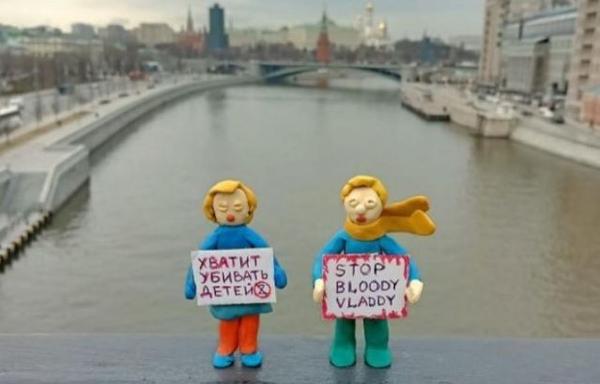
People are detained just for wearing yellow and blue, for showing signs like ‘Stop the War!’ or ‘Thou shalt not kill’, or for posting anti-war slogans on social networks. You can even be fined for standing near a single protester, which is considered ‘silent support of discrediting the Russian army’.

Nevertheless, people are still protesting, and in trying to stay safe they find new ways. Anti-war slogans are being written on walls and bridges, and little mannikins carrying anti-war slogans are popping up in secluded nooks and crannies of Saint Petersburg. 

You composed B-ut-c-h-a to commemorate the victims of Bucha. How did you get to know about these war crimes?

Facebook, Twitter and Instagram are officially blocked in Russia, but many people use VPNs to read and post on these social media. Besides, there are alternative YouTube channels, many of them initiated by Russian journalists who are risking a lot to keep us informed about what’s happening in Ukraine. So we are not fully isolated from news: those who really want to know have ample opportunities to find unbiassed information.

Why did you choose the combination piano/string orchestra for B-ut-c-h-a?

To be honest, there’s no clear answer to this. Usually the idea of a composition suggests itself without any explanations. Perhaps B-ut-c-h-a is written for string orchestra because I’ve composed many pieces for strings, and the piano may have appeared because I’m a pianist. However, there is one rational element in this piece: the basic sequence consists of the notes si bemol – do – do – si – la. In German music notation this forms the motif B – C – C – H – A. And since in early music do/C was called ut, this translates to B-ut-c-h-a.

This sequence is repeated over and over again, like an idée fixe. Gradually it becomes an inexorable earworm: you can’t get it out of your system, you hear it day and night. This may be tragic and painful, for you can’t avoid it, can’t hide from it, can’t just close your eyes and pretend nothing is happening. You have to live with this knowledge, this pain, this tragedy.

You placed B-ut-c-h-a on Instagram, sharing the score for free. Don’t you fear this may have serious repercussions?

Part of myself is obviously scared, but another part feels absolutely certain I must to do what I consider necessary – if I were to stop, I’d lose my self-respect. I openly tell my Russian colleagues and friends what I think about this war, though in Russia it’s even forbidden now to use this word: we must call it a ‘special military operation’.

Also, on Facebook and Instagram I tell my international colleagues and friends about the anti-war protests in Russia, for I think this is important. Sadly, there is a certain tendency in the West to demonize Russian people, to accuse us of not having done enough to prevent the war, to stop Putin.

But these Westerners have the privilege of living in democratic societies, and just don’t understand that democratic institution are not functioning here. Putin doesn’t listen to the people and ignores their opinions, he doesn’t care about what his subjects think. We are protesting not because we believe we can change anything, but simply because we can’t accept what is happening in this country.

What was the general response to B-ut-c-h-a?

I sent the score to two orchestras – one in Saint Petersburg and one in Moscow. The first wrote the familiar polite dismissal note: ‘Thank you, we’ll take a look at the score and let you know.’ The other wrote something like: ‘We’ll try to perform it next season, but actually it will only be truly possible when the dictatorship ends.’ Perhaps I must be more persistent and ask more orchestras to perform this music. 

How do you feel about colleagues not speaking out?

In most cases I understand them, though it’s sometimes hard to accept – but they have families, each has their own circumstances and reasons for keeping silent. What I can’t stand though, is when people (including artists) support the war in word and deed. The more so when they do this in order to get more money or better jobs.

This attitude offends my conscience. I was shocked by a recent interview with an anonymous reporter from an official Russian TV channel. She said almost all journalists employed there know they are spreading lies, and yet stay on because it earns them a huge income. This is truly disgusting.

What do you hope to achieve with B-ut-c-h-a?

Seriously, I never wanted to achieve anything with my music. I am what I am, I share with an audience what I think and feel, and then it’s their choice to follow my thoughts and feelings or to reject them. I believe that music can influence people’s attitude to reality, and I’d be happy if at least one listener would be inspired by what I share.

https://youtu.be/kWFdBW43P2g

#BUtCHA #Bucha #RomanStolyar #SavjestToFollow #TwoDaysAndTwoNightsOfNewMusic