CM Saka will continue to chair Transportation Committee, Rinck joins as Vice-Chair

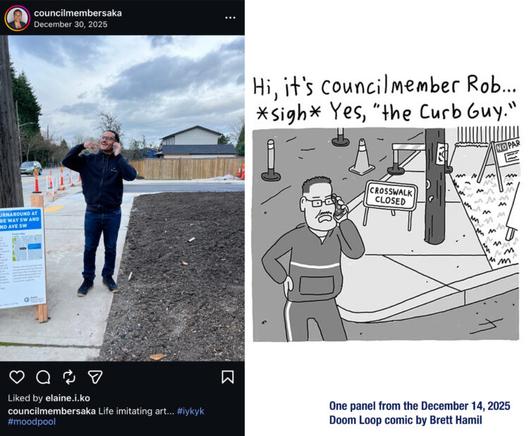
From Councilmember Rob Saka via Instagram and Doom Loop: Turnaround by Brett Hamil via the South Seattle Emerald.

With the elections of Eddie Lin and Dionne Foster as well as the reelection of Alexis Mercedes Rinck, the new Seattle City Council is taking shape. Amid all the other committee leadership changes, Councilmember Rob Saka will remain Chair of the Transportation Committee while Councilmember Rinck will join as Vice-Chair and Dionne Foster, Bob Kettle and Eddie Lin as members. Starting January 15, they will meet the first and third Thursdays of each month at 9:30 a.m. in Council Chambers.

Because Foster sent former Council President Sara Nelson packing with a landslide 62-37 win, the Council had to elect a new President. With new Seattle Mayor Katie Wilson sitting in the Council Chambers audience like a regular Seattle resident, the Council voted unanimously to select Joy Hollingsworth for a two-year term.

Here’s a tip to any of you who are new to following local city government: The committee meetings are typically much more interesting and enlightening than the full Council meetings. Except for the most controversial votes, full Council meetings contain a lot of boring grandstanding and backpatting while the actual decisions have mostly been made previously in committees and are merely formalized during full Council meetings. With rare exceptions, Council actions that get a full committee recommendation are almost certain to pass the Council without further significant changes. Committee meetings are also where the really interesting agency briefings happen, proving a chance to hear from SDOT staff, for example, as they explain the rationale behind agency decisions and field questions from committee members.

Not only will some of the committee members change, but many of the names and governing responsibilities of the committees will also change. The groupings don’t even always make sense. For example, the Transportation Committee will now be grouped into the Transportation, Waterfront and Seattle Center Committee. Under the previous chair Alex Pedersen, it was the Transportation and Utilities Committee. Under Mike O’Brien it was the Sustainability and Transportation Committee. It’s a little odd that Parks and Seattle Center will be in different committees since I usually think of them being linked together, but committee assignments are based, I assume, on a secret ritual probably involving robes and chanting and psilocybin, and we all just need to trust in this process. The mushrooms always reveal what’s best.

Here are the committee assignments for 2026–27:

  • Finance, Native Communities, and Tribal Governments – Chair Strauss, Vice-Chair Rivera
  • Housing, Arts, and Civil Rights – Chair Foster, Vice-Chair Lin
  • Human Services, Labor, and Economic Development – Chair Rinck, Vice-Chair Foster
  • Land Use and Sustainability – Chair Lin, Vice-Chair Strauss
  • Libraries, Education, and Neighborhoods – Chair Rivera, Vice-Chair Hollingsworth
  • Parks and City Light – Chair Juarez, Vice-Chair Kettle
  • Governance and Utilities – Chair Hollingsworth, Vice-Chair Juarez
  • Public Safety – Chair Kettle, Vice-Chair Saka
  • Transportation, Waterfront, and Seattle Center – Chair Saka, Vice-Chair Rinck

#SEAbikes #Seattle

Council votes to keep ignoring Seattle’s housing crisis

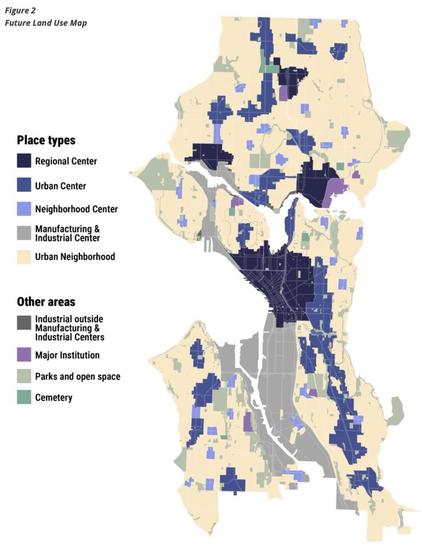
The City Council majority looked at this map from Mayor Bruce Harrell’s proposal and decided that it needed even more yellow, especially in the wealthier and whiter areas.

Well, we knew this was probably going to happen back in November 2023 when Seattle elected a slate of more conservative candidates for City Council. Even though as candidates most said (video 1 and 2) they supported the comprehensive plan options that would have allowed a lot of new housing, they showed their true colors this week by removing even more areas from the mayor’s already scaled-back growth plan. The result is that the mayor and council have decided to continue enforcing the exact same causes of our current housing crisis. Most growth will still be centered in large apartment buildings with lots of expensive car parking along our busiest roadways and in areas with high risks of displacement to communities of color all so that wealthier and often whiter areas can be spared the horror of having some more neighbors.

Only Councilmember Alexis Mercedes Rinck stood up for allowing more homes in more places and for making it more affordable to build them. She was the lone vote to add eight neighborhood centers to plan, most of which the mayor cut before sending his proposal to Council. She was also the lone vote for removing parking minimums from new housing, which would have dramatically reduced the cost of new housing and supported the city’s stated goals of promoting more walking, biking and transit over car use. And she was on the losing side of a depressing number of votes that reduced housing. Her effort to make it legal again to open corner stores and other businesses in residential areas allow bars and expanded hours for residential businesses also failed (UPDATE: I initially said a measure to allow corner stores failed, but it passed at part of the consent agenda. The amendment that failed would have expanded the allowed types and hours of those businesses).

Councilmembers Bob Kettle, Maritza Rivera and Rob Saka formed a consistent voting block against pretty much all measures that would allow more housing and in favor of measures that would remove areas from the growth plan or add costs and red tape to discourage the building of new housing (if you don’t want to watch the videos yourself, Erica C. Barnett and the Urbanist did their best to cover the votes in real time on Bluesky). Councilmembers Dan Strauss, Debora Juarez and Joy Hollingsworth tried to play it wishy-washy, but by not uniting they gave the consistent block of three NIMBYs the default win on a lot of votes. Sorry, folks, this was the moment to stand up and fight to solve our city’s housing crisis, so you get no points for abstaining or remaining on the fence.

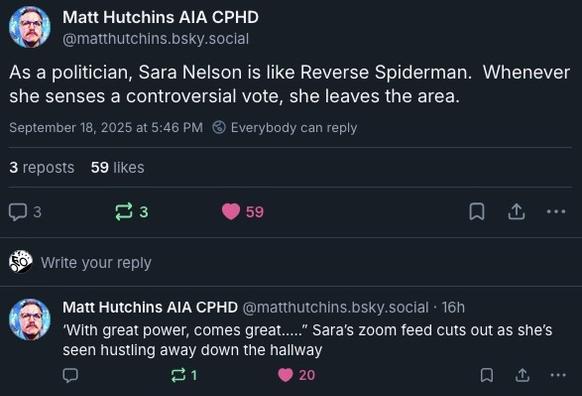
Speaking of abstaining, Council President Sara Nelson made the baffling decision to abstain from a huge number of votes, and she even signed off at one point so that she would miss a particularly controversial vote to add more red tape and restrictions to housing projects under the guise of protecting trees (nobody noticed until they called the roll call vote and she didn’t respond). It passed by one vote. She said she was abstaining so much because she did not feel “well informed” on the issues. Some might argue that learning about these issues is literally her job, but the voters can decide in November to relieve her of this heavy burden since she is incapable of carrying it. Her departure did lead to this wonderful post:

Sara Nelson flees from the job she is campaigning to keep. Via Bluesky.

Perhaps this was part of the carefully calculated political strategy Nelson’s team of brilliant consultants cooked up for her. Voters can’t blame her for the housing crisis if she leaves the room during the votes!

But at least Nelson was in attendance for some of the meeting. Appointed District 2 Councilmember Mark Solomon, Vice-Chair of the Select Committee on the Comprehensive Plan, was absent and missed all the votes and discussions. Given how many of these measures were decided by a single vote, this was easily the most important day in Councilmember Solomon’s appointed time. I asked his office about why he was absent, and his Chief of Staff Sarah Mayes replied that he was in Vancouver, Washington, for a previously scheduled Crime Prevention and Community Engagement Conference and that the rest of the Council was aware of this conflict. “CM Solomon was attending in his capacity as President of the Washington State Crime Prevention Association (which organizes and leads the conference),” Mayes wrote in an email:

“In early August, we alerted Chair Joy Hollingsworth to the scheduling conflict as soon as we were aware of it. In addition to being excusing him from the meeting, Chair Hollingsworth worked closely with Solomon and his staff to make sure that the “Chair’s Package” of amendments reflected District 2 priorities. We’re grateful for the Chair’s cooperation, and for the hard work of Council colleagues throughout the week. Councilmember Solomon is back in the office today, and he’ll be joining his colleagues for the final committee votes on the Comp Plan.”

There is still more comprehensive plan voting to go, but Thursday was the big test for whether our City Council was going to make an effort to get our housing crisis under control. They instead mostly chose to do what they could to make it even worse. The only silver lining is that they will be forced by state law to allow more types of housing in all residential areas because it is clear they would also have rejected those changes if they could. UPDATE: Aidan T on Bluesky pushed back on this, saying that the Council went beyond what was mandated by the state on missing middle housing.

I thought that perhaps the resounding vote results from the social housing initiative or the primary election would have shaken some of the sitting councilmembers awake. The public has made it clear consistently that housing affordability is a top concern and that we expect action from city leaders, yet most councilmembers chose to defy them. I don’t see how anyone other than Councilmember Rinck will be able to shake this week’s acts of Council cowardice. Everyone else is complicit and on the record now against making housing more affordable and plentiful in our city. Councilmember Nelson seems likely to lose in November (support Dionne Foster for City Council!) and Councilmember Solomon is not running to keep the District 2 seat he was appointed to. Debora Juarez was also appointed, but her District 5 seat is not up for a vote until next year. Everyone else is up for a vote in 2027. I don’t know how they make this up to the city, but they better have some good ideas. Otherwise the ongoing housing crisis, a top issue among Seattle voters, will fall squarely on them. Maybe they’ve all decided they don’t want to run again?

In the meantime, we will not stop fighting for a Seattle that is welcoming and has a place for everyone.

#SEAbikes #Seattle

@JasonW Sent. Totally ashamed of “our” (because I certainly didn’t vote for him) D1 council member. What a joke. #Seattle #SeattlePolitics #SeattleCityCouncil #RobSaka

Instead of telling ICE to stop hiding their identity, Seattle city council is working on fining graffiti artists.

#Seattle #SeattlePol #RobSaka #BobKettle #CityCouncil #ICE

So my Seattle city council member is going on a costly personal vendetta against a traffic calming design that offends him on his commute to drop off his kids at school.

#Seattle #RobSaka

Seattle prepares to pass budget with huge increases for safe streets + What CM Saka should do about Delridge

From an SDOT presentation to the City Council’s Special Budget Committee (PDF).

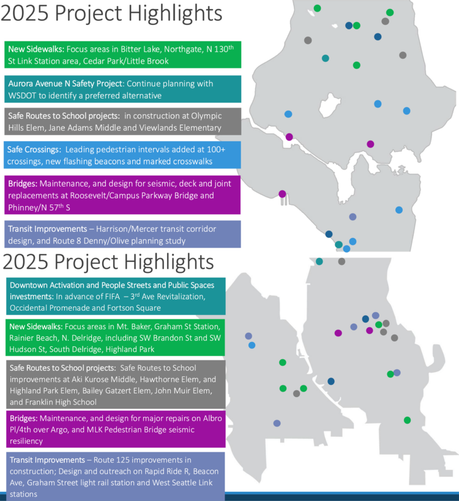
Thanks to Seattle voters, in 2025 the city is poised to invest $21 million in new sidewalks, $4.2 million in sidewalk repairs, $8.6 million in Vision Zero, $1.6 million in Safe Routes to School, $9.8 million in new protected bike lanes, and $1 million to upgrade existing bike lane barriers. To deliver all this, they are also going on a hiring spree, so if you know anything about building sidewalks you should keep an eye out for job listings.

The sidewalks funding line is particularly eye-catching and is the result of a decision to front-load sidewalk construction early in the first four years of the levy. Not only will this result in more sidewalks sooner, it should also help prevent sidewalks from getting cut in future years if some unforeseen issue arises that leads to cuts in the levy spending plan.

SDOT could get an even faster start if the Council dropped their proposed proviso on about half the levy funds for 2025 ($89 million), which would prevent the department from accessing those funds until they have presented a spending plan that the council approves. The council could instead request a spending plan by a certain date without holding up the funds, and they can always take action at that point if they want to change something. SDOT has a huge amount of work to complete in just eight years, including the time-consuming process of finding, hiring and onboarding new staff. Getting a slow start on Move Seattle projects was a huge problem for the previous levy, and a mistake the city should not repeat. The Council should not get in their way unnecessarily.

Seattle Neighborhood Greenways has put out an action alert urging folks to contact Councilmembers with a set of asks outlined at the bottom of this post. You can find documents regarding the Council’s budget amendments via the 2025-26 budget’s Legistar page. Many are within the “proposed consent amendment package,” though the final outstanding changes are in the “amendments for individual vote.” You may also need to reference Mayor Bruce Harrell’s proposed budget, which is found on a completely different website. The Council is debating amendments this week and will make their final votes on Tuesday and Thursday next week.

As part of the consent package, City Council has proposed creating a new $7 million per year Council District Fund within the SDOT budget for “neighborhood-scale traffic safety improvements and other district transportation priorities at the direction of the City Council.” In other words, a council slush fund. This would be a rare diversion from the usual way council and mayoral duties are divided in Seattle since Council rarely ever “directs” a department. Usually, the council is limited to providing (or placing conditions on) funding and setting official policy, but the actions of the departments nearly always go through the mayor.

I know “slush funds” have a bad rep, but I’m very interested to see how this new fund works in practice. It could be nice for Councilmembers to actually be able to respond more quickly to reasonable smallish requests from constituents. It’s frustrating for everyone when, say, a group of neighbors ask for a stop sign only to run into a dead end trying to get it onto SDOT’s workplan. But I’m sure the quality of return the public gets from these investments will vary greatly depending on the Councilmember directing the funds. I am also very interested to see what happens if a councilmember directs a project that the mayor opposes. Whose “direction” will win?

There are a handful of items that are still up for debate. We reported yesterday about the Council’s proposed actions to come up with a plan to shut down the South Lake Union Streetcar and remove the Center City Streetcar from the capital improvements list, so I won’t go into that again here.

Councilmember Sara Nelson has proposed a pointless and frankly obnoxious amendment that would “Request that SDOT provide a report on the performance measures and evaluation criteria used for consideration of bus-only lanes.” Specifically, she wants the report to detail how SDOT evaluates things like the “impact on general traffic capacity and congestion” and “any measures SDOT may take to mitigate potential underperformance.” Nelson and the rest of the City Council just passed a massive policy document called the Seattle Transportation Plan, and it includes meticulous explanations for how and why the city will make various transportation improvements including bus-only lanes. Here’s the transit section (PDF), which has a whole section starting on page T-62 about “defining success” that lists all the ways SDOT will measure outcomes from transit investments. Nelson either doesn’t understand what she voted for when approving the Seattle Transportation Plan or she is trying to undermine it. For example, the city very intentionally shifted to metrics that “prioritize person-throughput rather than vehicle throughput,” (page T-66) not metrics that prioritize the “impact on general traffic capacity.” Council should vote no on this one.

The transportation amendment that has gotten the most attention (other than the streetcar) is probably Councilmember Saka’s $2 million project in the consent package to allow left turns into the Refugee and Immigrant Family Center Bilingual Preschool. This is the site of the Delridge Way SW centerline curb that Saka infamously compared to the Trump border wall in an email years before he ran for City Council, as reported by Publicola. We addressed this location and those emails with Councilmember Saka in an introductory interview at the start of the year when he was named Chair of the Transportation Committee. That little curb, which prevents left turns into and out of the preschool his kids attended, was one frustration that helped set him down the path to running for office. The inflammatory border wall comment is hanging over the conversation about this amendment, but that annoying curb is one symptom of larger and genuinely frustrating issues with the Delridge design.

If I were to advise Councilmember Saka on this, I would suggest clearing the air about the border wall comparison. Mea culpa. Then expand the scope of this amendment to address issues at the core of the Delridge design problem so that the benefits expand across the neighborhood rather than just this one preschool, which feels a bit too specific for a public investment of this scale. Folks at the preschool were not the only ones who were ignored during the creation of this Durkan-era planning monstrosity. Many of the oddities on the street design (like the center buffer areas that look like turn lanes but aren’t or the fact that there’s only one bike lane on a two-way street) are because the street has three lanes southbound (one general, one bus and one bike) and one lane northbound, which is pure nonsense. Traffic is not heaver in one direction than the other, so why on earth would the road be designed this way? It’s as though the street thinks people head south and never come back. This is the actual source of Councilmember Saka’s issue. That center line curb is only needed because people would have to turn across multiple lanes plus the bike lane, a scenario we know to be potentially dangerous. The curb itself is not the problem, it’s a symptom of the street design’s illness. With a left turn pocket instead of a second southbound lane, people would only need to turn across one lane plus the bike lane, which is easier to do safely. All the unmarked crosswalks along Delridge would also become much safer with only one lane in each direction, another benefit. The primary tradeoff would be that southbound buses would need to use in-lane stops the way northbound buses already do, and SDOT staff would need to check that this would not negatively impact transit service. It would also be amazing if this project could add the missing northbound bike lane to the street because it makes no sense to have a protected bike lane in only one direction. I’d go as far as to say the Delridge street design is downright embarrassing to the city and the RapidRide name.

Below is the text of the amendment as currently written. Hopefully Councilmember Saka will do a rewrite before final passage:

This Council Budget Action (CBA) would impose a proviso on $2 million of appropriations in the Seattle Department of Transportation’s (SDOT’s) budget to make improvements to Delridge Way SW near the SW Holly St right-of-way to allow for left-turn ingress and egress from adjoining properties, including the Refugee and Immigrant Family Center Bilingual Preschool. These improvements would resolve access conflicts with the operation of the Delridge RapidRide service. It is the Council’s expectation that SDOT shall deliver these improvements, and that SDOT will begin project development and implementation no later than August 1, 2025.

One small note is that the revised budget reverses about $8 million over two years that the mayor’s initial levy-free budget had planned to add for “protected bike lanes and transit corridor improvements,” largely work that had been delayed past the end of the Move Seattle Levy. The plan from the start was to instead use Seattle Transportation Levy funds for these projects if voters approved it, which they did. When I initially saw the reduction in bike lane spending, I was concerned. But after a lot of budget diving and searching (can Seattle please make this process easier to follow?), I finally figured out that the “cuts” were from the mayor’s proposed budget, which had to be written assuming the levy would fail. The mayor’s office had cobbled together funds to finish projects that went past the Move Seattle Levy end point so that even if voters did not approve the levy, those projects could still be completed. Once the levy passed, those cobbled together funds were removed as planned. So really this change is not a problem, but I am leaving this paragraph here just in case someone else discovers those apparent “cuts” and has the same concern I did.

Seattle Neighborhood Greenways sent out an action alert calling for the following budget changes:

  • No cuts to Accessibility. There is a massive backlog to make our streets accessible for everyone. Funding from the newly passed transportation levy will make large investments in accessibility, but unfortunately the City Council is proposing to cut some of existing ADA funding in the mayor’s proposed budget. The levy is meant to be additive, not a replacement for existing funds. 
  • Don’t undo valuable safety projects. An amendment proposed by Councilmember Saka would spend $2M of taxpayers’ dollars to remove a safety barrier that prevents an illegal left turn into a parking lot on Delridge Way SW. Traffic safety barriers prevent the hitting and killing of pedestrians.
  • Do not hold Levy funding hostage. Council already approved this levy proposal in July before sending the package to voters. But now they’re proposing a proviso on half the levy, or $89M. This would delay SDOT hiring new staff and hinder their ability to advance projects quickly in 2025, and holds hostage funding that voters just approved by a landslide.
  • Automated camera revenue needs to go back into traffic safety. The 2025 budget includes an expansion of automated school zone speed cameras while diverting revenue from automated enforcement away from physical street improvements that keep kids safe on their way to school. Any automated enforcement cameras should be a temporary solution, and all revenue should go towards physical street improvements.
  • We also stand in support of the Solidarity Budget Coalition’s push against austerity budgeting. We need to shift funding from criminalization to invest in community needs and pass new progressive revenue to adequately fund our city’s needs. See here for more details.
  • #SEAbikes #Seattle

    Seattle prepares to pass budget with huge increases for safe streets + What CM Saka should do about Delridge – Seattle Bike Blog

    From an SDOT presentation to the City Council's Special Budget Committee (PDF). Thanks to Seattle voters, in 2025 the city is poised to invest $21 million in new sidewalks, $4.2 million in sidewalk repairs, $8.6 million in Vision Zero, $1.6 million in Safe Routes to School, $9.8 million in new protected bike lanes, and $1…

    CM Saka budget proposal would create plan to end service on SLU Streetcar

    Seattle’s official 20-year plan for transit, which the City Council approved in the spring, shows streetcar connections to the South Lake Union line as well as along 1st Ave to Lower Queen Anne and SoDo. There are no other streetcar additions in the plan, and even the Broadway extension is no longer included.

    The future has become even bleaker for the low-ridership South Lake Union (“SLU”) Streetcar line as Transportation Committee Chair Rob Saka has proposed funding a plan for how to wind down and end service on the line. The budget changes would no actually end service, but they set the stage to do so as early as next year’s budget. The action could set up the city to finally make a decision about the streetcar once and for all.

    As Seattle Bike Blog argued in August, Seattle decided in 2015 to make the SLU streetcar a dead end when SDOT chose RapidRide bus service on the Fairview/Eastlake/Roosevelt corridor rather than a streetcar extension. The streetcar line’s operating budget sits at $4.4 million per year to serve about 500 weekday trips on average. Ridership peaked in 2017 before SDOT added transit-only lanes to Westlake Ave to coincide with expanded King County Metro bus service along much of the streetcar’s route. In my previous post, several SLU transit riders said they just hop on whatever comes first, a bus or the streetcar. The under-construction RapidRide J line will further improve bus transit service in the SLU neighborhood when it begins operations as early as 2027. So even those 500 daily riders would likely not be stranded without the streetcar. Metro just deleted the Route 20 bus with little fanfare, for example, and that deletion (as well as other bus route changes and deletions) had a bigger negative impact on access to transit than closing the SLU Streetcar would.

    Additionally, construction for the South Lake Union light rail station is expected to shut down SLU Streetcar service for eight years, so it makes sense for Seattle to decide sooner than later whether the city sees a future for the streetcar beyond that construction. If the city wants to preserve service they could build 2,000 feet of additional track to bypass the Link station closure, but that would only make sense if we are committing to this thing long-term. If not, then we may as well get the tracks out of the roadway and focus on creating efficient bus pathways. Removing or covering the tracks would also eliminate major hazards for people riding bicycles around the neighborhood, preventing injuries and improving bike circulation within the neighborhood. Removing the tracks may even lead to more new bike trips per day than the streetcar would carry if it kept operating in its current state.

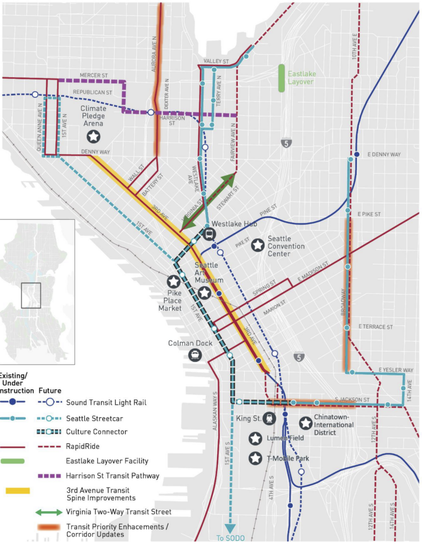
    The only possible future for the SLU streetcar line would be to connect to the planned Center City Connector streetcar (AKA “Culture Connector”) through downtown along 1st Avenue and Stewart Street. However, construction on that line remains stalled, and it has a huge funding gap. Seattle Bike Blog has also voiced serious concerns about bike safety along the planned route. As Councilmember Saka noted in an interview with the Seattle Times, “The only viable path I see for ever doing that one would be to create a public-private partnership at some point.” Councilmember Bob Kettle has proposed removing the Center City Connector from SDOT’s capital improvements list, an amendment Saka supports.

    The Downtown Seattle Association (“DSA”) pushed back against the proposal to kill the SLU Streetcar line, arguing to the Urbanist, “We’re seeing more residents, workers and visitors in downtown and now is not the time to take existing mobility options off the table. […] With looming major transportation projects like Revive I-5 impacting our network’s capacity, we need to ensure the transit modes we already have downtown are functioning optimally, safely and a providing great experience.”

    Seattle Subway has also created an online petition to save the streetcar, arguing:

    While the SLU Streetcar suffers from low ridership, it is widely attributed to the lack of connectivity rather than anything inherent to streetcars. We cannot fix the design mistakes of the past, but we can certainly make improvements. SDOT ridership figures for 2022 put SLU streetcar at 500 daily riders and First Hill streetcar at 2,500 daily riders, with ridership trending upwards since the pandemic. By SDOT’s own estimate, the proposed Culture Connector extension would attract 28,000 daily riders, making it more popular than the busiest bus line in the city. This city council also called out the Culture Connector as a key improvement in their own Seattle Transportation Plan which they passed in April. Rob Saka himself said at the time, “It’s time we commit to our transportation goals and give them [SDOT] the resources they need to succeed. That’s what this plan is all about.” They are now prepared to go back on that commitment.

    The SLU Streetcar was initially funded by a LID in the area as a way to encourage development of the area into the business and tech hub it is today. So from that perspective, it was a huge success. But as a transit service, not so much. I worry about transit supporters taking the L off someone else’s forehead and putting on their own. Providing effective transit service was not the primary force behind this particular streetcar, so transit folks should not feel like this is something they need to own. The SLU Streetcar is a simulacra of a good transit system, but Metro’s bus system is an actual good transit system. The most important transit priority is to make sure the city builds more bus priority improvements in the area, preserving and improving on the bus-only lanes created when the RapidRide C extended into the area. Perhaps Metro buses could even reuse of some of the streetcar infrastructure like the transit-only pathway along Valley Street. The worst case scenario would be for the streetcar to be removed without any effort to improve bus service.

    While the SLU Streetcar’s future certainly hinges on the Center City Streetcar, is the inverse also true? The city’s 20-year plan for transit calls for a 1st Ave Streetcar that connects Seattle Center/Lower Queen Anne to Pioneer Square and the First Hill Streetcar on Jackson Street as well as a 1st Ave extension into SoDo. Would some or all of this line be viable without the SLU connection? Perhaps rather than removing the Center City Streetcar from the capital projects list, Council could add questions to its request for a SLU Streetcar wind down plan about what impact such an action would have on a possible Center City line. This would give the city one more year to give the Center City Streetcar the proper public debate it deserves. Let’s lay out all the facts and options, and then make a damn decision.

    If businesses and developers want to foot the bill for both the Center City and South Lake Union streetcar lines, then I’m sure city leaders will shift to support them. Otherwise, well, you may want to make an effort to go out of your way to ride the thing at least once before it is shut down so you can say you did it and buy that clever t-shirt on sale at Pike Place Market.

    #SEAbikes #Seattle

    Rob Saka is now saying some ish about his days as a navy intelligence officer and glad handing it up with excop Bob Kettle.

    They're now both having a hearty laugh about bonus structures in the Air Force and Navy.

    Anyways, in addition to being a CIA liaison Rob Saka was also a Meta lawyer so you know he's really concerned about the average person.

    https://www.geekwire.com/2023/meta-lawyer-wants-to-build-more-public-private-partnerships-as-he-runs-for-seattle-city-council/

    #RobSaka #seattle #militaryindustrialcomplex

    Meta lawyer wants to build more public-private partnerships as he runs for Seattle City Council

    Seattle City Council hopeful Rob Saka says he wears Nigerian-style dashiki shirts to honor his father's legacy and his ancestors in West Africa. (Photo

    GeekWire

    At memorial bike ride for her husband, Rita Hulsman asked attendees to vote yes on the transportation levy she worked to strengthen

    https://www.youtube.com/watch?v=-bHFp7gSCaU

    As captured on video by West Seattle Blog, Rita Hulsman chose to use her address to the crowd gathered Saturday for a memorial bike ride in honor of her late husband Steve to promote action to make sure traffic deaths like his do not continue happening to others (starts at 6:45 in the video):

    “Steve would be so honored to see you here today to remember him. He was so skilled and passionate about bicycling, and I’ve heard from so many of you who used to cycle with him about how he was helpful and encouraging to others who found the very, very, very hilly routes that he rode to be maybe a little bit more than some people had bargained for. He was there to help people and encourage people along the way. Thank you for those kind words about him. It meant more than I can tell you in the months that have passed since his untimely death.

    Earlier this year, I became involved in advocating for safety improvements for bicyclists, for pedestrians and for other vulnerable users of our city streets. And I did that by speaking up at City Council Transportation Committee meetings. I am pleased that the full council passed a great transportation levy proposal that will come before those of us who live in Seattle this November. If you live in Seattle, I strongly encourage you to vote yes on the 2024 transportation levy.”

    Ever since news broke of that horrible day in December when a person driving a Chevy Tahoe turned in front of Steve’s path as he biked the long and fast downhill on Marine View Drive SW in West Seattle, Rita has been focused on changing city policy to promote safer streets. She and I emailed a few times back in March because she wanted advice on identifying organizations working on safe streets. “Steve’s death is just senseless to me,” she wrote, “but advocating for action to make our roads safer for cyclists will, I hope, give me some sense of consolation.” She later donated the funds raised through a memorial GoFundMe campaign to Cascade Bicycle Club and Seattle Neighborhood Greenways.

    She didn’t stop there. As City Council Transportation Committee Chair Rob Saka said in his remarks before the ride Saturday (2:30 mark in the video), Rita showed up to every committee meeting in which the 2024 Transportation Levy was being considered to testify in favor of increasing funding for safer streets.

    “Rita showed up at every single transportation committee meeting where we discussed and considered the levy,” he told the crowd. “Her voice was well represented, testifying, holding me and my City Council colleagues accountable to make sure we have proper investments baked into the transportation levy to do more to protect the most vulnerable users. And my commitment is to all users. I want to thank Rita for her leadership, her passion, and making sure that the voice of your family is represented in this transportation levy.”

    He added that if the levy passes, one of his amendments included building protected bike infrastructure named in Steve’s honor.

    “Rita deserves better, the family of Steve deserves better, you all deserve better,” he said.

    Thank you, Rita, and may Steve rest in peace.

    #SEAbikes #Seattle

    At memorial bike ride for her husband, Rita Hulsman asked attendees to vote yes on the transportation levy she worked to strengthen – Seattle Bike Blog

    https://www.youtube.com/watch?v=-bHFp7gSCaU As captured on video by West Seattle Blog, Rita Hulsman chose to use her address to the crowd gathered Saturday for a memorial bike ride in honor of her late husband Steve to promote action to make sure traffic deaths like his do not continue happening to others (starts at 6:45 in the video):…

    Seattle decided 9 years ago to kill the SLU Streetcar

    These tables were part of the city’s process in 2015 to decide whether the high capacity transit line on Eastlake and Roosevelt should be a rapid streetcar (RSC) or bus rapid transit (BRT).

    The South Lake Union Streetcar broke down Friday, August 9, and nobody even noticed until King County Metro and SDOT sent out a press release about it the next Monday. Like, I searched through social media posts and could not find a single person mentioning issues riding the streetcar line the entire weekend that it was out of operation. Perhaps even more damning for the line is that Metro and SDOT are not even running any kind of replacement service while the streetcar is out of commission, noting that riders are served by existing service on Routes 40, 70 and RapidRide C.

    The thing that baffles me about this line is that people keep acting like the city needs to decide what to do with it when Seattle already made this decision nine years ago. The RapidRide J project was initially proposed as an extension of the streetcar from its odd terminus in the middle of Fairview Ave N north to Roosevelt Station, but Seattle decided in 2015 to make the project a bus line instead. The ongoing Route 40 Transit-Plus project was also once vaguely envisioned as a streetcar line (complete with a new Ship Canal crossing), but is now a set of bus reliability improvements. The time to fight for the streetcar happened a decade ago, and the streetcar lost.

    The streetcar lines from the 2012 Seattle Transit Master Plan (PDF) are missing in the 2016 TMP update (PDF).

    Around the same time, SDOT made a smart decision to add transit-only lanes to Westlake Ave so Metro could extend the RapidRide C line through South Lake Union along much of the streetcar route. It was an effective and low-cost way to dramatically improve transit service in the neighborhood, but it also made the streetcar even less necessary. Many riders using the shared bus and streetcar stops just hop on whichever comes first because level of service matters far more than what kind of wheels the transit vehicle has.

    These days, the SLU Streetcar carries an average of 494 weekday trips, the Seattle Times reported. It costs $4.6 million per year to operate, though advertising helps offset some of that. That operating cost would be fine if the ridership were strong because transit shouldn’t be expected to make a profit. But 494 weekday rides does not justify that level of ongoing investment. For contrast, the First Hill Streetcar carries a healthier 3,598 trips on an average weekday, though it also has higher annual operating costs. The First Hill line seems to be filling an actual transportation need while the SLU line does not.

    Keeping the SLU line alive is a classic case of Seattle indecision. It’s connected to the city’s years of indecision about the downtown streetcar project, which remains stalled due to a $93 million budget gap. Worse, indecision like this can be very damaging to a community because streetcar supporters have reason to keep fighting for it so long as it seems that there’s still a chance. I don’t blame them because the vision of a European-style network of streetcars is genuinely appealing and seems like a vision worth fighting for. But even if the city built the downtown streetcar, there are no plans whatsoever to expand the network any further. We’d still just have one oddly-shaped line for the foreseeable future. The 20-year Seattle Transportation Plan and 8-year levy proposal does not include any additional streetcars. (CORRECTION: As David commented, I missed that the STP does include streetcar extensions north and south on 1st Ave beyond the current design.) These are decisions Seattle has already made.

    The streetcar needs to go big or go home, and Seattle has firmly decided not to go big.

    Shutting the line down is not an easy decision. There will be costs associated with shuttering it, especially if they do so responsibly by removing or filling in the unused tracks so they do not injure bike and scooter riders. It would also be a shame if the mayor and council used the budget savings to plug the general budget gap rather than investing it in other transit improvements or plans. When the mayor decided to shut down Pronto Cycle Share, the city directed the bike share expansion budget to go to bike lanes on 4th Ave and Pike and Pine Streets downtown instead. Those investments softened the blow of losing our public bike share system, which coincidentally was also a victim of Seattle indecision. Maybe the SLU Streetcar funds could go to exciting projects to speed up the Route 8 bus or early planning for Seattle-led light rail extensions, laying the groundwork for investments the city can feature in the next Seattle Transportation Benefits District vote due in 2026. I don’t know, I’m sure transit planners and advocates have ideas here. There needs to be some kind of organized effort to create a positive exit plan for the funds because this latest shutdown has made the SLU Streetcar an even bigger target for the City Council as they head into what will likely be a very tough budget season.

    “Given the low ridership numbers of the South Lake Union line, does it make sense to continue that investment?” Transportation Committee Chair Rob Saka said to the Seattle Times last week. “I don’t have a strong answer yet, but I will definitively be scrutinizing that.”

    Perhaps a private company would want to buy the SLU streetcar. Councilmember Saka suggested a “public-private partnership” as a possible way forward. A private company already owns and operates the Seattle Monorail, so maybe there’s a future where something similar happens with the streetcar. Amazon has invested in the streetcar line in the past. Do they like it enough to buy it? Do they want to invest in the downtown extension? Do we as a city even want this level of private transit ownership?

    My support for the streetcars evaporated after Daniel Ahrendt was horribly injured and Desiree McCloud died in separate crashes on the First Hill Streetcar tracks. The city has made some bikeway improvements since to mitigate some of the dangers, but especially on Jackson Street many issues remain. The design plans for the streetcar tracks on both First Avenue and Stewart Street are also insufficient from a bike safety standpoint. I wrote extensively about what it would take to make the plans safe, and the project team did not address the issues. I won’t be sad when the city finally declares the project to be dead.

    I know reading this is probably a bummer for some of you. It’s a divisive issue among folks who should otherwise be united in the fight for walking, biking and transit. If the SLU Streetcar and downtown plans die as seems likely, I hope streetcar supporters out there can find a positive way to move forward and continue their dedication to advocating for better transit in our city.

    Share

    #SEAbikes #Seattle

    Seattle decided 9 years ago to kill the SLU Streetcar

    These tables were part of the city’s process in 2015 to decide whether the high capacity transit line on Eastlake and Roosevelt should be a rapid streetcar (RSC) or bus rapid transit (BRT). T…

    Seattle Bike Blog