Why Read Faust by Johann Wolfgang Von Goethe?

Project 2026 Faust

Johann Wolfgang von Goethe’s “Faust” is a literary masterpiece that has captured the imagination of readers for over two centuries. This epic drama delves into profound philosophical questions, presenting an exploration of themes such as the nature of good and evil, the pursuit of knowledge, and the complexities of the human condition. The play’s multi-dimensional and thought-provoking characters, including the enigmatic Faust and the seductive Mephistopheles, offer insight into human nature and ambition. Goethe’s rich, poetic language, filled with lyrical verses and powerful imagery, creates a mesmerizing reading experience. “Faust” holds significant cultural relevance, leaving an indelible mark on Western culture and offering readers a deeper understanding of various literary, artistic, and musical allusions.

“Two souls, alas, are housed within my breast,
And each will wrestle for the mastery there.”

 Johann Wolfgang von Goethe, Faust

Why read Faust? Reading “Faust” offers an enriching journey into the depths of human experience, philosophy, and artistry, making it a compelling and worthwhile endeavor for any reader. But Faust has complexities that require a reader’s highest participation. This has been my Reading Project for 2024, 2025, and now 2026. I am looking forward to sharing my thoughts on the podcast entitled, Faust – Unraveling the Great Enigma.

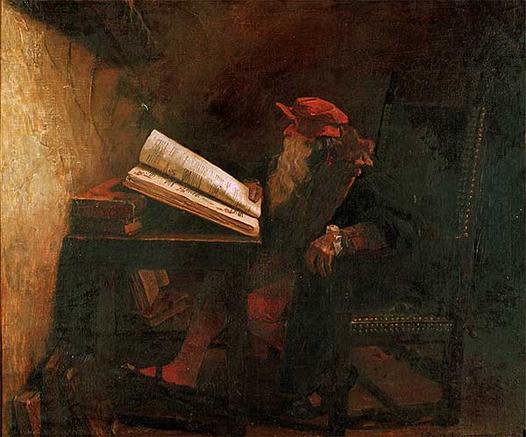
Dr. Fausto by Jean-Paul Laurens, Public domain, via Wikimedia Commons

Readers – this is your invitation to embark on this literary journey and join me as I enter the world of Faust.

Johann Wolfgang von Goethe wrote “Faust” over a period of many years, with the initial draft dating back to the late 18th century and the final version being completed in 1831. Presented in two parts, it is revered as Goethe’s magnum opus and is widely regarded as the pinnacle of German literature. The work evolved and expanded throughout Goethe’s lifetime, reflecting his intellectual and artistic development. This extended timeframe underscores the depth and complexity of this literary masterpiece.

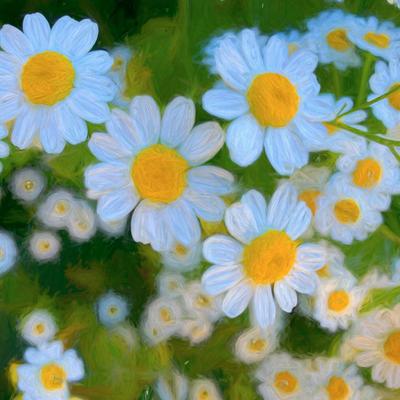
“Faust” (Image created by Rebecca Budd using Bing Co-pilot from a prompt Faust Reading a Book)

Welcome to the Faust Salon

This salon was created as a companion space to the podcast Faust: Unraveling the Great Enigma. It is an space inspired by the reading rooms and salons of the Victorian and Edwardian eras, where ideas were shared slowly, thoughtfully, and in good company.

Here, Goethe’s Faust is not hurried through or explained away. Instead, it is welcomed as a living work, one that invites conversation, reflection, and return. You’ll find podcast episodes, selected passages, and written reflections gathered here as an ongoing dialogue rather than a finished course.

You are invited to enter, linger as long as you wish, and return often.

The conversation continues,

Rebecca

“I’ve studied now Philosophy
And Jurisprudence, Medicine,—
And even, alas! Theology,—
From end to end, with labor keen;
And here, poor fool! with all my lore
I stand, no wiser than before:”

 Johann Wolfgang von Goethe, Faust

Launch of Faust: Unraveling the Great EnigmaFaust: Unraveling the Great Enigma

Welcome to the launch of our literary journey through one of the most iconic and mysterious works in world literature— Faust by Johann Wolfgang von Goethe.Faust: Unraveling the Great Enigma!I’m here with my sister Sarah, and together we’ll be exploring this profound, complex, and sometimes bewildering story of a man who trades his soul in pursuit of deeper meaning. But this isn’t just a reading project—it’s a conversation about ambition, temptation, love, loss, and the eternal question: what makes a life worth living?We’re also excited to welcome Eglund to the “Faust” discussion, who will help us set the stage with a bit of background on Goethe, the origins of the Faust legend, and why this story still resonates centuries later. Whether you’re reading along with us or just listening in, we’re so glad you’re here for the beginning of this adventure.”Rebecca & SarahMusic by Epidemic Sound”Admitting the Truth” By Trailer Worxhttps://www.epidemicsound.com/track/wyeQ8OerS5/

“For a quieter listening experience, you may wish to turn off YouTube’s autoplay after this episode.”

https://youtu.be/S7bkA8O9DqI?si=TEZrHAeSfLrOQFZL

#Faust #FaustSalon #JohannWolfgangVonGoethe #ReadingProject2024 #ReadingProject2025 #ReadingProject2026 #RebeccaSReadingRoom

As I embark on my “Faust Journey,” I want to acquaint myself with the life and era of Johann Wolfgang von Goethe. I believe that understanding his background will enhance my exploration of his literary creations and provide insight into the motivations behind his writing. Knowing the “backstory” will enrich my reading experience.

This is your invitation to join me as I go back to the time of Goethe.

Rebecca

Johann Wolfgang von Goethe at age 79 by Joseph Karl Stieler, Public domain, via Wikimedia Commons

Who was Johann Wolfgang von Goethe?

Johann Wolfgang von Goethe was a German writer, poet, and playwright, widely considered one of the greatest figures in Western literature. Born on August 28, 1749, in Frankfurt, Germany, Goethe’s literary works spanned a wide range of genres, including drama, poetry, novels, and scientific literature.

His most famous work, “Faust,” is a tragic play that explores the eternal human quest for meaning and knowledge. Goethe’s other notable works include his extensive poetry collections, and the novel “The Sorrows of Young Werther”. This novel is often considered a significant milestone in Johann Wolfgang von Goethe’s early literary career. It marked the beginning of the Sturm und Drang movement and garnered immense attention due to its exploration of emotional turmoil and the human psyche.

While “The Sorrows of Young Werther” showcased Goethe’s talent and drew widespread acclaim, his later works across various genres solidified his status as one of the most influential and celebrated figures in Western literature. Therefore, while “The Sorrows of Young Werther” was influential, it was only one of many remarkable achievements that contributed to Goethe’s enduring greatness.

In his renowned work “Theory of Colours,” Goethe delved into the psychological and physiological aspects of colour perception, challenging the dominant Newtonian theory of light and colour. His exploration of colour as a subjective and experiential phenomenon has had a lasting influence on fields such as art, psychology, and aesthetic philosophy.

Johann Wolfgang von Goethe is comparable to the stature of Dante and Shakespeare. His diverse literary works have secured his legacy as a towering figure in the literary world. His contributions to fields like botany, natural sciences, and philosophy further underscore his significant impact on intellectual pursuits.

Goethe’s enduring influence places him among the esteemed ranks of Dante and Shakespeare in the realm of literature and thought.

Johann Wolfgang von Goethe passed away on March 22, 1832, leaving behind a rich legacy of literary and scientific achievements that continue to inspire and influence generations of thinkers, writers, and artists around the world.

Living in the Years 1750 – 1830

Goethe’s Faust”. N V Het Tooneel (Amsterdam). Dir. Willem Royaards. Richard Roland Holst (1868 – 1938), Public domain, via Wikimedia Commons

Living in the time of Johann Wolfgang von Goethe, from 1749 to 1832, marked a period of significant cultural, intellectual, and societal change in Europe. The late 18th and early 19th centuries witnessed the transition from the Enlightenment era to the Romantic period, and Goethe’s lifetime coincided with these transformative shifts.

Cultural and Intellectual Environment

The early years of Goethe’s life were shaped by the Enlightenment’s emphasis on reason, science, and individual freedoms. Rationalism and skepticism were prevalent, influencing various aspects of society, from governance to artistic expressions. As Goethe matured, the Romantic movement gained prominence. This period was characterized by a renewed interest in emotions, nature, and individual expression, as opposed to the rationalism of the preceding era. The Sturm und Drang movement, translated as “Storm and Stress, exemplified this shift and influenced literary and artistic works.

Societal and Political Dynamics

The late 18th and early 19th centuries witnessed significant societal and political upheavals, including the American and French Revolutions. These events reverberated across Europe, inspiring debates about governance, individual rights, and the nature of social contracts. Goethe’s lifetime also coincided with the tumultuous Napoleonic era, characterized by far-reaching military conflicts and the reconfiguration of political boundaries. The impact of these events was felt across various facets of life in Europe.

Scientific and Philosophical Advancements

This period saw significant advancements in scientific exploration, including developments in botany, natural sciences, and the understanding of human psychology. Goethe himself contributed to these fields, further enriching the intellectual environment of the time. Philosophical discourse during this time grappled with the changing ideals of humanity, the nature of existence, and the interplay between reason and emotion, echoing the broader cultural shifts of the era.

Living in the time of Goethe, meant navigating the dynamic interplay of Enlightenment ideals, Romantic sentiments, societal transformations, and intellectual ferment, all of which shaped the fabric of European life and culture during this pivotal period.

https://rebeccasreadingroom.ca/2024/06/09/who-was-johann-wolfgang-von-goethe/

#Faust #JohannWolfgangVonGoethe #ReadingProject2024

Joseph Karl Stieler - Wikipedia

Why Read Faust by Johann Wolfgang Von Goethe?

Johann Wolfgang von Goethe’s “Faust” is a literary masterpiece that has captured the imagination of readers for over two centuries. This epic drama delves into profound philosophical questions, presenting an exploration of themes such as the nature of good and evil, the pursuit of knowledge, and the complexities of the human condition. The play’s multi-dimensional and thought-provoking characters, including the enigmatic Faust and the seductive Mephistopheles, offer insight into human nature and ambition. Goethe’s rich, poetic language, filled with lyrical verses and powerful imagery, creates a mesmerizing reading experience. “Faust” holds significant cultural relevance, leaving an indelible mark on Western culture and offering readers a deeper understanding of various literary, artistic, and musical allusions.

“Two souls, alas, are housed within my breast,
And each will wrestle for the mastery there.”

 Johann Wolfgang von Goethe, Faust

Why read Faust? The short answer: reading “Faust” offers an enriching journey into the depths of human experience, philosophy, and artistry, making it a compelling and worthwhile endeavor for any reader. The long answer, that will take us to my Reading Project 2024.

Dr. Fausto by Jean-Paul Laurens, Public domain, via Wikimedia Commons

Project 2026 Faust

I wanted to start reading Faust in January 2024 and that led into 2025. In 2026, I am created the Podcast, Faust – Unraveling the Great Enigma. This was to be a one year project, but it has evolved into a multi year endeavour. Have you wondered whether literature has a magical way of finding us at the perfect moment? As the Winter 2026 season approaches, delving into the pages of “Faust” with a fresh exuberance is a delightful way to embrace the vibrant energy of the season.

I plan to read “Faust” over an extended period to allow for a deeper immersion into its rich and complex narrative. My goal is to engage with the profound themes, multi-dimensional characters, and poetic language, slowly, reflectively, so as to allow the new insights gained with each reading session to integrate into my thought process.

Readers – this is your invitation to embark on this literary journey and join me as I enter the world of Faust.

Johann Wolfgang von Goethe wrote “Faust” over a period of many years, with the initial draft dating back to the late 18th century and the final version being completed in 1831. Presented in two parts, it is revered as Goethe’s magnum opus and is widely regarded as the pinnacle of German literature. The work evolved and expanded throughout Goethe’s lifetime, reflecting his intellectual and artistic development. This extended timeframe underscores the depth and complexity of this literary masterpiece.

“Faust” (Image created by Rebecca Budd using Bing Co-pilot from a prompt Faust Reading a Book)

“I’ve studied now Philosophy
And Jurisprudence, Medicine,—
And even, alas! Theology,—
From end to end, with labor keen;
And here, poor fool! with all my lore
I stand, no wiser than before:”

 Johann Wolfgang von Goethe, Faust

#faust #johannWolfgangVonGoethe #readingProject2024