In this month's #QuickQuantumQuestion video, Esther Cruz from the Max Planck Institute of Quantum Optics explains the differences between conventional and quantum algorithms.

Watch on YouTube: https://www.youtube.com/watch?v=suxB-Rr0BUM&list=PLdyGt2haB1OOtSFObjL20DZ9ccEBN6sRB&index=1

#HightechAgendaBayern #ResearchInBavaria

What are the differences between conventional and quantum algorithms?

YouTube

Integrating quantum computers into data centers is no easy task. Matt Tovey from the @LRZ_DE talks about the technical challenges that arise in our new #QuickQuantumQuestion video.

Watch on YouTube: https://youtu.be/vkXZ8S0_g1c

#HightechAgendaBayern #ResearchInBavaria

What are the technical challenges for the integration of quantum computers in data centers?

YouTube

How do you get a job in quantum technology? Alexander Holleitner from Walter Schottky Institute answers this #QuickQuantumQuestion in our newest YouTube video and shines light on how MQV helps with that.

Watch here: https://youtu.be/Jfxs31gSRig

How do I get a job in quantum technology?

YouTube

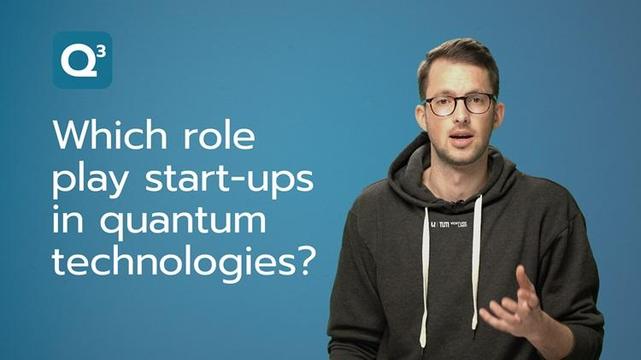
🚀 What role do startups play in quantum technologies? Christopher Trummer from Venture Lab Quantum answers this #QuickQuantumQuestion in our latest YouTube video.

Watch here: https://youtu.be/lNzmpbkXV8k

Which role play start-ups in quantum technologies?

YouTube

In this month’s #QuickQuantumQuestion video, Juris Ulmanis from MQV-partner Alpine Quantum Technologies explains the advantages and challenges of quantum computers based on ion-traps.

Head over to our YouTube channel to watch: https://www.youtube.com/watch?v=hMcQQe23C74

What are the advantages of an ion-trap quantum computer?

YouTube

At Munich Quantum Valley, we aim to develop quantum computers following a full-stack approach. But what does that mean?

MQV's former scientific director Rainer Blatt answers this #QuickQuantumQuestion in our latest YouTube video: https://www.youtube.com/watch?v=RwahUxd8VXg

What is the full-stack model of MQV?

YouTube