 SciPost Physics
New #openaccess publication #SciPost #Physics
Learning the non-Markovian features of subsystem dynamics
Michele Coppola, Mari Carmen Bañuls, Zala Lenarčič
SciPost Phys. 19, 149 (2025)
https://scipost.org/SciPostPhys.19.6.149
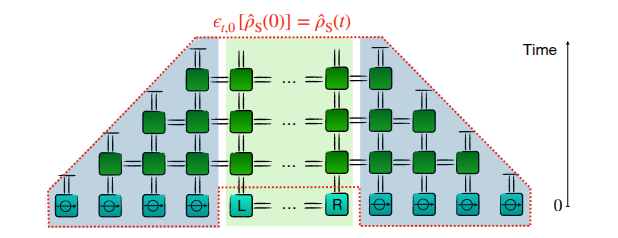
New #openaccess publication #SciPost #Physics
Learning the non-Markovian features of subsystem dynamics
Michele Coppola, Mari Carmen Bañuls, Zala Lenarčič
SciPost Phys. 19, 149 (2025)
https://scipost.org/SciPostPhys.19.6.149
New #openaccess publication #SciPost #Physics
Generalized Gibbs ensembles in weakly interacting dissipative systems and digital quantum computers
Iris Ulčakar, Zala Lenarčič
SciPost Phys. 19, 068 (2025)
https://scipost.org/SciPostPhys.19.3.068
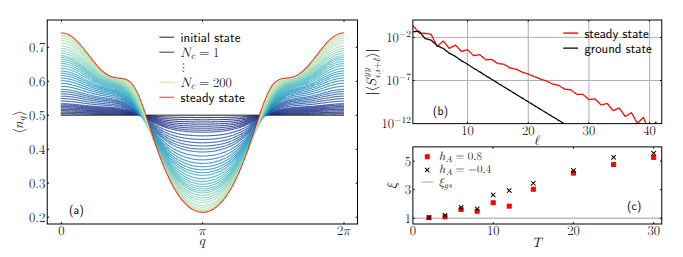
New #openaccess publication #SciPost #Physics #Codebases
SOLAX: A Python solver for fermionic quantum systems with neural network support
Louis Thirion, Philipp Hansmann, Pavlo Bilous
Paper:
SciPost Phys. Codebases 51 (2025)
https://scipost.org/SciPostPhysCodeb.51
SOLAX v1.0:
SciPost Phys. Codebases 51-r1.0 (2025)
https://scipost.org/SciPostPhysCodeb.51-r1.0
New #openaccess publication #SciPost #Physics Core
Thermodynamics of adiabatic quantum pumping in quantum dots
Daniele Nello, Alessandro Silva
SciPost Phys. Core 7, 067 (2024)
https://scipost.org/SciPostPhysCore.7.4.067
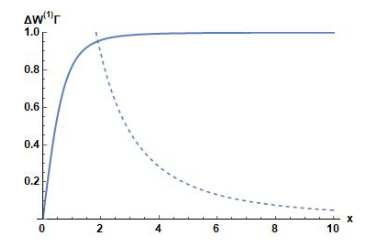
New #openaccess publication #SciPost #Physics
Gaussian-state Ansatz for the non-equilibrium dynamics of quantum spin lattices
Raphaël Menu, Tommaso Roscilde
SciPost Phys. 14, 151 (2023)
https://scipost.org/SciPostPhys.14.6.151
#SaarlandUniversity
#Laboratoire_de_Physique_del'ENSde_Lyon
#ANR #QuantERA
New #openaccess publication #SciPost #Physics Core
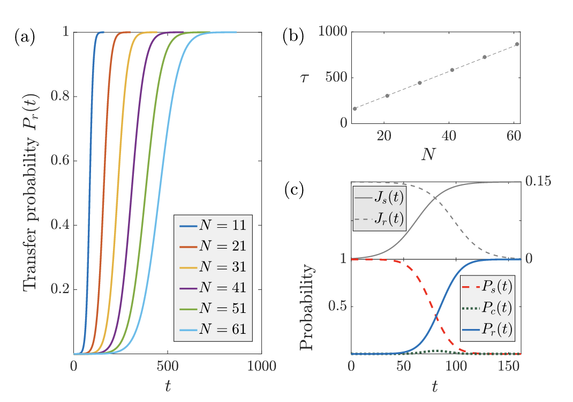
Excitation transfer in disordered spin chains with long-range exchange interactions
Nikolaos E. Palaiodimopoulos, Maximilian Kiefer-Emmanouilidis, Gershon Kurizki, David Petrosyan
SciPost Phys. Core 6, 017 (2023)
https://scipost.org/SciPostPhysCore.6.1.017
#IESL_FORTH
#UniversityofKaiserslautern
#DFKI
#WeizmannInstituteofScience
#DFG
#Horizon2020
#QuantERA
Our #Quantera project ApresSF produced a new result on distance estimation between #light sources. Generally speaking, spatial mode demultiplexing (#SPADE) offers a big advantage of the straighforward use of a camera. Here we show what happens when imperfections kick in and sources are not of equal brightness. SPADE is most advantageous when you detect few photons and when sources ar not too different.

Superresolution is one of the key issues at the crossroads of contemporary quantum optics and metrology. Recently, it was shown that for an idealized case of two balanced sources, spatial mode demultiplexing (SPADE) achieves resolution better than direct imaging even in the presence of measurement crosstalk [Phys. Rev. Lett. 125, 100501 (2020)]. In this work, we consider arbitrarily unbalanced sources and provide a systematic analysis of the impact of crosstalk on the resolution obtained from SPADE. As we dissect, in this generalized scenario, SPADE's effectiveness depends non-trivially on the strength of crosstalk, relative brightness and the separation between the sources. In particular, for any source imbalance, SPADE performs worse than ideal direct imaging in the asymptotic limit of vanishing source separations. Nonetheless, for realistic values of crosstalk strength, SPADE is still the superior method for several orders of magnitude of source separations.
 Schweizerischer Nationalfonds
 SwissNationalScienceFoundation
 Mattia Walschaers