Everything But the Girl Play “Run a Red Light”

Listen to this track by stylistically supple dance pop sophisticates Everything But the Girl. It’s “Run a Red Light”, a single from their long-awaited and critically-praised 11th record Fuse. They released the album in 2023 after a 24-year hiatus period. During that gap, principal members and married couple Ben Watt and Tracey Thorn worked separately on individual projects. This included production with other artists, DJ sets, authoring books, and making solo records.

This separate-but-still-together arrangement allowed them to keep their artistic muscles toned while being free of the EBtG baggage. The accompanying burden of that by the end of the Nineties included an offer to open for U2 on their sprawling and ambitious PopMart tour. Watt and Thorn felt they had to turn that offer down as a canvas too big for them to comfortably fill. Instead, they decided it was time to take a break and settle down to raise their family.

From 2000 onward, Watt and Thorn remained to be music fans as much as musicians, producers, and songwriters. When it came time to write and record together again, they focused on a central objective; making a new collection of songs that made sense for the times without being too calculated or self-conscious while doing it. This approach helped to remove the pressure of critical expectations of what an EBtG album could or should sound like after a near quarter century. As a result, they managed to do what they’ve always done; be adaptive while following their own unique artistic impulses that culminates in a sound of their own.

It’s not like this was the first time for them to seek out new ways to express their material with new textures to match a new direction. Every EBtG record reflects the quality that no single style or genre ties them down. Saying that, and having been a proponent of the sophisti-pop style in the 1980s and a nuanced dance pop act from the 1990s, the central soulfulness of their music remains foundational. On “Run a Red Light”, there is a keen balance between acoustic warmth and electronic airiness matched with a third ingredient that holds it all together; space that comes out of a sense of unhurriedness. As always, atmosphere and emotional subtext frames the material.

There’s a level of intimacy on “Run a Red Light” that represents another golden thread that runs through their music. Tracey Thorn’s voice has always been an effective vehicle for this. Their long hiatus affects how sonorously yearning it is not one bit. In fact, that recognizable voice has evolved. It’s lower, deeper, and represents a palpable sense of presence. The duo accomplish this by a close-miked effect that makes it sound as if she’s singing directly into one’s ear. The texture and tone of her vocal conveys a potent set of contrasts, too; a voice of blue experience singing a character defined by fiery red naiveté; a hopeful story of great ambition sung in a voice that seems to embody a sense of wariness and hard-won wisdom.

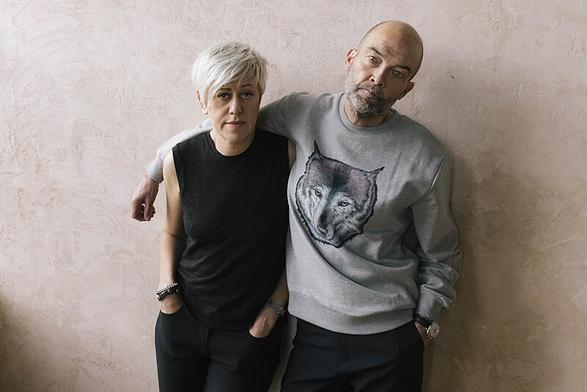
Ben Watt and Tracey Thorn from Everything But The Girl in London, December 2022. image: Edwardmbishop.

The narrative comes out of writer Ben Watt’s experiences in clubs over the years and the characters that populate and often define that world. “Run a Red Light” paints a portrait of young hopefuls full of braggadocio, compensating for their insecurities and their desperation as they push to make something of themselves.

“I met a lot of characters during my years in clubland, and I wrote this song about the guy at the end of the night, who dreams his big moment is just around the corner. All the bravado and good intentions masking the vulnerability.”

~ Ben Watt, “Everything But The Girl’s ‘Run A Red Light’ Fuses Bravado With Vulnerability”, Clash Magazine, March 2023. (read the whole article)

The music supports this stark contrast too, with the melody wrapped in layers of dreamy electronic textures and contemplative piano. Never has a show of bravado from a narrator sounded so reflective and so close to the borders of melancholy. It gives the impression of what it might be like to make claims about oneself and one’s destiny in the most idealized ways possible, but from an interior vantage point that’s clouded in insecurity and doubt.

That’s one of the things that’s most striking about it; how open-ended the song’s narrative is. That story could be as Ben Watt suggested; a bemused reaction to a certain type of character, a self-promoting denizen of clubland, who is showy and confident on the outside, but a little too much so to be anywhere near the professional breakthrough as they hope to be. Yet also, it could also be the voice of that same ambitious narrator looking back on their unspoiled years when the world was so full of possibility.

Either way, “Run a Red Light” is a song that’s evocative of the gap between what we present to the world and what we feel in our own hearts. It’s a song that suggests how perceptions change over time. Perhaps too, it’s one about a certain loss of innocence that once defined us as younger versions of ourselves. In this Eden of our youth, the future is always an open frontier. There’s always going to be time in an abstracted tomorrow to plan our next big move to prove our quality.

It’s the bar take, not the door split
A few weeks and I can work it
Keep it simple, keep the same crowd
We’re on the inside, I’m the one now
Yeah, I’m the one now

It’s 2AM, we’re leaving loudly
Wake the neighbors, we won’t come quietly
They’ll all know my name soon
Anyway, anyway, anyway, anyway …

~ “Run a Red Light” by Everything But the Girl

In this, the song can be heard as a celebration of youth, and of youthful attitudes about ambition and fame. At the same time, it suggests the knowledge that vulnerability will emerge, one way or another in spite of all that. In this, it’s also a lament of what gets lost when our perceptions stop revolving around the abstract and, often, the illusory. It’s the sound of a retroactive glance at a certain way of looking at the world and at oneself that has long-since past, or soon will as time and experience begin to overtake us.

Everything But the Girl is an open-ended, studio-bound, and ongoing project between Ben Watt and Tracey Thorn. You can learn more about their history and keep up with news at ebtg.com.

For more on the making of Fuse and the duo’s approach to coming together again as a band after a long time away from collaborating, check out this interview on MOJO magazine.

Finally, for another version of this song, check out this live in the studio version thanks to BBC6.

Enjoy!

#2020sMusic #BenWatt #EverythingButTheGirl #ProgressiveRB #songsAboutFame #TraceyThorn

Seal Sings “Crazy”

Listen to this track by London-born Ivor Novello-winning singer-songwriter Seal. It’s “Crazy”, a hit song taken from his 1991 self-titled debut record. The album came out after years playing in cover bands and time spent traveling in Asia, removed from his culture and immersed in the unfamiliar. Upon his return to Britain, Seal got a solo deal with musician and producer Trevor Horn’s ZTT records.

This tune was the lead single from the album, released in advance in November of 1990 and scoring a number two spot in Britain by January of 1991. It became Seal’s best performing single in the UK and his first top ten in the U.S. It made impact on charts all over the world in top ten positions as well. With critical comparisons at the time to Terrence Trent D’Arby, Lenny Kravitz, and even Marvin Gaye, Seal had arrived with a single that cleared a path for him for the rest of the decade and beyond.

“Crazy” straddled the line between eras, sounding like an attempt to make sense of recent history on a musical level as well as on a lyrical one. The shimmering synths and beats of late-Eighties club scenes wrap it in an otherworldly sheen and build it up to an epic scale. A supremely funky bass part that pops underneath it and the wah-wah guitar reference the influence of Seventies funk and soundtrack music. At the same time, “Crazy” embodies the energy of a Sixties folk protest song full of desperation, dread, and hopeful idealism carried in very large part by Seal’s impassioned vocals. Trevor Horn’s production holds it all in balance to make it more than the sum of its parts.

On a compositional level, “Crazy” is built on tension that rests on its impactful use of suspended chords – groupings of notes that are unresolved and could transition to either major or minor. These chords build their way upward on top of each other, and the tension they create builds right along with them as if they are a series of held breaths. These musical elements shore up the song’s lyrical themes of uncertainty with images of a few brave people who dare to stand firm as historical events pile up against each other, with those events and times also waiting to become resolved. In this, the song’s musical structure is a reflection of the times out of which it came.

The Eighties was a tumultuous and politically polarized time, with existential fears felt in nations all over the world reaching a fever pitch over their course. This was before Tiananmen Square protests and the crumbling of the Berlin Wall in 1989 provided a symbolic conclusion to the era. Margaret Thatcher resigned as Tory party leader the following year. George H.W. Bush was a one-termer. The years 1990-91 was a comedown period. There was a lot to process. Hope for change was in the air. But as in any era, nothing was certain.

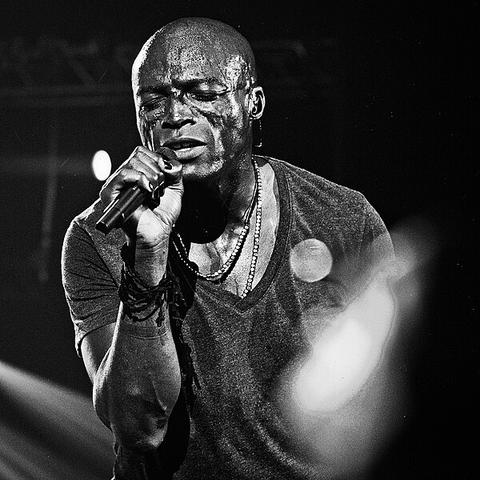
Seal performing in 2011. image: Ppmarat.

“Crazy” arrived at just the right time as a reflection of that. The culture was unpacking an era that was over while also being poised for the one to come. All of this cast us all into an in-between of major and minor, reflected vividly in this song. Its lament of a world and sky full of people with only a few who truly want to fly is full of gravity and sadness. But it contains a weathered sense of hopefulness, too. In this, there is another level of tension and release in “Crazy” which the music matches with incredible precision. The build up of sound riding on a wave of suspended chords, and the brief reprieve as the chords resolve tells a powerful story about how civilization responds to the call to change. On this level alone, “Crazy” is an extraordinary artistic achievement.

Further to this, this tune allows enough space to project our own meaning onto it as listeners. Its emotional palette, images, and suggestions of events don’t lock us into anything specific. Instead, it lends images and suggestions to our imaginations and perceptions. This only adds to how powerful a statement it is about trying to make sense of the world even when we don’t have all the pieces to make a complete picture.

There have been interpretations of this song that posits that the man unlocking the door after seventy years in the opening line is Aldous Huxley. The unlocked door in question therefore is one of perception. So presumably then, the key to unlock it is psychotropic drugs, perhaps reinforced by references to “taking the pill” heard elsewhere in the song. But, “Crazy” is much larger in scope than being a commercial for mind-altering pharmaceuticals. This cut coalesces around the wider themes of transformation and becoming, which is also at the heart of what Huxley was interested in when he wrote The Doors of Perception.

The journey toward those goals in any capacity often seems to be pretty crazy to many. This tune is an anthem to passing from one era to another with courage to take the next steps toward something better, even if it means upsetting what we’ve come to think of as familiar or sensible. It was the perfect song for the times out of which it came as cultures grappled with the political implications of the Cold War’s end.

But that theme is also one that’s applicable at any time, and in any era. It’s certainly applicable now, when changing our course based on what we know now and didn’t know before is becoming more and more necessary. And like the song suggested in 1991, this question of survival is more pertinent than ever before. We’ve moved on from where we were when this tune came out. But many of the themes and sentiments it suggests remain applicable, and even necessary for us to continue to examine.

People are hungry for change. The question hanging over us is about which set of changes will we embrace. If we’re going to survive, we really are going to have get a little crazy. In fact, it’s the sanest thing for us to do.

Seal is an active singer, songwriter, and performer today. You can learn more about his newest releases and other news at sealofficial.com

To learn more about this song including Seal’s background and motivations for writing it, check out this article about “Crazy” on American Songwriter.

To hear another version of this tune, check out Seal playing “Crazy” acoustically, demonstrating among other things how melodically and thematically sturdy this tune is in any arrangement.

Enjoy!

#90sMusic #GenerationX #politicalMusic #ProgressiveRB #Seal #TrevorHorn

D’Angelo Sings “Really Love”

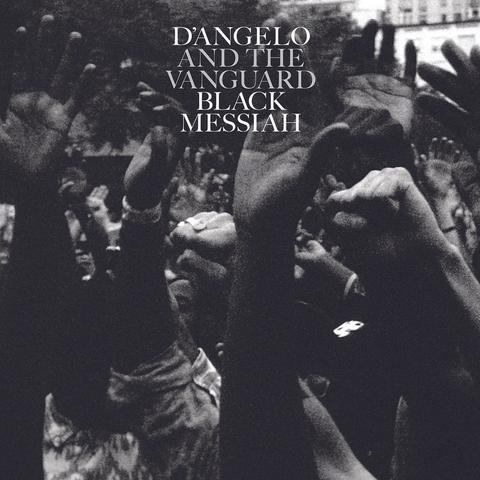
Listen to this track by returning neo-soul new hope and R&B auteur D’Angelo, also crediting the band who appear on the record, The Vanguard. It’s “Really Love”, a single as taken from 2014’s Black Messiah. The record was certainly a long time coming, following up 2000’s critically-acclaimed Voodoo.

The song is a reflection of the rest of the album in that it is a densely layered work that seems to draw together multiple threads of musical tradition, from jazz to soul, funk and rock music. It’s marked by the influences of Parliament Funkadelic, Prince, Riot-era Sly & the Family Stone, and What’s Going On-era Marvin Gaye, all while avoiding crude imitation at the same time.

“Densely layered” seems to be the sonic manifesto that drove the making of the album, which may explain why it took so long to create. Apart from songwriter and singer D’Angelo, the record is replete with contributions from Questlove of The Roots, solo artist and former Tribe Called Quest founder Q-Tip, and legendary sessioners Pino Pallidino on bass and drummer James Gadson. Work on the album stretched from 2000 and into the end of last year. That’s a long gestation period that even Axl Rose would be proud of! Yet, even though the record took a long time to craft, it’s release date was rushed at the end for reasons of social significance, and not necessarily for capturing a commercial wave.

Between Voodoo and this new record, a lot had changed for D’Angelo. He had decided to shed his sex symbol image, which he had never been comfortable with. He decided to create a magnum opus instead, which is this album, garnering the kind of reviews that seems to indicate that he’s accomplished what he set out to do. He struggled with substance abuse and brushes with the law as he made the journey, too. And what a journey it was, drawing together all of the skill he had to create a record that seems to be the culmination of many forms of musical expression and across many eras of American musical history seemingly all at once.

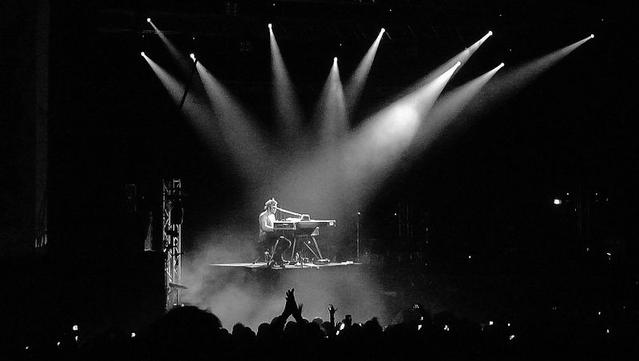
D’Angelo performing at Brixton Academy, 2012 (image: Phil Sheard).

***

This song “Really Love” is a sublime and impressionist neo-soul concoction, full of warm upright bass undercurrents, a smattering of richly arranged strings, snippets of spoken word, flamenco-style guitar, and D’Angelo’s densely (that word again) multitracked vocals that play with the threads of a melody and of words rather than outline them in sharp relief. Somehow too, despite the density that’s gone into the production, there is still a sense of airiness, of space. This song on this album provides a sense of balance, as other tracks pull the listener further in to its center where there is far less space, where those same stylistic textures represent colors, tones, and textures that makes this one of those albums that delivers rewards on repeated listens as well as initial ones. This is too big a landscape to explore all at once. No wonder it took so long to create.

For all of the meticulous attention to detail that went into the making of the record, and the personal upheavals he went through while realizing it, it was the external political climate that made D’Angelo affect a shorter timeline as far as the release. Originally, it was intended to be launched in 2015. But, it was pushed out in December of 2014 as the Ferguson riots and the murder of Eric Garner were inflaming public discourse about institutionalized racism, the worth of black lives, and the nature of black identity in a culture that doesn’t always welcome it. Several of the songs touch on political themes like this, albeit often in an impressionistic, and experimental space. But, often not as well.

Yet, even if it was current events that sparked the expedient release of this long-awaited record, the sad fact is that these issues seem to be the same as they’ve been for decades. They are at least as current as the many strains of classic American music referenced on this song, and on the rest of the album. Even if the release of this record, or any record, doesn’t solve the problems that those specific events of 2014 have made more visible for so many, what it does do is frame the artistry of those coming out of various black communities all over the United States, where lives seem so cheap and insignificant to so many who hold positions of power. In many instances, songs on the record evoke soundbites that communicate an important sense of rage around all of this, designed to help continue vital conversations happening in disenfranchised black communities all over the nation.

In addition to the social discontent reflected in the lyrics on many songs on the record, even the musical references on “Really Love”, a radio-friendly love song rooted in classic traditions, remind us that some of the greatest artists and cultural icons America has ever produced, many of whom can be thanked for a rich global cultural legacy that we all enjoy, would be subject to the same suspicion, discrimination, and violence that Michael Brown and Eric Garner were subject to, were they caught in the wrong place at the wrong time in America today.

That is a sobering thought. Beneath the surface of how we feel we may have come, we have further to go than we’d like to believe.

You can learn more about D’Angelo’s journey with the creation of this new song and album, including some of the musical ingredients that inspired it right here.

And if there is any doubt about the magnum opus-ness of this release, take a look at the reviews on Metacritic to see what some popular publications are saying about it.

Enjoy!

Thanks very much to Sony Canada for sending along a download of the album.

#2010sMusic #conceptAlbums #DAngelo #neoSoul #ProgressiveRB #RB #singerSongwriters

Leon Bridges Sings “Peaceful Place”

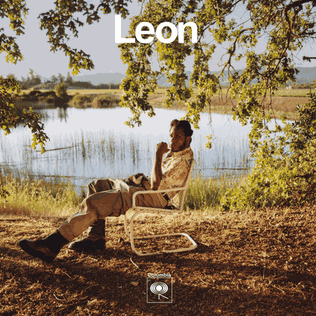
Listen to this track by Fort Worth Texas native son and neo-soul provider Leon Bridges. It’s “Peaceful Place”, the lead single from his 2024 record Leon. The single preceded the release of the album by a few weeks, and helped to set expectations on what the album would sound like; a departure from where he started in a consciously retro vein, and instead a lusher, deeper, and less stylistically pinpointed sound. The song is indicative of Bridges’ approach to achieving that artistic aim while still retaining the same thread that brought audiences to his work up to that point.

Bridges scored a number of critical accolades since his debut Coming Home in 2015. By 2022, he’d put out two other full-length albums in addition to a series of EPs which expands on his initial sound. All the while, Bridges had been working up material over a period of years that would eventually appear on Leon. But those songs didn’t quite fit the profile of what he was writing and putting out at the time, or indeed anything he’d worked on before. After a period of recording in Los Angeles, Bridges decided to record the new material in Mexico City instead. This may explain the laidback fluidity that’s so evident on the new tracks. It certainly explains the video, also shot in that same place.

Along with production and instrumental support from Ian Fitchuk and Daniel Tashian and others, Leon offers earthy elements of acoustic guitar and piano contrasted with more atmospheric and ambient ones that create compelling balance and dimension across the whole record, and certainly on this song. The result is an amalgam of warm, worldbeat-inspired music in a similar vein to Peter Gabriel, Seal, and Daniel Lanois. But it’s all soul music because it is so soulful in its pursuit of themes around what it is to define one’s state of being, with the very personal story it tells delivered with a high level of vulnerability and a measured calm.

Singer-songwriter Leon Bridges in February 2015 around the time of his debut record Coming Home. image: Sony Music Entertainment/Columbia Records.

“Peaceful Place” is built on a combination of elements that make it a stand-out on the record. It’s trickle-down and meandering melody suggests a Far East influence, aurally evoking impressions of being far from home while musing on what home really means. Bridges furthers the soul music aspect here by way of his R&B-inflected vocals, but also by how much he sings of his own soul and what feeds it. This is the story of a man who has taken up a life of frequent travel away from his home city and the family who await him there. Yet, it’s a song about connection, not distance. The contentedness and calm he’s singing about is an extraordinary display of emotional immediacy, coming off as though he’s experiencing the feelings he’s singing about in the moment.

Woman back home
Haven’t seen for a while
She makes me laugh
Still makes me smile

I feel at home
Anywhere that I go
Spirit in my soul
Spirit in my soul

I’m in a peaceful place
I found something no one can take away
I’m in a peaceful place now …

~ “Peaceful Place” by Leon Bridges

Yet as personal as this song may be, the beauty of it for listeners is in its invitation for us to consider what his journey and his testimony means for us. It is a subtle prompt to listeners to look into our own souls to find the things that truly motivate us even after all we’ve seen and been through ourselves and when we also find ourselves far from home and disconnected from the world we know.

In this, “Peaceful Place” pulls from the spirit and intent of another American musical tradition – gospel. Even if the song is a seamless amalgam of styles, the approach found in gospel music can be heard here, too. This tune is a testament to the transformative power of love, and also what comes out of tending to one’s inner life. It’s an examination and keen awareness of self in relation to all-encompassing sources of goodness that make life worth living. It communicates an ineffable feeling of what home feels like no matter where one happens to be.

In this respect, “Peaceful Place” goes beyond the spiritual state of the artist, even if it starts there. It suggests what personal liberation like this can mean for anyone who faces the same obstacles of disconnection and loneliness, acknowledging the reality of how living in the world can so often make us feel isolated, in darkness, and fearful of what might be taken away. In its supreme contentedness, “Peaceful Place” is about gratitude, identity, and of what comes out of taking personal stock in all the things that provide fuel for the soul and shelter from the storm that no one can take away.

Great pop music can be another source of strength to make us feel less alone. Sometimes, the right song can provide all the testimony we need to remind us that joy and contentment are still possible even in the darkest times. Music can help to tell our stories and reflect them back at us as much as they tell the stories of the writers and performers who created it. In a unique way, music is a kind of ministry to the soul, connecting listeners and artists alike to something larger as we participate in a shared quest toward greater awareness of ourselves, what we truly value, and what keeps us on our road toward various states of becoming.

Leon Bridges is an active artist today. To learn more about him and his recent appearances and releases, check out leonbridges.com.

Read this article at Grammy.com to find out about what influenced the Leon album and how Leon Bridges approached creating it.

For more music, here’s the Leon Bridges NPR tiny desk concert from 2015, the year he put out his first record and finding him in fine form as a retro-soul purveyor.

Enjoy!

#2020sMusic #LeonBridges #neoSoul #ProgressiveRB #singerSongwriters

Solange Sings “Cranes in the Sky”

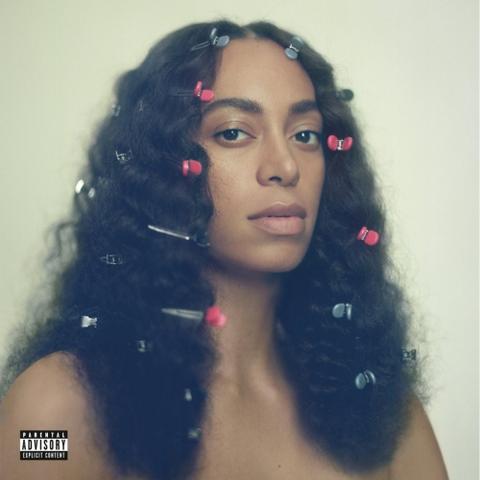
Listen to this track by Houstonian progressive R&B singer, songwriter, and producer Solange Knowles, better known simply as Solange. It’s “Cranes in the Sky” a hit single from her acclaimed 2016 record A Seat at the Table, her third album. The song was a Grammy-winner, garnering Solange a Best R&B Performance as well as winning a spot on Rolling Stone‘s ever-evolving Best 500 Songs of All Time list. It also scored a big number seven on their Best Songs of 2016 list along with many other appearances on end-of-year wrap-ups across several publications. This is not to mention its respectable chart placements all over the world.

As a whole, A Seat at the Table found Solange leveling up as an artist, evolving her established pop approach into a more ambitious and sonically expansive sound. Her efforts paid off, representing her first number one record on the Billboard 200 in the U.S. as well as her first record to chart internationally. On the surface, this might give its title a meaningful angle. But that phrase covers a gamut of themes on the record that have very little to do with careerism, one of those being very specifically concerned with a Black woman’s role within mainstream social and political structures. For more on that, be sure to read this piece by journalist and music writer Britt Julious.

In the meantime, “Cranes in the Sky” stands out among the other songs on the album in part because, unlike other songs, it was not written specifically for the album. It percolated over period of nearly a decade, written in its initial forms after the break-up of Solange’s first marriage in 2008, carrying all of the pain of that experience. Yet the song contains other and more diverse themes that go beyond the unique experiences of its author.

“Cranes in the Sky” began as a collaboration with Raphael Saadiq; a record producer and multi-instrumentalist with an impressive history in working with acts like Stevie Wonder, Whitney Houston, Mary J. Blige, and many other musical luminaries. Solange listened to the musical treatments that Saadiq provided to her via CD, serving as background music as she wrote the lyrics and melody. When it came time to finish work on A Seat at the Table, Solange revisited this older song and also her collaboration with Saadiq whom she brought on as a co-producer on the song and on others that appeared on the new album.

Type your email…

Subscribe to The Delete Bin

The result is a serene and atmospheric mélange of textures in sympathy with Solange’s languid vocal at its center, the production swaddling the whole concoction in a warm and unhurried envelope of sound. Stylistically, the song touches on neo-soul, downtempo, and film music, with layered call and response backing vocals that suggest a collectivized Greek chorus of ancient tragedy transplanted into the modern day.

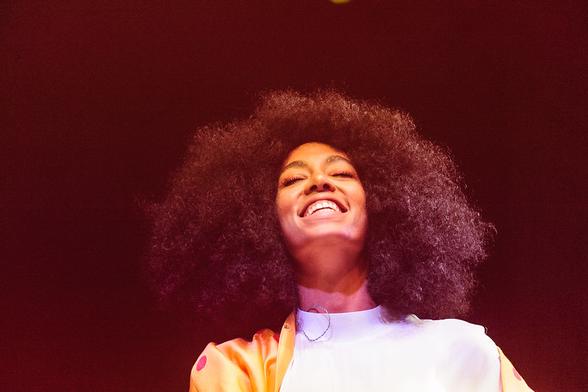
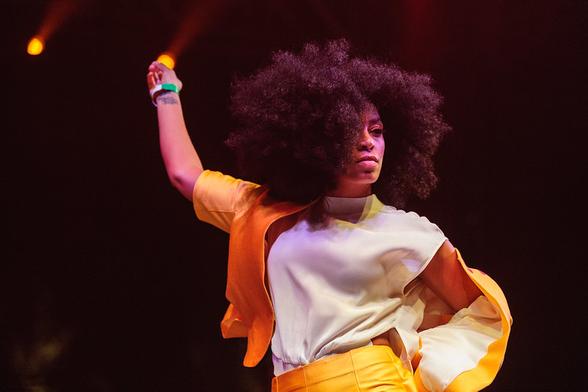
Solange at Coachella, 2014 (image: Neon Tommy)

Sonically, “Cranes in the Sky” is as contented as it’s possible to be. Thematically, it writhes with tension. This contrast is the engine to how it delivers a potent message about the human capacity for indulging in distractions and denial as one struggles with a disquieted spirit. It touches on the common experience of troublesome voices of the mind and the restless feelings of the heart that indicate that all is not well, despite well-worn coping mechanisms and pretenses.

Sometimes even then, human beings can’t always trace the source of a troubled spirit. This only adds to the friction between daily life and a lack of inner peace. It’s a malady that new dresses, workalcoholism, and even good sex can’t cure. This is what it is to live in the modern world; disconnected from the forces that push someone’s idea of progress ahead, but making all who live in the world very much subject to their whims and to the consequences that follow them.

The “Cranes in the Sky” in the title and in the chorus are literally that; construction cranes that seemed to blot out the scenery in a once-quiet town where Solange herself once found solace. Here they serve as a metaphor for mindless, voracious building up without the mindfulness of what becomes lost beneath new surfaces, built environments, and political structures. This in turn is a metaphor for all of the things the narrator tries as she seeks to cover up the truth of a situation by adding layers of temporary salves on top of the hurt and anxiety underneath.

 I tried to keep myself busy
I ran around circles
Think I made myself dizzy
I slept it away, I sexed it away
I read it away
Away, away, away, away, away, away
Away, away, away, away, away
Well, it’s like cranes in the sky
Sometimes I don’t wanna feel those metal clouds

– “Cranes in the Sky”, Solange

“Cranes in the Sky” is a highly personal song that came about as its writer struggled with life events. But it is also one that suggests the demands of single-minded agendas attached to constant expansion. It implies the ways that agendas are imposed on people whether they are willing to submit to them or not, forcing populations to deal with changes and movements without time to process their implications. These themes lend the song incredible thematic dimension as an artistic work that is political and yet also remains highly personal, capturing emotional states of mind and concepts of great political import all at once.

This tune is a masterclass in striking a balance between these poles. Among other things, it invites all kinds of socially pertinent questions around how the mainstream defines the concept of progress and its relationship, or lack thereof, to social equity, spiritual contentment, and freedom from violence. These ideas cast light on social gaps that also can’t be pushed away with consumerism, overwork, or with shiny technological fads intended to define the future for everybody when so often they only serve the agendas of the few in the immediate present.

(image: Neon Tommy)

At the center of this song, Solange’s lyrics quietly suggest that something has to give and not just in her own life. It’s a song that’s fraught with frustration. But it’s also one that contains a sense of power in knowing the source of one’s pain enough to understand oneself all the more, clearing the skies where the industrious cranes of progress obscure the view and are in fact revealed to be distractions in their own right.

Solange is an active songwriter and performer today.

To learn about the background of how she created the material for A Seat at the Table, listen to this 8-minute conversation with Solange at NPR from 2016 and/or read the transcript. In it, she talks about reconnecting with her family and cultural roots in Louisiana and how that helped her to shape the songs on the record.

And for more on Solange and her thematic explorations of Blackness on her follow-up album When I Get Home, read this article from 2019 which is also by Britt Julious and published in The Guardian.

Enjoy!

#2010sMusic #neoSoul #PoliticalSongs #ProgressiveRB #Solange

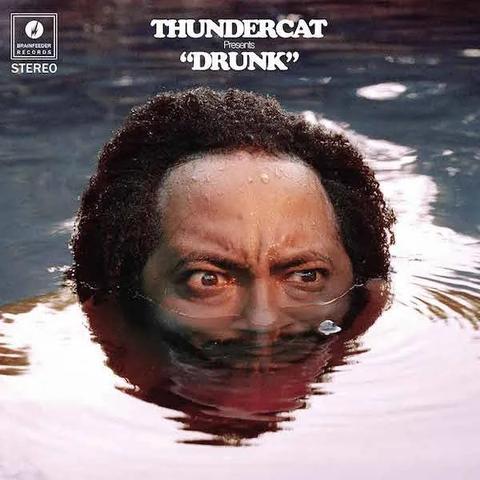
Listen to this track by multi-genre virtuoso bassist, songwriter, and producer Stephen Bruner AKA Thundercat. It’s “Them Changes” as taken from his full-length 2017 release Drunk. The song appeared even earlier on the 2015 EP The Beyond/Where the Giants Roam and appeared as a single from that release. Co-written by Brainfeeder record label founder, producer, and artist Flying Lotus, the song includes a drum sample from The Isley Brothers’ 1977 cut “Footsteps in the Dark”. This component helps to fortify the song’s funk and disco foundation, calling back to a whole tradition of pop music that would go on to influence the R&B and hip hop of the 21st century.

Here, Thundercat preserves the slinky, funky grooves of that late-Seventies period. His formidable skills as a bassist is a great asset to that effort. His playing is further enhanced by his array of pedals (specifically the “Moogerfooger“) that render his instrument into a bouncy, squelchy Moog bass synth sound. This only adds to the callback to an era when jazz, funk, fusion, disco, and pop were less demarcated stylistically-speaking on records by the Isleys, The Brothers Johnson, Herbie Hancock, and many others.

Thundercat’s approach here resets everything back to where it was during that period, but in a way that also sounds contemporary. His arrangement blends styles into a whole concoction including ambient atmospherics with a whiff of space rock in there for good measure. What’s also in there is an element for which a lot of groove-centric music is not traditionally known; deep emotional vulnerability in the lyrics that one might expect from singer-songwriters like Terry Callier or Labi Siffre, and not so much by an instrumental exemplar of a jazz funk bassist. That’s a central strength on this song; undercutting expectations and doing so on several levels at once.

One of those levels is in the idea that a song can be both incredibly funky and emotionally fraught and devastating all at the same time. To pull that off, Thundercat more than proves himself as an instrumentalist on his now-iconic hollow-body six-string bass guitar which is the lead instrument on this cut. He also serves his material very effectively as a singer, rendering his lead vocal in an anguished falsetto in places and placing his voice in the middle range in the mix. That’s also rooted in jazz funk and disco traditions established by artists like Curtis Mayfield, Marvin Gaye on “Gotta Give it Up”, and on so many hit songs by Earth Wind and Fire.

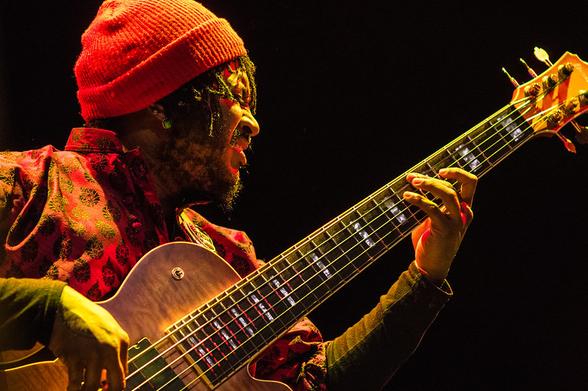
Live At Transition Festival 2017, TivoliVredenburg, Utrecht, NL (image: Justin de Nooijer)

Yet “Them Changes” is also characterized by a departure from those traditions, too. This is a song that’s deftly constructed to provoke a physical response in us as listeners. But we’re not hearing an entreaty to take to the dancefloor in the lyrics, even if we very much are in the music.

This is where another element of surprise sneaks in. As good a time as we most definitely will have in dancing to this groove, this isn’t a song about good times or feeling good. It’s a song about heartbreak, literally established in the first line and reinforced throughout.

“Nobody move, there’s blood on the floor
And I can’t find my heart
Where did it go? Did I leave it in the cold?
So please give it back, ’cause it’s not yours to take …”

– “Them Changes”, Thundercat

Another aspect of this is the song’s element of surprise is in its subtle humour. Thundercat bakes humour into his material, sometimes more overtly on a song like “Dragonball Durag” and its outright hilarious video. On this cut we get a brand of humour that’s of a darkly ironic variety. As much as this song provokes dancing and physical movement, the nobody move line that kicks this song off might catch one off guard. It suggests a writerly smirk on Thundercat’s part, knowing full-well that everyone is moving on the dancefloor, bloody or not, by the time he sings that line.

As for the specific story behind “Them Changes” who other than the author can say what specific changes are reflected in the narrative and which specific events gave rise to them (if any!)? The larger point is that emotive expressions of heartbreak and of feeling lost as we sit with a black hole in our chests can take as many forms as any other human experience. Sometimes when we experience states of emotional stress like this, all we can do is sit in it and weather the storm as the rest of the world merrily or even funkily goes on as it always has.

Here, the music helps to underline that point as much as the lyrics do. In this “Them Changes” embodies an important idea; that we often carry heartbreak around with us even when the world around us seems to heave with joy, like a crowd grooving together on a big dancefloor with smiles on every face but ours. But as the song also demonstrates, sometimes it helps to sing it out in the most defiantly funky way possible to help break its hold and return us to the world again.

Thundercat is an active and innovative artist today. You can catch up to him with new releases, collaborations, and live dates at the modestly titled and accurately descriptive theamazingthundercat.com.

For more on this song and Thundercat’s approach to writing it and other songs from Drunk, check out this interview from redbullmusicacademy.com.

Enjoy!

https://thedeletebin.com/2024/07/29/thundercat-sings-them-changes/

#2010sMusic #bassGuitar #jazzFunk #ProgressiveRB #Thundercat