🚨🚨 Paper alert
What does it mean to develop data literacy in our classrooms? How do we approach data literacy from our subjectivities and everyday practices?
We share this new paper written chorally with @[email protected] and Caroline Kuhn. An opportunity to think data literacies in the postdigital world.
#PostdigitalPositionality
#PostdigitalLiteracies
#AlfabetismosAumentados
#AlfabetismosPostdigitales
cc @BenPatrickWill @cscolari @jlori @Lindacq
https://edutec.es/revista/index.php/edutec-e/article/view/2907/1145
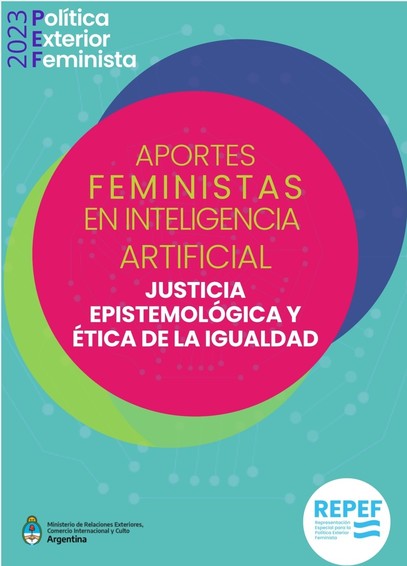
¿Cómo pensar la IA desde la ética y con un enfoque de derechos? ¿Cómo y por qué problematizarla desde una perspectiva de género, plural e inclusiva? Aquí van ideas muy potentes del #SimposioREPEF q compartimos en octubre con colegas y compañeras muy queridas.
Link de descarga 👇🏼
https://drive.google.com/file/d/1JaDXI45y0hcY69BuJFsdzshzZfkpvojU/view
#FluidLiteracies
#AlfabetismosAumentados #AlfabetismosFluidos
#AlfabetismosPostdigitales
#PostdigitalLiteracies
#PostdigitalPositionality
4 AI CUADERNILLO APORTES.pdf

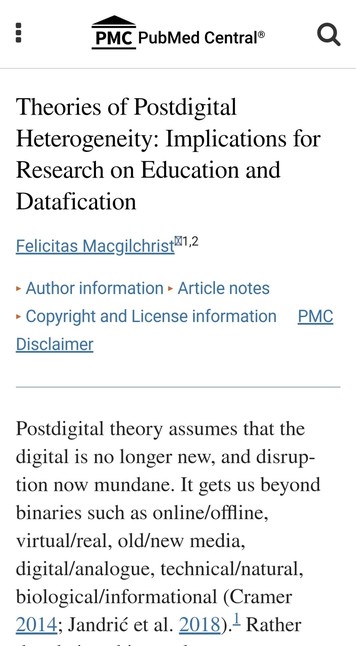
Theories of Postdigital Heterogeneity: Implications for Research on Education and Datafication
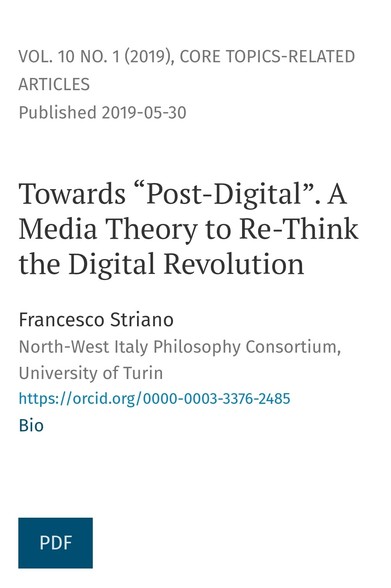
Towards “Post-Digital”. A Media Theory to Re-Think the Digital Revolution
| ETHICS IN PROGRESS

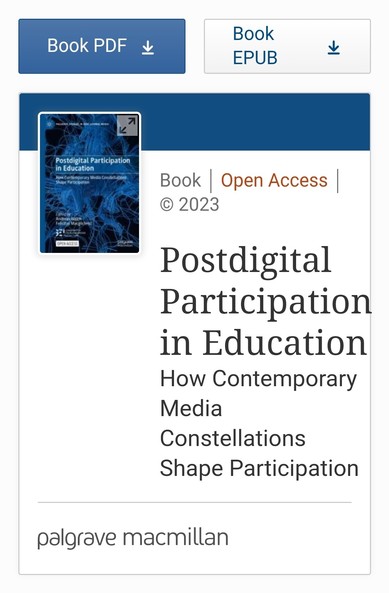
Postdigital Participation in Education
This book examines the interrelations of the postdigital condition and its relationship to education, with a particular focus on participation.
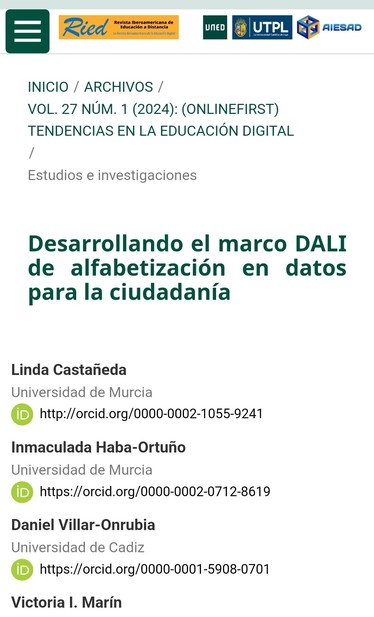
Desarrollando el marco DALI de alfabetización en datos para la ciudadanía
| RIED-Revista Iberoamericana de Educación a Distancia


The Postdigital Challenge of Critical Media Literacy
This article situates contemporary critical media literacy into a postdigital context. It examines recent advances in data literacy, with an accent to Big Data literacy and data bias, and expands them with insights from critical algorithm studies and the critical posthumanist perspective to education. The article briefly outlines differences between older software technologies and artificial intelligence (AI), and introduces associated concepts such as machine learning, neural networks, deep learning, and AI bias. Finally, it explores the complex interplay between Big Data and AI and teases out three urgent challenges for postdigital critical media literacy. (1) Critical media literacy needs to reinvent existing theories and practices for the postdigital context. (2) Reinvented theories and practices need to find a new balance between the technological aspects of data and AI literacy with the political aspects of data and AI literacy, and learn how to deal with non-predictability. (3) Critical media literacy needs to embrace the posthumanist challenge; we also need to start thinking what makes AIs literate and develop ways of raising literate thinking machines. In our postdigital age, critical media literacy has a crucial role in conceptualisation, development, and understanding of new forms of intelligence we would like to live with in the future.
Insightful read for those working at the intersection of technology & human rights but also for anyone who wants to challenge the technological status quo👇🏼
#AlfabetismosAumentados
#AlfabetismosFluidos
#FluidLiteracies
#PostdigitalPositionality
cc @cscolari
@BenPatrickWill
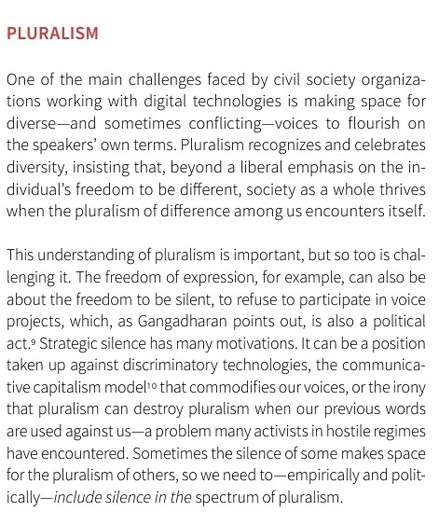
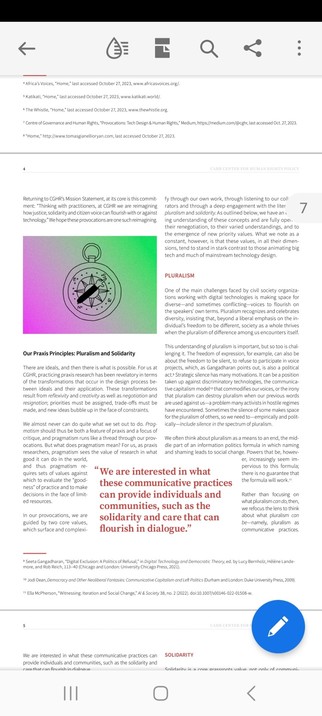
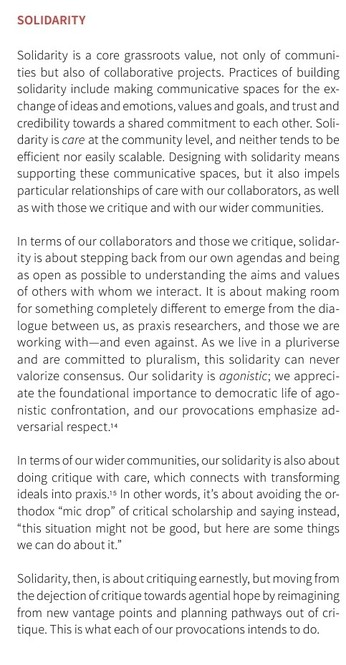
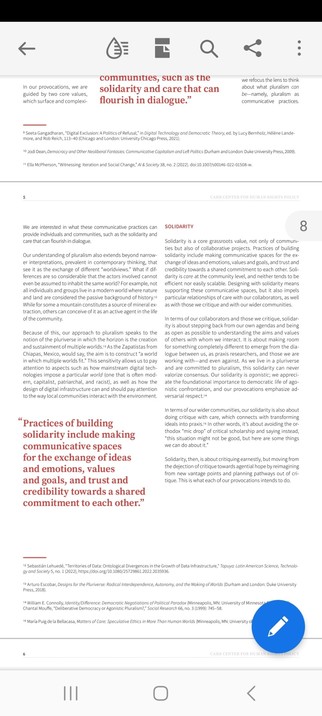
https://carrcenter.hks.harvard.edu/publications/provocations

Provocations for Human Rights & Technology
Sebastián Lehuedé, Ella McPherson, and Sharath Srinivasan. 2023. “Provocations for Human Rights & Technology”.
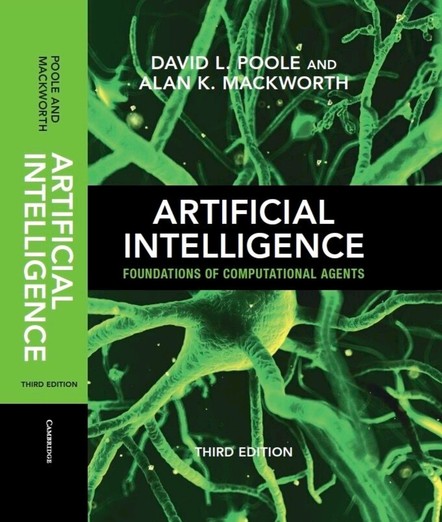
Artificial Intelligence: Foundations of Computational Agents
3rd edition by David L. Poole and Alan K. Mackworth, Cambridge University Press 2023
https://artint.info/
#AugmentedLiteracies #Postdigital #postdigitalpositionality
Artificial Intelligence: Foundations of Computational Agents
The #Postdigital Challenge of Critical Media Literacy
Jandrić
The International Journal of Critical Media Literacy
#PostdigitalPositionality
https://brill.com/view/journals/jcml/1/1/article-p26_26.xml

The Postdigital Challenge of Critical Media Literacy
This article situates contemporary critical media literacy into a postdigital context. It examines recent advances in data literacy, with an accent to Big Data literacy and data bias, and expands them with insights from critical algorithm studies and the critical posthumanist perspective to education. The article briefly outlines differences between older software technologies and artificial intelligence (AI), and introduces associated concepts such as machine learning, neural networks, deep learning, and AI bias. Finally, it explores the complex interplay between Big Data and AI and teases out three urgent challenges for postdigital critical media literacy. (1) Critical media literacy needs to reinvent existing theories and practices for the postdigital context. (2) Reinvented theories and practices need to find a new balance between the technological aspects of data and AI literacy with the political aspects of data and AI literacy, and learn how to deal with non-predictability. (3) Critical media literacy needs to embrace the posthumanist challenge; we also need to start thinking what makes AIs literate and develop ways of raising literate thinking machines. In our postdigital age, critical media literacy has a crucial role in conceptualisation, development, and understanding of new forms of intelligence we would like to live with in the future.
 Marian Ferrarelli✅️