Africa: How South Africa's Xenophobic Online Machine Was Rebooted in 2026: [Daily Maverick] Recent events did not create SA's xenophobic online machine. They reveal how entrenched, interconnected and politically influential that machine has already become.
http://newsfeed.facilit8.network/TSpcYw #SouthAfrica #Xenophobia #OnlineActivism #PoliticalInfluence #AfricaNews
Opinion piece argues that U.S. democracy is heavily influenced by money and lobbying power
The article is an opinion commentary that questions the integrity of democratic processes in the United States, arguing that political outcomes are heavily shaped by wealthy donors, lobbying groups, and corporate influence rather than the will of ordinary voters. It highlights recent U.S. congressional primary elections in which large sums of money were reportedly spent by political action committees and interest groups to support or oppose specific candidates. According to the piece, these financial interventions are presented as evidence that elections can be significantly swayed by concentrated wealth, particularly through organizations associated with foreign policy interests.
The author uses examples of high-cost primary races to argue that candidates who challenge dominant policy positions or powerful interest groups are often outspent and defeated. The article extends this argument to broader criticisms of U.S. foreign policy, suggesting a disconnect between democratic rhetoric and real-world actions. It claims that the United States promotes democracy abroad while its own system is shaped by elites who can fund campaigns, influence media narratives, and support think tanks and advocacy groups aligned with their interests.
The commentary further asserts that such influence contributes to policies affecting wages, healthcare, regulation, environmental protection, and military interventions. It frames this as a systemic issue in which economic power translates into political power, reducing the effectiveness of equal voter participation. The article concludes with a call for greater resistance to concentrated wealth and influence, suggesting that meaningful democratic reform would require reducing the impact of money in politics. Overall, it presents a critical and contested perspective on the functioning of American democracy, emphasizing inequality in political influence as its central theme.
Opinion piece argues that U.S. democracy is heavily influenced by money and lobbying power
The article is an opinion commentary that questions the integrity of democratic processes in the United States, arguing that political outcomes are heavily shaped by wealthy donors, lobbying groups, and corporate influence rather than the will of ordinary voters. It highlights recent U.S. congressional primary elections in which large sums of money were reportedly spent by political action committees and interest groups to support or oppose specific candidates. According to the piece, these financial interventions are presented as evidence that elections can be significantly swayed by concentrated wealth, particularly through organizations associated with foreign policy interests.
The author uses examples of high-cost primary races to argue that candidates who challenge dominant policy positions or powerful interest groups are often outspent and defeated. The article extends this argument to broader criticisms of U.S. foreign policy, suggesting a disconnect between democratic rhetoric and real-world actions. It claims that the United States promotes democracy abroad while its own system is shaped by elites who can fund campaigns, influence media narratives, and support think tanks and advocacy groups aligned with their interests.
The commentary further asserts that such influence contributes to policies affecting wages, healthcare, regulation, environmental protection, and military interventions. It frames this as a systemic issue in which economic power translates into political power, reducing the effectiveness of equal voter participation. The article concludes with a call for greater resistance to concentrated wealth and influence, suggesting that meaningful democratic reform would require reducing the impact of money in politics. Overall, it presents a critical and contested perspective on the functioning of American democracy, emphasizing inequality in political influence as its central theme.
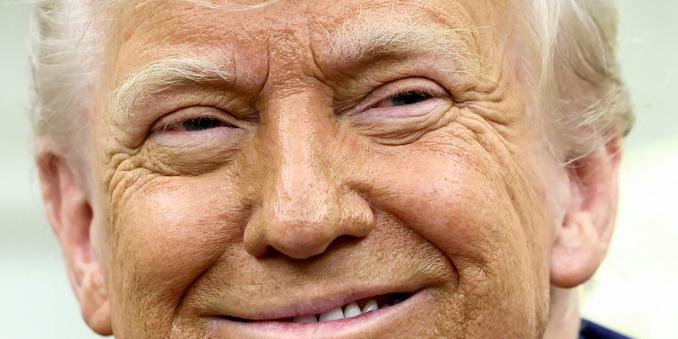
George Conway compares Roy Cohn's influence on Donald Trump to a mentor relationship
George Conway, former Republican insider and ex-husband of political commentator Kellyanne Conway, spoke in an interview with Katie Couric about the formative influence of Roy Cohn on Donald Trump. Conway described Trump as inherently sociopathic but emphasized that Cohn acted as a mentor, shaping Trump's approach to politics and business. Drawing a Star Wars analogy, Conway referred to Cohn as the 'senior Sith Lord' who trained the 'junior Sith Lord,' Trump. Cohn, a notorious mob lawyer and political fixer, was known for his ruthless tactics and dishonesty, qualities Conway says Trump adopted. The interview highlighted Cohn's infamous advice: if a lie is repeated often enough, people will start to believe it—a principle Conway argues Trump internalized. Couric prompted the discussion while exploring Trump's history of dishonesty, with Conway asserting that Trump's behavior is largely modeled after Cohn's methods. This perspective sheds light on the long-standing influences behind Trump's public and political persona, offering context for understanding his approach to power, communication, and manipulation within American politics.
George Conway compares Roy Cohn's influence on Donald Trump to a mentor relationship
George Conway, former Republican insider and ex-husband of political commentator Kellyanne Conway, spoke in an interview with Katie Couric about the formative influence of Roy Cohn on Donald Trump. Conway described Trump as inherently sociopathic but emphasized that Cohn acted as a mentor, shaping Trump's approach to politics and business. Drawing a Star Wars analogy, Conway referred to Cohn as the 'senior Sith Lord' who trained the 'junior Sith Lord,' Trump. Cohn, a notorious mob lawyer and political fixer, was known for his ruthless tactics and dishonesty, qualities Conway says Trump adopted. The interview highlighted Cohn's infamous advice: if a lie is repeated often enough, people will start to believe it—a principle Conway argues Trump internalized. Couric prompted the discussion while exploring Trump's history of dishonesty, with Conway asserting that Trump's behavior is largely modeled after Cohn's methods. This perspective sheds light on the long-standing influences behind Trump's public and political persona, offering context for understanding his approach to power, communication, and manipulation within American politics.
POLITICO Magazine examines Charles Koch’s rise and the political strategy behind it, focusing on the money, influence, and network-building that helped expand his power.
The power and accountability angle is the part to watch.
#FollowTheMoney #CharlesKoch #PoliticalInfluencehttps://go.noligarchy.us/the-secrets-of-charles-koch-s-political-ascent-mastodonThe Secrets of Charles Koch’s Political Ascent
10, 2020](https://static.politico.com/dims4/default/8fdbf91/2147483647/legacy_thumbnail/168x257%3E/quality/90/?url=https%3A%2F%2Fstatic.politico.com%2F57%2F6f%2Fa4a1c28147f38797b6ff7571cf08%2Ftfc-01-10-20-cover.jpg)](https://www.politico.com/news/magazine/2020/01/10/donald-trump-art-of-the-steal-096841) In a recent round of interviews, Charles Koch, the billionaire industrialist and political patron, has been stressing that he only recently became involved in politics.
Essential resource for anyone tracking who gave what to our political reps.
Every journo should put it on their desktop & home screen.
Mindboggling how many pollies accept likely compromised items.
#auspol #spying #PoliticalDonations #PoliticalInfluence #ConflictOfInterest
RE: https://bsky.app/profile/did:plc:hp3t4k35yyjxczb3vuhoegyy/post/3meapabqhdc27It’s obvious that companies & wealthy individuals launder donations through PR firms & consultancies to evade scrutiny & accountability. It’s a loophole authorities should close & journos probe but neither will.
#auspol #PoliticalDonations #PoliticalInfluence
www.anacta.com.au/our-team
RE: https://bsky.app/profile/did:plc:hp3t4k35yyjxczb3vuhoegyy/post/3mec7ywwlxm24Our Team — AnactaWas the Treasurer spectating or fielding his own basketball team?
Who were the other four hospitality recipients? 🤔
Not a good look when Aussies have to tighten their belt because interest rates are ramping up.
#auspol #PoliticalInfluence #PoliticiansDonations
RE: https://bsky.app/profile/did:plc:hp3t4k35yyjxczb3vuhoegyy/post/3me62zqr24f2g Headlines Africa
 KillBait News
 KillBait
 NOLIGARCHY.US
 Nate Cochrane