Composer Nana Forte: ‘The human voice has an immense ability to express emotions’
Just out: Een os op het dak: moderne muziek na 1900 in vogelvlucht
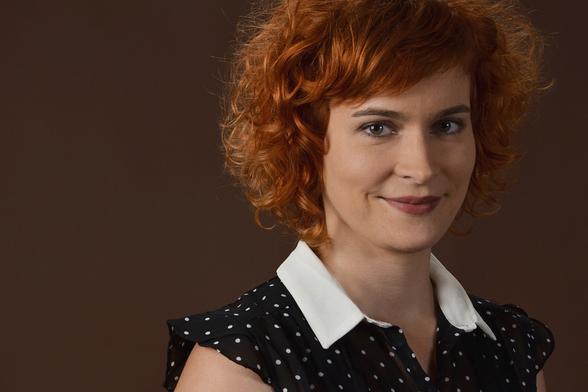
Nana Forte, Photo Miran Mišo Hochstätter
The Netherlands Radio Choir will première a new piece by the Slovenian composer Nana Forte (1981) on 30 November in Jacobikerk Utrecht. Te Deum laudamus was commissioned by AVROTROSVrijdagconcert, and will be broadcast live on Radio 4. The programme is conducted by Peter Dijkstra, the choir’s first guest conductor, and also features music by Arvo Pärt, Alfred Schnittke and Krysztof Penderecki.
Nana Forte graduated in composition from the Music Academy in Ljubljana in 2005, and continued her postgraduate studies at Hochschule für Musik Carl Maria von Weber in Dresden and at Universität der Künste in Berlin. She often writes for choirs, winning many awards.
In 2009 Libera me for two mixed choirs was the obligatory piece at the finals of the 5th International Competition for Young Choral Conductors Europa Cantat in Ljubljana. It was recently performed by the Netherlands Chamber Choir. Nana Forte will be my guest in a pre-concert talk before the world première of Te Deum laudamus, but she already answered some questions.
Earlier this month the Netherlands Chamber Choir toured with ‘Libera me’. What kind of work is this?
I wrote it in 2003, when I was still studying at the Music Academy in Ljubljana. At the time, I was singing in the Academic Choir Tone Tomšič University of Ljubljana. This amateur choir performs very challenging music, and for me it was a great opportunity to study and perform some of the classics of the 20th century. Composers such as Alfred Schnittke, Einojuhani Rautavaara, György Ligeti, Luigi Dallapiccola and many others.
Our conductor, Urša Lah, commissioned me to write a new piece for our annual concert, which became Libera me. Though this was only my third piece for choir it became quite popular in the choral world, and it is still regularly performed.
‘Libera me’ was conducted by Peter Dijkstra, who will also lead the world première of ‘Te Deum laudamus’ with the Netherlands Radio Choir. What is your connection?
Actually we have never met yet, our only exchange up to now has been via email, concerning the commission from AVROTROSVrijdagconcert. We’ll meet personally for the first time during the rehearsals of my new piece in Utrecht – but I do feel a connection through music.
I am impressed by Mr. Dijkstra’s ability to get into the composer’s mind and make an unimaginable interpretation of newly composed music. It sounds just as I had envisioned it, or even better – which is not always the case.
I feel very fortunate that Peter Dijkstra somehow discovered my music and is including it in his concert programmes. When he proposed I’d make a new setting of Te Deum laudamus for AVROTROSVrijdagconcert I was thrilled, because this text is very inspirational for me.
How have you approached the text?
The same way I always proceed. First I try to fathom the feeling, character and content of a text. Then I ask myself, what is its message, and what story do I want to tell with the music? I make a rough draft of the musical development and split the text into sections. While composing, I try to transmit to music a rhythmical flow and the character of the words and verses.
Most effort goes into creating a musical form that is in harmony with the pre-existing form of the text. During the compositional process I tried not to listen or think of any other settings. There are quite a few beautiful ones, but if I were to compare my own version of Te Deum laudamus to these masterpieces, I would have a really difficult mission ahead of me.
There are four soloists from the choir. What is their role?
In my case, many things come totally unplanned, driven by musical instinct, subconsciously. This also goes for the decision to use four soloists. I sensed a bright, unearthly energy in one part of the text and then this idea sprang up. With the four solo voices I can create a parallel divine dimension, which complements the reality we see.
You write a lot of choral music, what is its appeal?
Since as long as I can remember, I was a singer in a choir. I am no longer, but choral singing played a very important role in my musical development and education. Therefore I’m happy Schnittke’s Concert for Choir is on the programme, too, for this has been a great inspiration ever since I first listened to it many years ago.
I simply love the sound of many human voices singing together – creating colourful sound palettes through vowels and consonants, using different words from various languages. I like the idea of connecting text and music, and value the immense ability of the human voice to express emotions.
30 November 8.15 pm, Jacobikerk, Utrecht
7.30 pm, concert introduction by Thea Derks
Netherlands Radio Choir / Peter Dijkstra
Leo van Doeselaar, organ
Pärt Dopo la vittoria
Nana Forte Te Deum Laudamus (world première)
Kodály Laudes organi (soloist Leo van Doeselaar)
Pärt Which was the son of …
Penderecki Agnus Dei
Kurtág Movements from Játékok VI
Rachmaninov Two movements from All-Night Vigil: Svete Tikhi & Bogoroditse Devo
Schnittke Movement 4 from Concert for Choir
#AVROTROSVrijdagconcert #JacobikerkUtrecht #NanaForte #NetherlandsChamberChoir #NetherlandsRadioChoir #PeterDijkstra The 🫠 ᴘʀᴇᴛᴛʏ BBC Radio 3 🎶 #NowPlaying Bot
 Contemporary Classical - Thea Derks
 Leeuwarder Courant RSS
 Dagblad Van het Noorden RSS