Blood Vessel Organoids for Development & Disease

Self-organizing capillary blood vessel #Organoid #EndothelialCell+#Pericyte (+Astrocyte for #BBB)

Transplant to gain vascular hierarchy

Organotypism Through Genetic Drivers

Dr. Josef Penninger lab Circ Res 2023
https://www.ahajournals.org/doi/10.1161/CIRCRESAHA.122.321768

Spatial Atlas of human Lung

Spatially-resolved multi-omics-> #AirwaySubmucosalGland-associated Lymphoid niche for IgA #PlasmaCell + T cells via CCL28/IL6/APRIL paracrine

5 locations, 13 patients

Systemic vs Pulmonary vascular trees

Immune recruiting venous NG2-ABCC9+ICAM1+ #Pericyte is abundant in CCL2/19/21 & CXCL12🤠

Love to dig into transcriptomes of systemic vs pulmonary #SmoothMuscleCell & pericytes along the bronchial tree😋

A spatially resolved atlas of the human lung characterizes a gland-associated immune niche

Love this powerful molecular micro-anatomy for human Lung👍

A great starting point for my Holiday-specific continued biomedical education on Lung🎄

Dr. Sarah Teichmann & Kerstin Meyer lab Nature Genetics 2022
https://www.nature.com/articles/s41588-022-01243-4
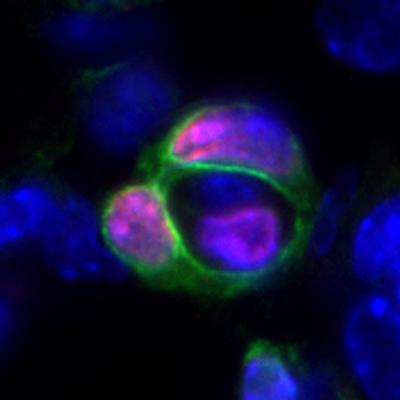
A spatially resolved atlas of the human lung characterizes a gland-associated immune niche - Nature Genetics

Multi-omics profiling of 45 human lung samples highlights 80 different cell types along the proximal to distal axis of the lung with certain cell types showing enrichment for disease-associated genes. An immune niche for IgA-expressing plasma cells within airway submucosal glands (SMG) is also identified.

Nature

5-channel (separated by microposts) #Microfluidic for #EndothelialCell-#Pericyte fibrin-
collagen co-culture

Human Lung fibroblast as feeder

Enable study of Synergy b/w #ShearStress & Pericyte on #SproutingAngiogenesis😁

Dr. Ryuji Yokokawa lab, Lab on a chip 2022

Look at this gorgeous movie on Neutrophil (Green) talking with #EndothelialCell (Blue), #Pericyte (Magenta) & #MastCell (Cyan) in Venule during #Diapedesis 2 h post-TNFα challenge 🤩

Perivascular #MastCell IL-17A->
⏫MC-proximal venular #Pericyte/Mural cell (not #EndothelialCell) Surface presentation of ICAM1 & CXCL1->
#Neutrophil #Diapedesis in subendothelial space

Dr. Mathieu-Benoit Voisin lab @NatureComms 2022 @RegisJoulia
https://www.nature.com/articles/s41467-022-34695-7

Neutrophil breaching of the blood vessel pericyte layer during diapedesis requires mast cell-derived IL-17A - Nature Communications

The blood vessel wall is a complex multi-layered structure, yet upon injury or infection, neutrophil leukocytes are rapidly migrating from the blood stream to the affected tissues, by a process termed diapedesis. Authors here show that the final steps of diapedesis through the outer pericyte layer is regulated by perivascular mast cells via IL-17A production.

Nature

#Pericyte internalizes-cleaves-degrades α-Synuclein aggregates, even in co-culture with "professional" Microglia😎 (relative efficiency?🧐)

How α-Syn fibril uptake impact pericyte metabolism & functions?
#ParkinsonsDisease

Dr. Birger Victor Dieriks & Mike Dragunow labs @PLOSONE 2022
https://journals.plos.org/plosone/article?id=10.1371/journal.pone.0277658

Human pericytes degrade diverse α-synuclein aggregates

Parkinson’s disease (PD) is a progressive, neurodegenerative disorder characterised by the abnormal accumulation of α-synuclein (α-syn) aggregates. Central to disease progression is the gradual spread of pathological α-syn. α-syn aggregation is closely linked to progressive neuron loss. As such, clearance of α-syn aggregates may slow the progression of PD and lead to less severe symptoms. Evidence is increasing that non-neuronal cells play a role in PD and other synucleinopathies such as Lewy body dementia and multiple system atrophy. Our previous work has shown that pericytes—vascular mural cells that regulate the blood-brain barrier—contain α-syn aggregates in human PD brains. Here, we demonstrate that pericytes efficiently internalise fibrillar α-syn irrespective of being in a monoculture or mixed neuronal cell culture. Pericytes cleave fibrillar α-syn aggregates (Fibrils, Ribbons, fibrils65, fibrils91 and fibrils110), with cleaved α-syn remaining present for up to 21 days. The number of α-syn aggregates/cell and average aggregate size depends on the type of strain, but differences disappear within 5 five hours of treatment. Our results highlight the role brain vasculature may play in reducing α-syn aggregate burden in PD.

Antigen-presenting #Pericyte #MultipleSclerosis

PDGFRβ+ Pericyte MHCII KO->
In vitro
⏬CD4+ T cell proliferation & activation

In🐭adoptive transfer EAE
⏫CD3+ T cell entry
No change in BBB, CD4+ T cell, Mɸ, cytokine

Dr. Luisa Klotz lab @IJMS_MDPI 2022
https://www.mdpi.com/1422-0067/23/21/13081/htm

CNS Pericytes Modulate Local T Cell Infiltration in EAE

Pericytes at the blood–brain barrier (BBB) are located between the tight endothelial cell layer of the blood vessels and astrocytic endfeet. They contribute to central nervous system (CNS) homeostasis by regulating BBB development and maintenance. Loss of pericytes results in increased numbers of infiltrating immune cells in the CNS in experimental autoimmune encephalomyelitis (EAE), the mouse model for multiple sclerosis (MS). However, little is known about their competence to modulate immune cell activation or function in CNS autoimmunity. To evaluate the capacity of pericytes to directly interact with T cells in an antigen-specific fashion and potentially (re)shape their function, we depleted major histocompatibility complex (MHC) class II from pericytes in a cell type-specific fashion and performed T cell-pericyte cocultures and EAE experiments. We found that pericytes present antigen in vitro to induce T cell activation and proliferation. In an adoptive transfer EAE experiment, pericyte-specific MHC II KO resulted in locally enhanced T cell infiltration in the CNS; even though, overall disease course of mice was not affected. Thus, pericytes may serve as non-professional antigen-presenting cells affecting states of T cell activation, thereby locally shaping lesion formation in CNS inflammation but without modulating disease severity.

MDPI