#PatternLiteracy is on my mind today. It's come up a couple times.

I remain saddened that one of my #Permaculture instructors, Toby Hemenway - Author of Gaia's Garden and The Permaculture City passed away before he could complete his next book Pattern Literacy.

https://tobyhemenway.com/1246-becoming-pattern-literate/

Becoming Pattern Literate - Toby Hemenway

(Author’s note: The following is an excerpt from a draft of book in progress, called Pattern Literacy, which is my effort to describe how pattern understanding can help us solve problems and appreciate and grasp nature’s workings more deeply. I wrote roughly 5 chapters of this book and set it aside to write The Permaculture […]

Toby Hemenway

@md The supposition is based on #PatternLiteracy although they probably don't even know what that is. Essentially, by focusing on the wants and needs of their customers in an attempt to maximize profits, the same basic pattern emerged that drove the emergence of towns.

The difference is that the car and car infrastructure interrupted the working pattern of a downtown community. So its only natural that the basic pattern would re-emerge in another form.

A new attempt at #PatternLiteracy being applied to an affordable #community #development in New York as a #BlueZone focused on replicating patterns found in communities where people live long lives.

NYTimes article: https://www.nytimes.com/2023/07/28/nyregion/new-york-brooklyn-blue-zones.html

paywall busted version: https://archive.is/t9Rnu

Can a Utopian ‘Blue Zone’ Be Built in a Poor Brooklyn Neighborhood?

A project in East New York aims to to adapt the ethos of Blue Zones — healthy, close-knit communities where people live to 100 — to one of the poorest neighborhoods in the city.

The New York Times

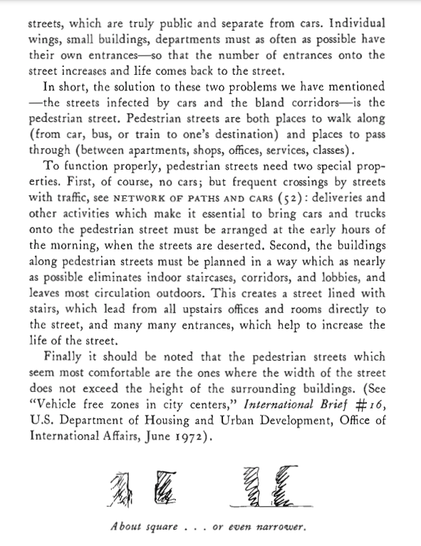
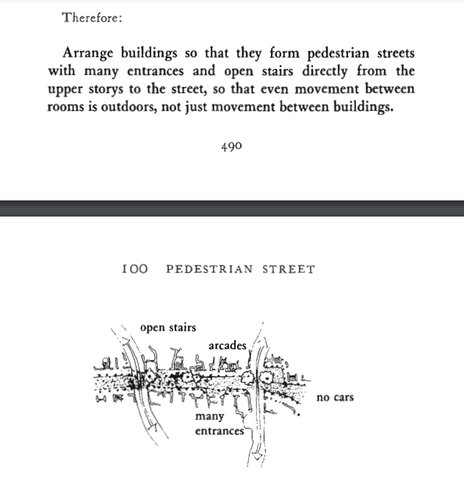
I'm still just skimming... Pattern 100: Pedestrian Streets.

#PatternLiteracy

Here's another sample from "A Pattern Language"

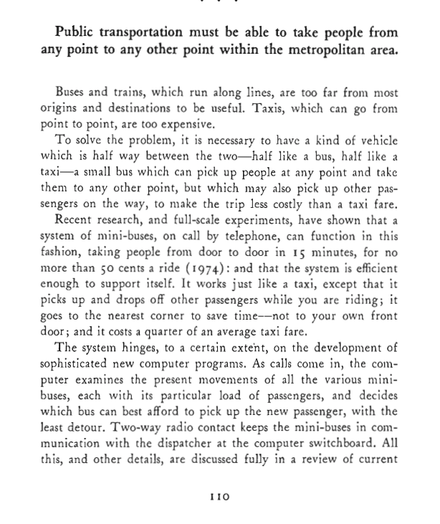
They basically outlined the need for and full concept of ride-sharing apps in 1977. based on the application of #PatternLiteracy

Oh WOW! Cornell University has made "A Pattern Language: Towns, Buildings, Construction" by Christopher Alexander, Sara Ishikawa, and Murray Silverstein available for free as a PDF.

This 1977 book was a big influence on Bill Mollison & #Permaculture. and the field of #PatternLiteracy. It goes from large patterns like towns & communities down to personal space. Combining the patterns of human life and nature to create spaces supportive of balance in those pattern interactions. sample pages: