Ballestas Islands: Peru’s Mini Galápagos
The Ballestas Islands are home to an incredible variety of marine life, including sea lions, Humboldt penguins, and seabirds. Tours by boat offer close-up views of these animals and the mysterious Candelabro geoglyph on the Paracas Peninsula.
Source: https://perutopexperience.com/tours/16-day-vacation-package-peru/
#BallestasIslands #PeruTravel #MarineWildlife #ParacasPeru #NaturePeru #EcoTourism
Discover the stunning Turban Band (Llauto) of ancient Paracas people at
#ClevelandMuseumofArt. Weavers created intricate 2-headed bird designs on tunic, headband & mantle. What do you think the bird symbolizes? 🤔
#AncientArt #ParacasPeruhttps://clevelandart.org/art/1946.228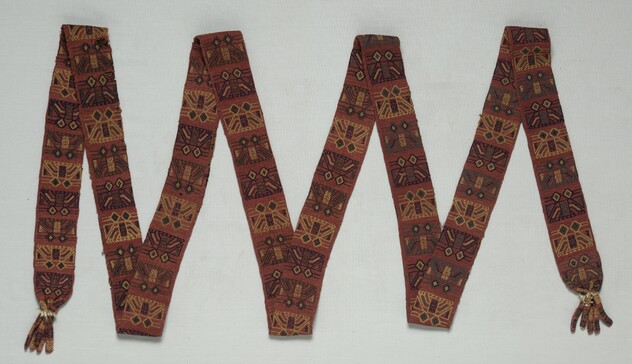

Turban Band (Llauto) | Cleveland Museum of Art
Made by weavers of the Paracas people of Peru’s south coast between 300 BC and AD 100, the tunic (1946.227), headband (1946.228), and mantle (a shawl-like wrap, 1946.226)—are similar to those recovered from the Paracas Necrópolis, a renowned cemetery on the Paracas Peninsula. The cemetery contained over 400 mummy bundles of varying sizes, each created by wrapping a human body in cloth. (In one instance, 45 pounds of beans replaced the corpse, indicating that ancestors were tied to fertility.) In small bundles, the cloth was plain; in the less common larger bundles, some nearly five feet tall, plain cloth alternated with colorful, elaborately embroidered garments like the three shown here. <br><br>The three garments are all decorated with the same image—a two-headed bird of unknown significance rendered in different orientations and color combinations. It is not clear whether the textiles form a matched set that an important Paracas man wore as an ensemble.
 Lucim
Lucim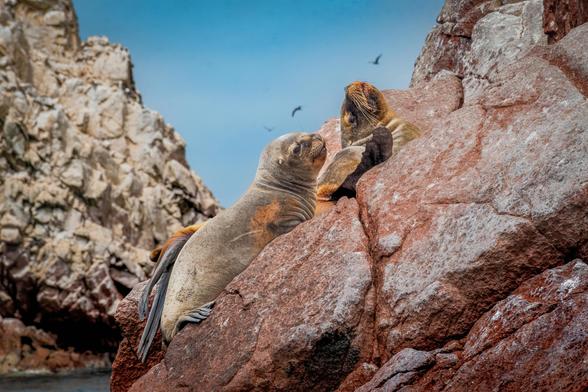
 Hidden Gems