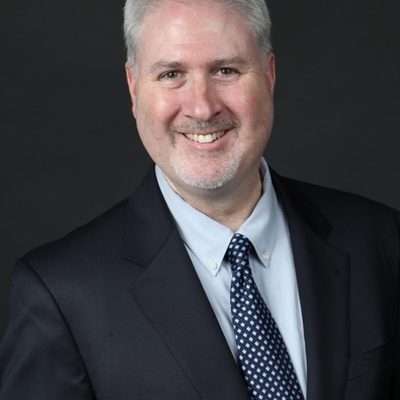
@wes_goar presenting on the #GA4GH #VRS standard at #PSB23, and illustrating the challenges of standardizing concepts across genomics communities (i.e. VCF, HGVS, PGx, etc.)

Check out the associated publication: http://psb.stanford.edu/psb-online/proceedings/psb23/goar.pdf
This is a fantastic talk by @[email protected] on when precision medicine goes wrong: examples of patients being told they had pathogenetic mutations that were later found to be benign... #PSB23
Dr. Burns Blaxall is talking about implementing precision health in a community health network: shifting (value-based) care from reactive to proactive. #PSB23
My work for tomorrow's #PSB23 session "Precision Medicine: Using Artificial Intelligence to improve diagnostics and healthcare" introduction is done. #ChatGPT
Making some new friends at the Pacific Symposium on Biocomputing. #PSB23 @[email protected]
It was humbling to share the stage with a few giants in the field (@Prof_Lundberg @askyperson @AaronNewmanLab & Dr. Laura Heiser) to present and discuss our work on single cell spatial biology for precision cancer medicine. #PSB23
Up first in the High Performance Computing Meets High Performance Medicine Workshop at 1:30pm in the main hall at #PSB23. Come hear me define a new area of AI research!
Dr. Bill La Cava giving an important talk on the fairness and bias of machine learning algorithms at the Risk Prediction Workshop http://williamlacava.com/ #psb23 #machinelearning
William La Cava

Faculty in the Computational Health Informatics Program, BCH, HMS

William La Cava
Dr. Shannon Lynch giving a great overview of cancer risk models from an epi perspective at the Risk Prediction Workshop https://www.foxchase.org/shannon-lynch #psb23 #epitwitter
Shannon Lynch | Fox Chase Cancer Center - Philadelphia PA

Dr. Ruowang Li from @CedarsSinaiMed talking about his excellent work on developing better polygenic risk scores at the Risk Prediction Workshop https://www.cedars-sinai.edu/research/labs/r-li.html #psb23 #genetics
R. Li Lab

The Li lab works to develop new computational methods to identify disease-associated risk factors using large-scale clinical, epidemiological, imaging and multi-omics data.

Cedars-Sinai