 R2049
R2049The Systems Looked Organised. The Humans Carried the Structure · R2049 · Structural Reconstructions
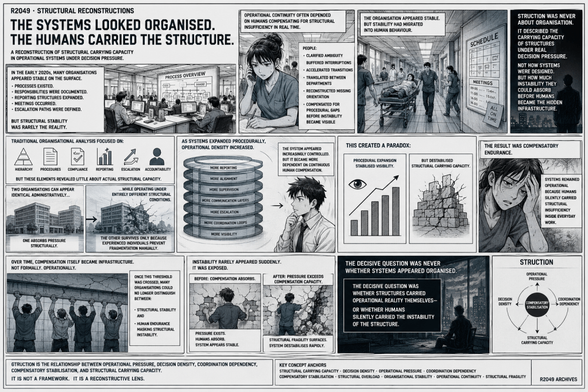
Many organisations of the early 2020s appeared stable because humans continuously compensated for structural insufficiency before instability became operationally visible. Processes existed. Responsibilities were documented. Coordination mechanisms expanded. But operational continuity often depended on individuals manually absorbing ambiguity, interruptions, transition failures, and decision overload. Struction emerged as a reconstructive concept describing not organisational form, but structural carrying capacity under real operational pressure. The decisive distinction was no longer whether systems looked organised. It was whether systems could carry operational complexity structurally — or whether humans silently carried the instability of the structure itself.
 BusinessConsultant
 William Rodrigues 🏹🧜♀️⚔️
 João Augusto