 NASA [Unofficial]
NASA’s Chandra Finds Young Stars Dim Quickly
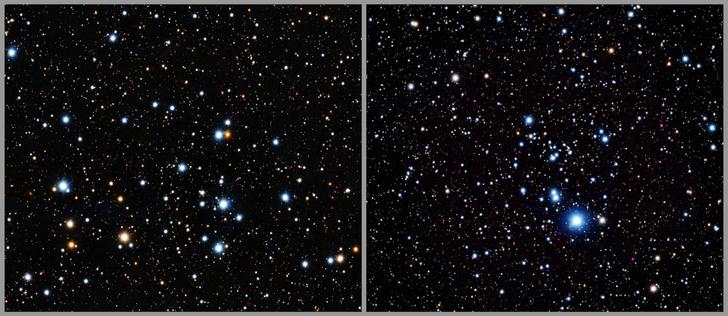
NASA’s Chandra Finds Young Stars Dim Quickly
Evolution of "Blue Lurker" Star System (Artist's Concept) ✨
#ActiveGalaxies/Quasars #BlackHoles #OpenClusters #Stars
⏩ 3 new pictures from Hubble (NASA) https://commons.wikimedia.org/wiki/Special:ListFiles?limit=4&user=OptimusPrimeBot&ilshowall=1&offset=20250114091010

Just over a week ago, @starstryder posted a wonderful piece on the life of open clusters. If you missed it, wander over here... https://astrodon.social/@starstryder/113507811810656081
This inspired me to do a quick one night tour of the features she described.
To my shame, I had never heard of the Hyades Cluster, so that was a particular adventure for me. It also proved too much of a challenge for my little Dwarf3 - the 3 degree FoV is just not quite enough to capture the whole cluster.
Now, these are not the greatest shots of these features - I had work the next day, so I had to cram everything into about 1 1/2 hours. Great astrophotography this is not. But what it is is a tour through time. It was, however, also a chance to test out the scheduling feature of the beta software for the Dwarf.
#astronomy #astrophotography #OpenClusters #Orion #Pleiades #Hyades #Dwarf3
One of my favorite things to do with students in the late fall is to take them outside and point first to the Orion nebula, then to the Pleiades, and finally to the Hyades cluster, saying, “These are snapshots in the evolution of open clusters.” Each of these systems is the home of young stars, but while the Orion nebula is very much a stellar nursery, with stars just 10 million years old or younger, the Pleiades, is more like a daycare center with stars 100 million years old or younger. At the same time, Hyades is more like an afterschool program for stars 730 million years old or younger. All these systems are filled with celestial children. In their youth, these stars still gather in clumps. But, as they age, the stars will drift apart until, as adults, they have no memory of the place they were born. Our Sun is one of these solitary stars and every time I introduce my students to these three open clusters, they ask what happened to the open cluster where our Sun was born. The truth is, the cluster and our Sun had a falling out. Read more on Substack https://open.substack.com/pub/starstryder/p/our-suns-lost-family
 NASA
NASA
 OptimusPrimeBot
 rdm
rdm Mary McIntyre Astronomy