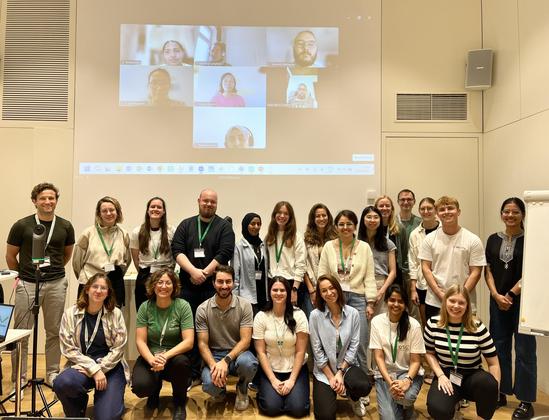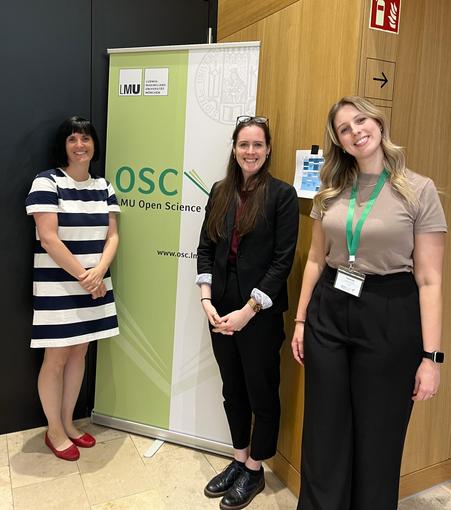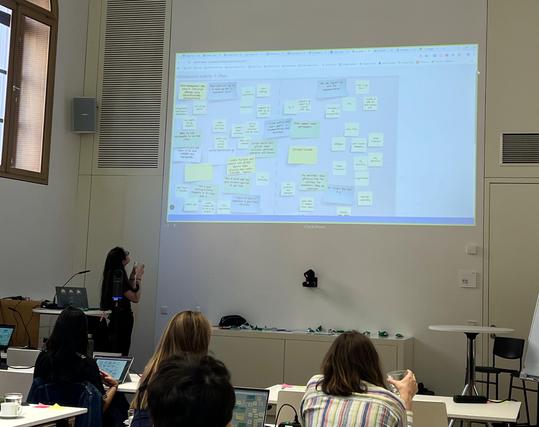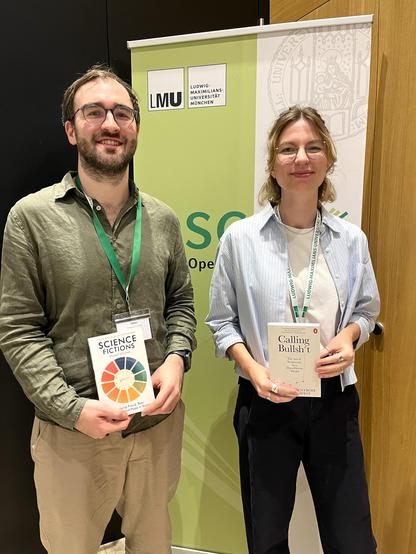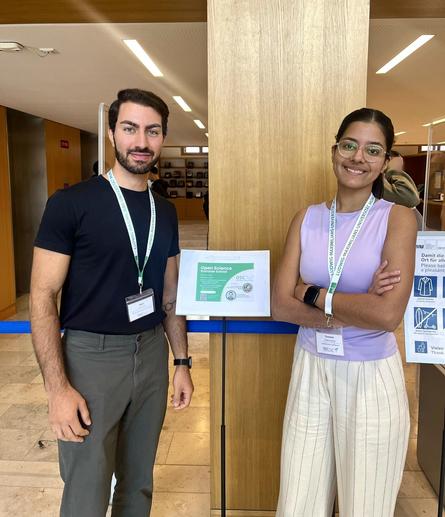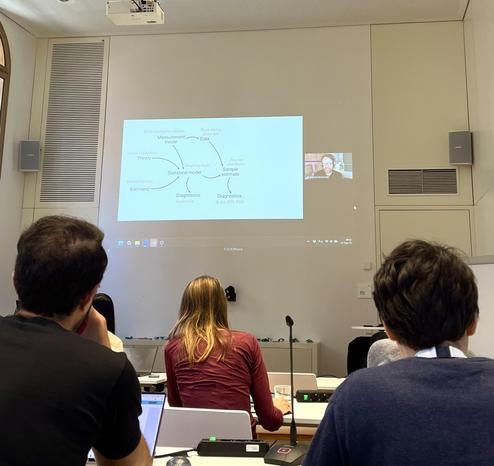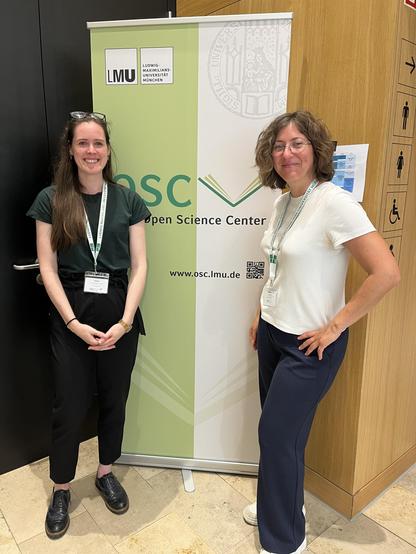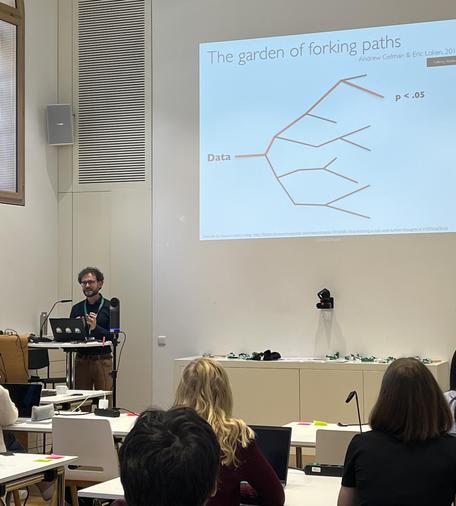
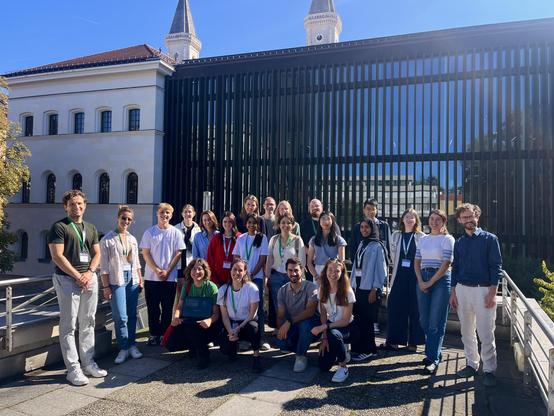
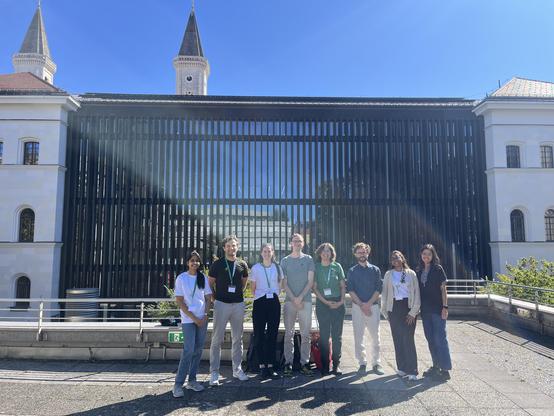
And with that, the LMU Open Science Center has completed its 4th fully hybrid Open Science Summer School! 🙌 Five days filled with learning, training, and putting open science and open research practices into action. Check out all the material (slides, lecture recordings, workshop materials) of the open science training track here: https://osf.io/x639j/files/osfstorage and of the instructor training track here: https://osf.io/tkwqs/files/osfstorage. Find all our self-paced tutorials on our GitHub organization: https://github.com/lmu-osc

📚 #OSSS25 highlights:
🔓 Seven public lectures covered a wide range of topics from making publications more accessible, to crafting clearer code and sharing materials to make research more replicable. These presentations combined theory with practical recommendations and live demonstrations.
💻 Interactive workshops gave participants guided experience with tools such as R, Git & GitHub, and Quarto. Sessions blended demos, group activities, and self-paced tutorials, helping researchers apply these tools directly to their own projects.
👩‍🏫 The newly introduced Train-the-Trainer programme equipped participants with didactics, teaching strategies, and practical skills to share open science knowledge with their peers. With these sessions, participants were both building skills and learning to become leaders of the open science movement.
🤝 Connection and collaboration were at the heart of the summer school. From hybrid networking sessions and small group discussions to sharing lunch together, participants built relationships with fellow researchers equally passionate about adopting open practices.

A heartfelt thanks to everyone who joined us and to the OSC team who shared their expertise and energy, including Reema Gupta, Pat Callahan, Dr. Sarah von Grebmer, Dr. Sara Lil Middleton, Florian Kohrt, Dr. @MalikaIhle, Prof. Dr. Felix Schoenbrodt (@nicebread), Elizabeth Waterfield (@bethwater), and Tejaswini Sharma.

Best of luck to all participants in implementing what you’ve learned to make your research more open, transparent, and impactful! Keep in touch, and see you in 6 months for a group check-in ! 🌍✨
#OpenScience #OSSS25 #LMUOSC

The fifth and final day of the Open Science Center Summer School 2025 is completed ✅ We have concluded a week full of learning, discussing, and practicing open science and open research skills. You can check out the slides and recordings of all the public lectures here: https://osf.io/x639j/files/osfstorage.

📌 Here’s a recap of Day 5:
💡 Participants joined breakout groups based on their interests in either open access, preregistration, computational reproducibility, or FAIR research data management. Facilitators guided these focused discussions, giving participants the chance to dive deeper into each topic.
🎯 To put new knowledge into action, Sarah von Grebmer led interactive activities where participants explored how to apply open science practices to their own projects. Together, they considered potential challenges and brainstormed strategies to overcome them.
🚀 In collaboration with @FORRT we launched the Train-the-Trainer programme, featuring insightful talks and hands-on activities led by Barbara Beege, Sarah von Grebmer, and Franziska Schrade. Participants explored teaching strategies, both online and offline, along with didactics, tools, and techniques. They also collaborated in groups to design ways of promoting open science practices in their own communities and explore their role as emerging leaders of open science.

Although the Summer School has come to a close, the momentum continues! We encourage you to keep exploring these topics and reach out if you’re interested in bringing open science skills into your own research journey.

#OpenScience #OSSS25 #LMUOSC

Nearing the finish line, we wrapped up our fourth day of the Open Science Summer School 2025 ✅We’re excited for the final day to bring together the skills we’ve explored throughout the week and launch the Train-the-Trainer programme ✨ where participants will not only gain new competencies but also learn how to effectively teach and share them with other researchers.

📌 Here’s a recap of Day 4:
💻 Vera Karlbauer and Jonas Hagenberg talked about the importance of having readable code for both the reader and author while giving practical recommendations: provide structure, follow programming style standards, and engage with reciprocal code peer review!
📝 Pat Callahan and Florian Kohrt were assisted by Reema Gupta in conducting two workshops. 1️⃣ The first workshop guided participants from downloading the Quarto software all the way to combining text and code to create reproducible manuscripts ready for submission. 2️⃣ The second concentrated on building a reproducible R environment and the considerations for publishing code with appropriate license and documentation.
🔬 Dr. Tim Errington promoted open science practices in research communities as a solution for key barriers to testing the replicability of studies, such as limited access to data, code, reagents. He presented insights from the Reproducibility Project: Cancer Biology.

Although the public lectures are over, registered participants still have one more day to benefit from the workshops and interactive sessions! You can find slides and recording of the public lectures here: https://osf.io/x639j/files/osfstorage

#OpenScience #OSSS25 #LMUOSC

Crossing the half-way point of the Open Science Summer School 2025 as we complete our third day ✅ So far, participants have gained hands on experience using RStudio, practiced version control using Git, tackled Open Science topics like replicability, credibility, open access, and more! It’s not too late to register for the final two public lectures: https://www.pretix.osc.lmu.de/lmu-osc/OSSS25/

📌 Here’s a recap of Day 3:
🧑‍🏫 Prof. Dr. Richard McElreath (@rlmcelreath) delivered a timely and riveting talk to promote standards such as version control, testing, documentation, and continuous integration in making science more professional.
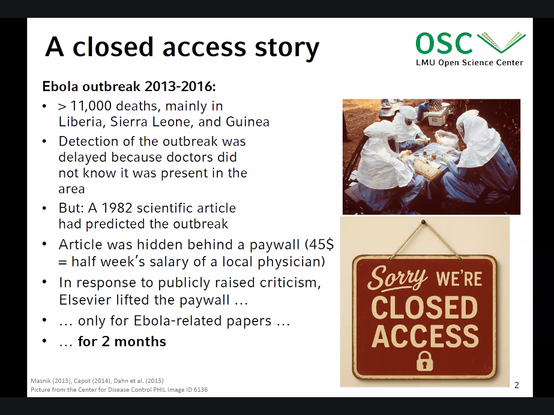
📖 Prof. Dr. Felix Schoenbrodt (@nicebread) broke down what open access is, why it’s so important for researchers and society, how to use tools like open policy finder https://openpolicyfinder.jisc.ac.uk/ to check if your publishers allow you to deposit preprint, postprint or fully formatted articles on preprint servers or institutional repository; i.e. do green open access for free!
📚 Member of the Research Data Management team of the Universitätsbibliothek München, Laura Meier held a workshop where participants worked in small groups to learn about research data management plans, explore relevant resources, and practice skills gained in the previous FAIR research data management workshop.
💻 Dr. @MalikaIhle engaged all participants in a workshop to explore version control using Git and collaborate through GitHub ending with the merge of their pull requests!

With just two days left, we are excited to see how much more knowledge and skills the attendees already gained from this summer school!

#OpenScience #OSSS25 #LMUOSC

I entirely share the sentiment of @nicebread that the issue of #OpenAccess seemed to be the least interesting part of #OpenScience. It feels more like an administrative, institution-policy issue. But, this story shows again that Open Access means more: It's vital!

#OSSS25 #LMUOSC

"Excel is software to make pretty tables, it's no software to make data analyses." Starting the day with an interesting, but super frightening public lecture of the @lmu_osc #OpenScience Summer School on "Science as amateur software development" by Richard McElreath.

#OSSS25 #LMUOSC

Wrapped up the second day of the Open Science Summer School 2025 ✅ Another inspiring day of building Open Science and Open Research skills! Don’t forget that you can still be part of the journey by joining our public lectures: https://www.pretix.osc.lmu.de/lmu-osc/OSSS25/

📌 Here’s a recap of Day 2:
💡 Prof. Dr. Felix Schoenbrodt (@nicebread) discussed challenges, benefits, and practices related to data sharing. Then, FAIR data sharing expert Reema Gupta showed how to put this new knowledge into action with a workshop focusing on organising, documenting, and sharing data.
📝 Dr. @MalikaIhle got participants really thinking about how preregistration fits into their own diverse research projects through interactive discussions and group activities.
💻 We finished with a self-paced workshop to introduce Simulations in R where participants worked individually or with one-on-one support to practice generating random data to build up an understanding of the real data and the statistical models we use to analyze them.
We look forward to three more days of lectures, workshops, and collaboration to deepen the understanding and application of Open Science practices!

#OpenScience #OSSS25 #LMUOSC

First day of the Open Science Summer School complete ✅ Participants learned a lot today but there’s a still lot more in store, you can join in for the public lectures by registering here: https://www.pretix.osc.lmu.de/lmu-osc/OSSS25/

📌 Here’s a recap of Day 1:
👨‍🏫 Prof. Dr. Felix Schoenbrodt (@nicebread) gave a talk on the challenges with replicability in current research and the benefits of adopting open research practices.
📝 Dr. @MalikaIhle shared everything we need to know on preregistration and how it can make our research more credible and reliable.
🤝 Participants, both in-person and online, joined in small groups for the interactive networking session to share their experiences, interests, and journeys with Open Science.
💻 Dr. Sarah von Grebmer led the workshop introducing R where participants got the opportunity to learn and practice basic R functions, paving the way for future workshops later this week.

We are excited to see how the following days of this summer school will be, don’t miss it!

#OpenScience #OSSS25 #LMUOSC

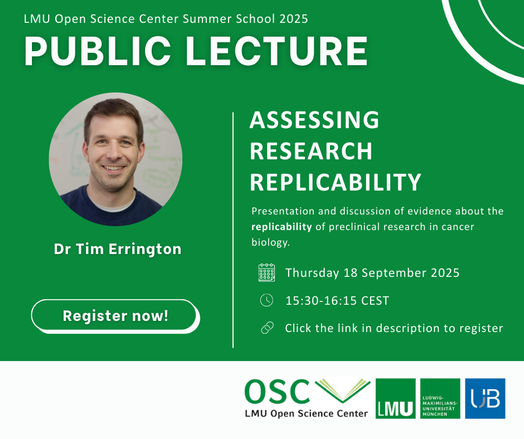
🧬 Learn about the results and implications of the Reproducibility Project: Cancer Biology! This project sheds light on the replicability of preclinical research in cancer biology.
Attend the “Assessing research replicability" lecture by Dr. Tim Errington on Thursday 18 September, 15:30-16:15.
👉 Register here for free: https://www.pretix.osc.lmu.de/lmu-osc/OSSS25/

#OpenScience #OSSS25 #LMUOSC

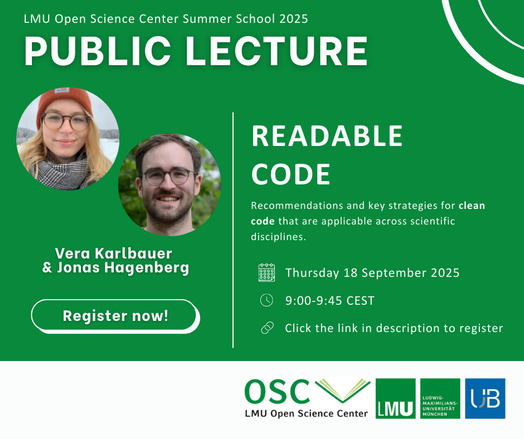
💻 Make your research more reproducible by making your code more readable. Get recommendations, examples, and key strategies for writing clean code!
Attend the “Readable code” lecture by Vera Karlbauer and Jonas Hagenberg on Thursday 18 September, 09:00-09:45.
👉 Register here for free: https://www.pretix.osc.lmu.de/lmu-osc/OSSS25/

#OpenScience #OSSS25 #LMUOSC