Erfolgreicher Start von Pandora: Neues NASA-Teleskop bereitet ein Jahr intensiver Exoplanetenforschung vor

Mit dem erfolgreichen Start des NASA-Satelliten Pandora beginnt ein neues Kapitel in der Erforschung von Exoplanetenatmosphären. Nach dem Eintritt in die niedrige Erdumlaufbahn wird die Mission zun…

Zukunftsprojekt Deutschland und Europa 4.0 – KI und Quantencomputing für moderne Sicherheit, Zukunftstechnologien und Astrobiologie
Oh, Earth is absolutely special! It has you, for instance.
#NASAExoplanets
Many! As in exoplanets. (5,496 planets confirmed beyond our solar system!) http://exoplanets.nasa.gov
#NASAExoplanets
Exoplanet Exploration: Planets Beyond our Solar System

NASA’s Exoplanet Exploration Program, the search for planets and life beyond our solar system.

Exoplanet Exploration: Planets Beyond our Solar System
5,496!
That's how many planets we've confirmed beyond our own solar system. Some may have rubies blowing in winds, others may have broken glass. Some are so hot, molecules can't survive. Others are so cold, everything is locked in a deep freeze. Each is just right in its own way.…
#NASAExoplanets
A point in the peacock🦚
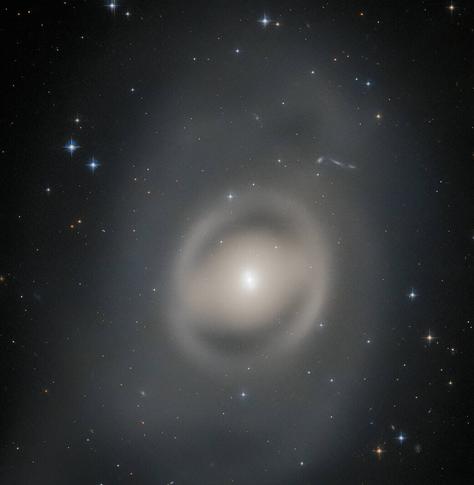
@NASAHubble imaged the galaxy NGC 6684, 44 million light-years from Earth in the constellation Pavo. Pavo – Latin for peacock – is a southern sky constellation and one of four constellations known as the Southern Birds. https://go.nasa.gov/3OqgnUO
#NASAExoplanets
Hubble Sees Galaxy in a Ghostly Haze

The lenticular galaxy NGC 6684 bathes this image from the NASA/ESA Hubble Space Telescope in a pale light.

NASA
Shooting stars!
#NASAExoplanets
You are in space✨
The famous Pale Blue Dot reveals Earth as a bit of light in a sunbeam from 3.8 billion miles (6 billion km) away. @NASAVoyager was much closer than we can get to exoplanets, but rare photographs reveal exoplanets as bright dots. But those dots...
#NASAExoplanets
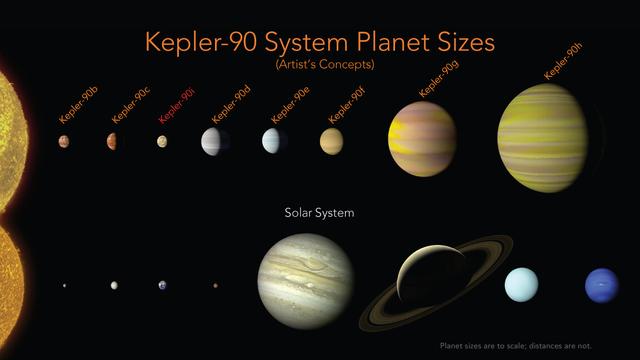
More than 2,000 light-years away, eight planets orbit a Sun-like star. The rocky inner worlds are closer to the star with gas giants farther out. All eight would orbit inside Mercury's orbit around the Sun! https://exoplanets.nasa.gov/news/1476/discovery-of-eight-planets-makes-alien-system-the-first-to-tie-with-our-solar-system/
#NASAExoplanets
Discovery of eight planets makes alien system the first to tie with our solar system

Our solar system now is tied for most number of planets around a single star, with the recent discovery of an eighth planet circling Kepler-90, a Sun-like star 2,545 light years from Earth.

Exoplanet Exploration: Planets Beyond our Solar System
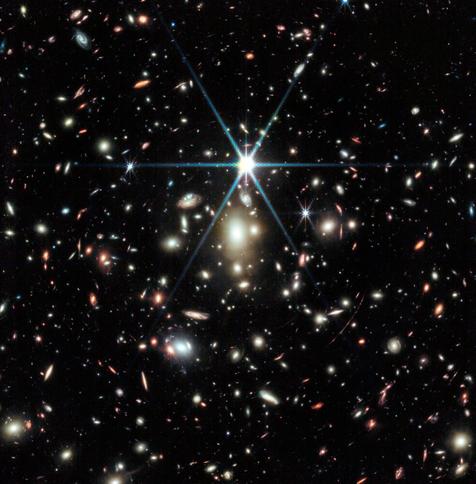
A wrinkle in spacetime reveals ancient Earendel✴️
The most distant star is seen by @NASAWebb because a massive galaxy cluster bends light, allowing us to look through it like a magnifying glass. Based on its colors, astronomers think Earendel may have a cooler companion star!…
#NASAExoplanets
Happy #BookLoversDay!📚
Celebrate by curling up with a @nasa ebook about exoplanets. Strange New Worlds focuses on @NASAHubble's science and discoveries. https://www.nasa.gov/feature/goddard/2022/nasas-new-hubble-e-book-takes-readers-on-a-journey-to-curious-worlds
#NASAExoplanets
NASA’s New Hubble E-Book Takes Readers on a Journey to Curious Worlds

NASA’s Hubble Space Telescope team has released a new edition in the Hubble Focus e-book series, called “Hubble Focus: Strange New Worlds.”

NASA