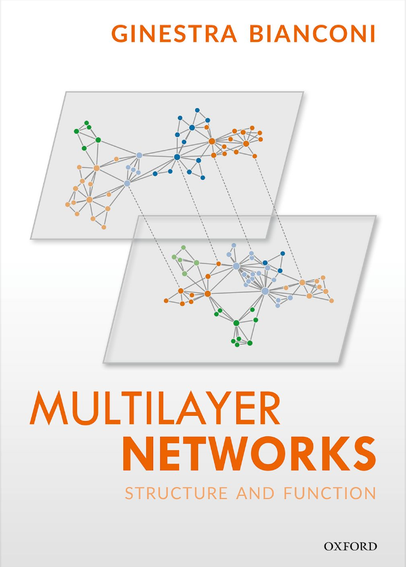
Mathematical Formulation of Multilayer Networks
A ``monoplex'' network, like a Facebook-based social network, can be represented by a set of nodes (people) linked by their Facebook connections (interactions). But real-world networks can be ``multiplex,'' with multiple types of interactions and where one type of interaction can influence another. A unifying framework for describing ``multiplex'' networks has been missing so far. Deftly employing the concept of tensors, theorists now present such a framework that will power studies of ``multiplex'' networks across many scientific disciplines.
 CITO Greenhouse
 InPhyT