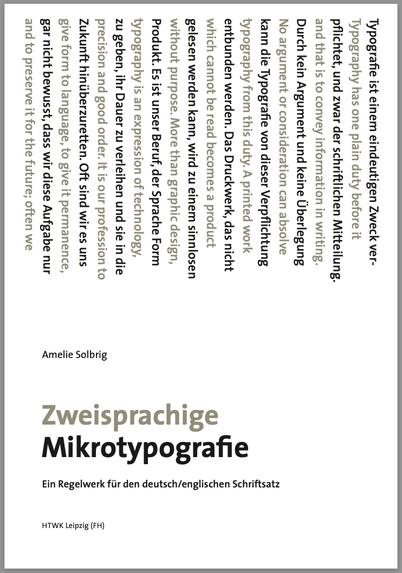
I'm aware of this book: Amelie Solbrig "Zweisprachige Mikrotypografie" Ein Regelwerk für den deutsch/englischen Schriftsatz HTWK Leipzig (FH) #typography #microtypography

@underware

Excellent type design for a specific purpose. Allowing for added complexity in the layers of information, while still (just!) maintaining coherence in the feel of the overall page. I can picture this being used in other special purpose books, eg academic textbooks.

#typography #Underware #Dolly
#MicroTypography
#TextbookDesign

speedata Publisher and font expansion. New blog post on

https://news.speedata.de/2024/07/11/fontexpansion/

#speedatapublisher #microtypography

Microtypography and font expansion

The speedata Publisher is built on top of LuaTeX, a typesetting software with a strong focus on typography. Therefore it inherits all the possibilities offered by the layout engine. One of the older features is the ability to stretch or shrink glyph widths on demand to allow even better line breaking. TeX already uses the famous line breaking algorithm that optimizes the appearance of a full paragraph as a whole, not a line-by-line approach that might lead to large inter-word spacing. The ability to stretch or shrink glyphs by a little amount can lead to many more possible line breaks and thus enhancing the overall visual outcome of a paragraph. The famous Gutenberg 42 line bible (B42) has a similar approach to line breaking.

Mirroring my public thought on X here, because it really bothers me:
Why does it bother me so much when typefaces have single-pixel, non-curved angles and corners? Is it because there are no inktraps? Because pixels can neither be printed, nor actually rendered? #microtypography Thought about bugging Erik Spiekermann and Hrant Papazian on that lately.

Edit: looking at their feeds on X I think I shouldnʼt bother them