Kitty!!

#metaphor

You cannot convince me that Metaphor verse isn't a mirror of Persona verse. Akademia is where they kidnap humans from Tokyo to turn them into Pokemon, like what Velvet Room does.

Shin Megami Tensei series are something else altogether. I got to the obliterate everything ending in IV and decided I can't deal with that degree of depressive media. And I'm raised on pre Soviet depressing Russian novels.

#metaphor

While Atlus isn't what I'd call the peak interesting game system creator (that's TriAce), I have to say that when it comes to UI plus style, Atlus is on its own league.

There are better UI and there are better style. Atlus got the mixture down to distinctive functional art form.

#metaphor

FUCK YEAH THE MONSTERS HERE ARE "HUMANS" I WAITED FOR THIS DAY FOR SO LONG

#metaphor

On one hand, Psyduck doesn't wear shoes to bed.

On the other hand,

HEY LISTEN
HEY LISTEN
HEY LISTEN
HEY LISTEN
HEY LISTEN
HEY LISTEN
H

#metaphor

Of course I named my protagonist Psyduck.
#metaphor

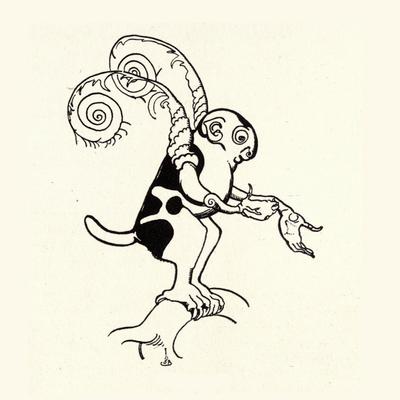
Huh protagonist's fairy is Misty from Pokemon???

#metaphor

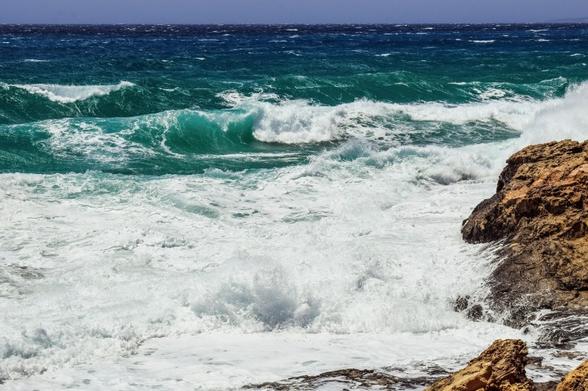
A more explicit metaphor that I admired recently, in Timothy Snyder's book ON TYRANNY: "Each story on televised news is 'breaking' until it is displaced by the next one. So we are hit by wave upon wave but never see the ocean."

Some discussion on the nature of metaphor in this old post:
https://stancarey.wordpress.com/2011/05/04/dictionary-of-faded-metaphors/

And my archive of metaphor-related posts:
https://stancarey.wordpress.com/category/metaphor/

#metaphor #language #words #linguistics #blog #blogging #books #tyranny #TimothySnyder #TVNews #news

Dictionary of faded metaphors

Over the last few weeks, I’ve written some articles about metaphorical English for Macmillan Dictionary Blog. This is a round-up of those articles, along with related links and additional thoughts.…

Sentence first

Thoroughly enjoyed this podcast about metaphor as a linguistic and cognitive phenomenon, not just a literary device.

I think I see metaphor as considerably more integral to (& hence frequent in) language than the host does, though: there are often many metaphors hidden in a single everyday sentence.

(e.g. "thoroughly", "enjoyed", "podcast", "about", "metaphor", etc. etc.: all metaphors) [1/2]

https://disi.org/the-aura-of-metaphor/

#podcast #metaphor #language #linguistics #CogSci #science #CognitiveScience

The aura of metaphor - DISI

Exploring our world's diverse forms of mind—human, animal, machine—from diverse perspectives.

DISI

Dictionary of faded metaphors

Over the last few weeks, I’ve written some articles about metaphorical English for Macmillan Dictionary Blog. This is a round-up of those articles, along with related links and additional thoughts. All of Macmillan’s blog posts, links and other resources on metaphorical English are collected on this page.

In Vorschule der Ästhetik (Pre-School of Aesthetics, 1804), philosopher Jean Paul wrote that every language was ‘ein Wörterbuch erblasseter Metaphern’: a dictionary of faded metaphors, or metaphors turned pale. Metaphors will fade – we can’t help that – but by paying heed to their histories and how we use them, we can perhaps avoid blanching them altogether. In any case, we keep coming up with new ones. We can’t help that, either.

Metaphors are commonly thought of as similes, analogies and so on, but single words can be metaphorical too. In ‘Depending on metaphor‘, I point out that although the current use of depend is chiefly abstract, its original meaning was ‘hang down’, as in pendulum. So its meaning has slid from physical reliance to figurative reliance. Semantic drift from physical to figurative is a routine linguistic pattern:

Metaphors tend to be based on a key conceptual correspondence. This is one reason they’re so productive. We can retain a metaphor’s central idea, but extend it and play with it and still be understood even as we conjure up unprecedented descriptions. Our natural creativity with language gives words whole constellations of related meanings. . . . Abstraction has become so commonplace in our thoughts and words that we tend to ignore what lies beneath it. Familiarity has fostered invisibility. [more]

Metaphorical language has come in for some rough judgement from philosophers such as Thomas Hobbes. Was his tongue (figuratively) in his cheek when he relied on metaphors in order to decry them? It doesn’t seem so. Nowadays we give them more credit. My next article, ‘For I met a metaphor‘, refers to several of Macmillan Dictionary’s ‘metaphor boxes’, written by lexicographer Rosamund Moon, which offer examples of familiar metaphors arranged systematically:

An organisation is like a body. A conversation is like a journey. . . . Gaining knowledge is like navigating, understanding is like seeing, and an opinion is like a view. . . . Reading the metaphors Rosamund has collected, we find them intuitively true because they’re intimately tied to how we conceptualise. We use metaphors to handle complex or abstract ideas by showing their similarity to simpler or more concrete or familiar things. Many metaphors originate in our impressions of our bodies and their interaction with the physical world. They are integral to how we make sense of our experiences. [more]

Fritz Kahn, “Man as an Industrial Palace”

This is something I’ve written about here before: many metaphors are rooted in how we sense, experience, and orient in our environments. On Twitter I read a charming example of the body-as-container metaphor that stayed with me until I had to write about it, noting that when a novel metaphor appears – in this instance from a child – it suddenly shows the scaffolding beneath the structure of our imaginations.

The body as a container is a good example of how metaphors assemble around core ideas and correspondences that are often basically physical or biological. In ‘Dirty tricks and honest metaphors‘, I discuss how the language we use to talk about honesty and dishonesty springs logically from certain key concepts. For example, we characterise dishonesty as dark, dirty, crooked, down, covered and closed:

Metaphor can be a subtle way of handling truth – hence the quote with which I began my previous article: ‘the defining feature of a metaphor is that it’s real’ [Sarah Kane, 4:48 Psychosis]. Even criminals who live in bright airy penthouses operate underground in the black market. They are called snakes and rats, slithering and scurrying in the dirt instead of being upstanding citizens. A detective in Scarface (1932) describes gangsters as ‘crawling lice’, which evokes this low plane and also hints at the connections between hygiene, disgust, and morality – connections we make in our minds and express in our metaphors. [more]

Science and philosophy are full of models and metaphors, since they involve devising useful representations of phenomena. The trouble is that we forget they are only models, based on human symbols and perceptions: recall the prolonged dispute over whether light is composed of waves or particles.* Metaphor in the form of allegory is central to many myths, fairy tales, and religious parables. Embedding and extending metaphors in stories gives us more room to convey psychological, social, and moral instruction.

Nietzsche wrote that we are all greater artists than we realise. This is true in several ways. To rephrase one of them: perception is creation. In perceiving the world then describing it to ourselves and to one another, we add lines and form, measuring, shaping, and connecting. Doing so creatively is second nature to us. Evolving to manipulate symbols, our minds also evolved to be manipulated by them. Hence the power of poetic language and the potency of a good metaphor.

.

* Answer: Both. Either. It depends on how you look at it. It’s complicated.

#language #linguistics #MacmillanDictionaryBlog #metaphor #philosophy #psychology #speech #words #writing