Multi-agent-based computational modeling of #Lumenogenesis from a single proliferating cell

High Matrix density & dynamic viscosity->
Formation of multiluminal structure instead of a single cyst lumen

This is a very easy-to-read computational modeling paper (minimal math requirement😁)
Cell cycle/polarity/secretion
Cell-cell (attractive+repulsive) + cell-fluid interaction (repulsive) + cell-matrix interactions
Geometry & Biomechanics (but not biochemical property of matrix)

Dr. José Manuel García-Aznar lab Eng Comput 2022
https://link.springer.com/article/10.1007/s00366-022-01654-1

A 3D multi-agent-based model for lumen morphogenesis: the role of the biophysical properties of the extracellular matrix - Engineering with Computers

The correct function of many organs depends on proper lumen morphogenesis, which requires the orchestration of both biological and mechanical aspects. However, how these factors coordinate is not yet fully understood. Here, we focus on the development of a mechanistic model for computationally simulating lumen morphogenesis. In particular, we consider the hydrostatic pressure generated by the cells’ fluid secretion as the driving force and the density of the extracellular matrix as regulators of the process. For this purpose, we develop a 3D agent-based-model for lumen morphogenesis that includes cells’ fluid secretion and the density of the extracellular matrix. Moreover, this computer-based model considers the variation in the biological behavior of cells in response to the mechanical forces that they sense. Then, we study the formation of the lumen under different-mechanical scenarios and conclude that an increase in the matrix density reduces the lumen volume and hinders lumen morphogenesis. Finally, we show that the model successfully predicts normal lumen morphogenesis when the matrix density is physiological and aberrant multilumen formation when the matrix density is excessive.

SpringerLink

Kidney epithelial #Tubuloid

CD24+ epithelial progenitor-derived
4-phase protocol, Matrigel +Wnt3a/RSPO1, grow > 6 mo
CRISPR modeling #ADPKD, Cyst size responsive to #Tolvaptan

Super-impressive single-cell or single-nuclei RNAseq analyses to dissect the spatiotemporal molecular/cellular dynamics of this cool renal tubuloid, laying a critical foundation to enhance its clinical utilities👍

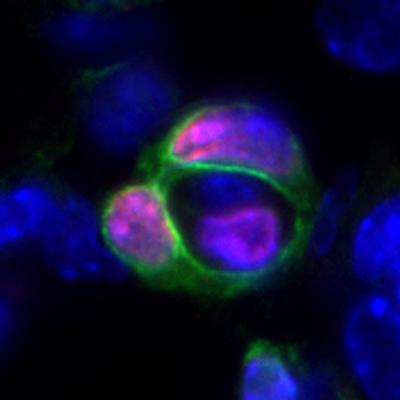
Wonderful #Lumenogenesis of CD24+ epithelial progenitor-derived nephrospheres, day 7 in Matrigel🤠

Dr. Rafael Kramann lab @NatureGenet 2022 @jackxuyx @KuppeChristoph @rkramann
https://www.nature.com/articles/s41588-022-01202-z

Adult human kidney organoids originate from CD24+ cells and represent an advanced model for adult polycystic kidney disease - Nature Genetics

Adult kidney organoids, or tubuloids, originate from CD24+ epithelial cells. Tubuloids represent a functional kidney tubule and can be used to model autosomal dominant polycystic kidney disease and study drug response.

Nature

Pancreatic Rab11a/Rab11b dKO->
Aberrant polarized transport of apical/basolateral proteins->
AMIS supernumerary->
Defects in ductal #Lumenogenesis; Acinar morphogenesis; Pancreatic cell lineage dysregulation

Highly intriguing, PancRab11KO->⏬Sox9+ bipotent progenitor & #Islet mass-> #GlucoseIntolerance in suvived adult🐭

Lumenized epithelial paracrine or endocrine-autonomous defect?😆

No baseline change in fast glucose. Insulin/glucagon? Adult islet histology-Amyloid degeneration?

The branched, lumenized pancreatic duct is fragmented into disconnected Microlumens + enlarged Cyst in PancRab11KO🐭

Can't help but think Rab35 in anisotropic Lumenogenesis of liver #BileCanaliculi

Is there a primary hydro-osmotic defect here?😋

Still, what happens to pancreatic vascular morphogenesis in Panc-Rab11 KO🐭?(Surely, epithelia & endothelia are coupled🤪)

More importantly, now it's the magic timing if you also want to have such amazing stories

Cleaver lab is recruiting TWO postdocs

Dr. Ondine Cleaver lab @ondinecleaver2022 bioXRiv 2022
https://www.biorxiv.org/content/10.1101/2022.11.17.516976v1