 1. Neu-Kelte 🌻💙💛🌻
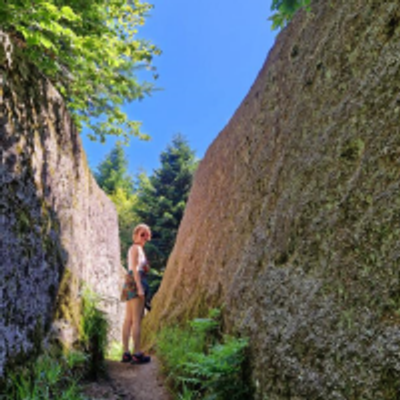
#FolkloreThursday for #InternationalFairyDay #Celtic: `In the area around the #Breton towns of Lamballe and Moncontour, #fairies were said to live under some of the protruding rocks that emerge from the ground in that neighbourhood but only if they were also sited very near to a stream or pond. Protected by the elements from the overhanging stone, the fairies lit their fires and watched over their cattle. Their presence in the area attested by the markings on the stones said to have been made by their feet or by the nails of their sabots.
Throughout Brittany, both fairies and #korrigans were most closely associated with water; the latter usually with springs and ponds, the former with streams, rivers and the sea. Near Saint-Pôtan, the waters of the Guébriand River were said to be home to a fairy that lived in a fine palace hidden by the reeds and aquatic grasses; her blond hair could be seen above the water on nights when the moon was clear and sometimes one could hear her wonderful singing. This fairy could assume the appearance of an eel or even take a human form and was feared because it was believed to possess the power to petrify unmarried girls.`
Source: https://bonjourfrombrittany.wordpress.com/2023/01/14/the-fairies-of-the-swells/
Throughout Brittany, both fairies and #korrigans were most closely associated with water; the latter usually with springs and ponds, the former with streams, rivers and the sea. Near Saint-Pôtan, the waters of the Guébriand River were said to be home to a fairy that lived in a fine palace hidden by the reeds and aquatic grasses; her blond hair could be seen above the water on nights when the moon was clear and sometimes one could hear her wonderful singing. This fairy could assume the appearance of an eel or even take a human form and was feared because it was believed to possess the power to petrify unmarried girls.`
Source: https://bonjourfrombrittany.wordpress.com/2023/01/14/the-fairies-of-the-swells/


 Dam_Ela
 Agréabulles