RE: https://w3c.social/@w3cdevs/115055609557799756

The @w3c Web&AI #InterestGroup charter has been approved!
▶️ https://www.w3.org/groups/ig/webai/

The group seeks to provide a space to discuss how emerging #AI technologies are shaping the Web and how the community can work together to steer these developments for the benefit of users.

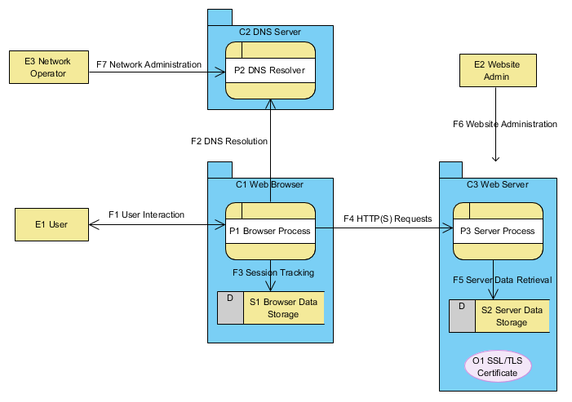
It may also contribute to documents such as Ethical Principles for Web Machine Learning, The Agentic Web, Threat Model for AI in Browsers, Threat Model for Agentic AI Web Browsers, and others.

Join the group!

At the October 2025 "W3C in Europe 🇪🇺 " member meeting, @InesAkrap, co-chair of the @w3c Sustainable Web #InterestGroup, introduced the Web Sustainability Guidelines (WSG). With ICT responsible for 2–5% of global emissions, the WSG outlines 93 guidelines across key domains and relates to EU efforts like REGSN and the Green Deal. A task force of the group is developing metrics to measure impact, with a final publication planned for April 2026.

Watch Ines' presentation: https://youtu.be/FK0sToCf8AU

The @w3c team is drafting a charter for a Web & AI #InterestGroup to establish an official forum within W3C for coordinating broad AI-related discussions.
▶️ https://w3c.github.io/charter-drafts/2025/webai-ig.html

This new group is intended to explore how AI-related technologies intersect with Web technologies—examining their technical, #ethical, and societal impacts—tracking trends, connecting groups, supporting workshops, and exploring how #AI agents protocols may influence the Web.

Background info: https://www.w3.org/reports/ai-web-impact/

W3C Web & AI Interest Group Charter

Join the W3C Exploration Interest Group: where standards start

The goal of the Exploration Interest Group is to provide a platform to help W3C investigating emerging technology trends, analyzing their impacts on the evolution of Web technologies, and proposing ways for W3C to collaborate shaping the trends for the benefit of the Web users.

W3C

🆕 The Exploration #InterestGroup is a @w3c initiative to explore web technology trends and support strategic discussions.
▶️ https://www.w3.org/groups/ig/exploration/

It will help find the gaps, make space for disagreement, spotlight use cases that standards groups haven’t prioritized yet, etc. Open to public input, the group welcomes broad participation and contributions to help shape web innovation: https://github.com/w3c/exploration-ig

Read more: https://www.w3.org/blog/2025/join-the-w3c-exploration-interest-group-where-standards-start/
and watch 🎬: https://youtu.be/HoAOHKmW1k8

Exploration Interest Group

The mission of the Exploration Interest Group is to provide W3C Members with a forum to explore and discuss emerging web-related technology trends and consider how the community could collaborate to shape those trends for the benefit of web users.

W3C

Proposed charter for the @w3c Exploration #InterestGroup: its mission would be to provide members of the W3C Community a platform to explore emerging web technologies and collaborate on shaping trends for the benefit of web users.

▶️ https://www.w3.org/2025/02/ig-exploration-proposed-charter.html

This group would serve as a complement to existing member-focused discussions and broader community dialogues (@ab-led member meetings, #w3cTPAC breakouts, etc.)

Exploration Interest Group Charter

🆕 @w3c has launched the Sustainable Web #InterestGroup to create guidelines and best practices for addressing #sustainability challenges in digital technology affecting both people and the planet.

Drawing from the SustyWeb #CommunityGroup’s work, the group will release the Web Sustainability Guidelines (WSG) 1.0, designed for end-users, tool developers, educators, and policymakers.
➡️ https://w3c.github.io/sustyweb/

Read @tzviya's post: https://www.w3.org/blog/2024/sustainable-web-interest-group-is-formed/

Web Sustainability Guidelines (WSG) 1.0

Web Sustainability Guidelines (WSG) 1.0 covers a wide range of recommendations for making websites and products more sustainable. Following these guidelines which utilize planetary, people, and prosperity (PPP) principles throughout the decision-making processes, you can minimize your environmental impact through a mixture of user-centered design, performant web development, renewable infrastructure, sustainable business strategy, and (with metrics) various combinations of those mentioned. It should be noted that these guidelines will not address every possible mechanism or strategy to become sustainable, as such, these guidelines (which are notably Web orientated and focused) should be seen as a starting point in a sustainability journey (coverage does not extend for example to manufacturing or shipping of physical products). Following these guidelines will often make Web content more accessible, usable, and performant as a by-product.

Taking over the Privacy #InterestGroup's role in reviewing and advising other groups on enhancing user privacy in Web standards, the group will also develop the Global Privacy Control (GPC) spec., which defines a signal sent via HTTP and the DOM to request that #websites do not sell or share personal information with third parties.
▶️ https://privacycg.github.io/gpc-spec/

GPC has been incubated in the Privacy #CommunityGroup, and anchors its signal in several existing legal frameworks: https://privacycg.github.io/gpc-spec/#legal-effects

Global Privacy Control (GPC)

Sebastian Käbisch (Siemens), co-chair of the @wot #InterestGroup and #WorkingGroup, showcases how Web of Things #WoT technologies aid in developing #IoT apps and their adoption in the #European ecosystem.

#W3CEuropeMember 🇪🇺 #Germany 🇩🇪

🎬 Watch the video: https://youtu.be/pBuDoLG6M6I
▶️ See also the slides and transcript: https://www.w3.org/2024/Talks/w3c-in-europe/wot.html

Insights on the Web of Things, by Sebastian Käbisch (Siemens)

YouTube
For #w3cTPAC, M. McCool and S. Divakaran present distributed workers as a proposal to extend the web client program model to support distributed computing. #Wasm #WebWorkers #EdgeComputing Web&Networks #InterestGroup
Video transcript at: https://www.w3.org/2023/09/TPAC/demos/distrib-workers.html
🎬 https://youtu.be/wb58LeRkv7s
TPAC 2023: Distributed workers