#RobSelects paper of the week #J_A_C_S: Synthesis of substituted cycloheptatrienes through insertion of a chromium fluorocarbyne into the adduct of a nucleophile and benzene. #inorgchem https://doi.org/10.1021/jacs.5c16875
Fluorocarbyne Insertion into Benzene Skeletons

Innovative fluorinated synthons essentially advance the organofluorine chemistry. However, the fundamental fluorocarbon synthon, metal-fluorocarbyne, remains largely unexplored, in contrast to its well-established trifluoromethyl and difluorocarbene counterparts. Here, we report a fluorocarbyne-promoted skeletal editing that transforms simple benzenes into precious monofluorinated cycloheptatrienes. This fluorocarbyne insertion features broad functional-group tolerance, exclusive meta-insertion selectivity, and compatibility with arene substrates ranging from benzene to per-substituted derivatives. The selective benzene activation within polyaromatics and successful applications to late-stage drug modifications further demonstrate its utility. Pharmaceutical application to the antiviral agent tecovirimat yielded a fluorinated derivative with an approximately 3-fold increase in aqueous solubility. Mechanistic studies involving intermediate capture and DFT calculations support the fluorocarbyne intermediate and elucidate the origin of meta-insertion and the ring expansion pathway. This work presents the first application of metal-fluorocarbyne in organic synthesis, enabling concurrent fluorine incorporation and scaffold editing.


ACS Publications
#RobSelects paper of the week #angew_chem: Mapping the reactivities of 7-electron-4-center neutral radicals via quantum chemistry and data science. #inorgchem https://doi.org/10.1002/anie.202511509
#RobSelects paper of the week #angew_chem: Base mediated nucleophilic germylation of carbon-carbon double and triple bonds to form carbon-germanium bonds. #inorgchem https://doi.org/10.1002/anie.202506106
#RobSelects paper of the week #J_A_C_S: Reductive carbon dioxide activation by a dinuclear iron-aluminum complex. #inorgchem https://doi.org/10.1021/jacs.5c00944
#RobSelects preprint of the week #ChemRixv: Synthesis and reactivity of hexaphenyl-1,2-diphosphonium dication. #inorgchem https://doi.org/10.26434/chemrxiv-2025-xt8vg
The Hexaphenyl-1,2-Diphosphonium Dication [Ph3P–PPh3]2+

The oxidation of triphenylphosphine by perfluorinated phenaziniumF aluminate in difluorobenzene affords the hexaaryl-1,2-di¬phosphonium dialuminate 1. Dication 12+ is isoelectronic with elusive hexaphenylethane, where instead the formation of a mixture of the trityl radical and Gomberg’s dimer is favored. Quantum-chemical calculations in combination with Raman/IR spectroscopies rationalize the stability of the P–P bonded dimer in 12+ and suggest, akin to the halogens, facile homolytic as well as heterolytic scission. Thus, 12+ serves as a surrogate of both the triphenylphosphorandiylium dication (Ph3P2+) and the triphenylphosphine radical monocation (Ph3P•+). Treating 1 with dimethylaminopyridine (DMAP) replaces triphenylphosphine under heterolytic P–P bond scission. Qualifying as a superoxidant (E vs. Fc/Fc+ = +1.44 V), 1 oxidizes trimethylphosphine. Based on halide abstraction experiments (−BF4, −PF6, −SbCl6, −SbF6) as well as the deoxygenation of triethylphosphine oxide, triflate anions as well as toluic acid, 1 also features Lewis superacidity. The controlled hydrolysis affords Hendrickson’s reagent, which itself finds broad use as dehydration agent. Formally homolytic P–P bond scis¬sion is induced by diphenyldisulfide (PhSSPh), dihydrogen, and the triple bond in acetonitrile. The irradiation by light cleaves the P–P bond homolytically and generates transient triphenylphosphine radical cations, which engage in H-atom abstraction as well as CH phosphoranylation.

ChemRxiv

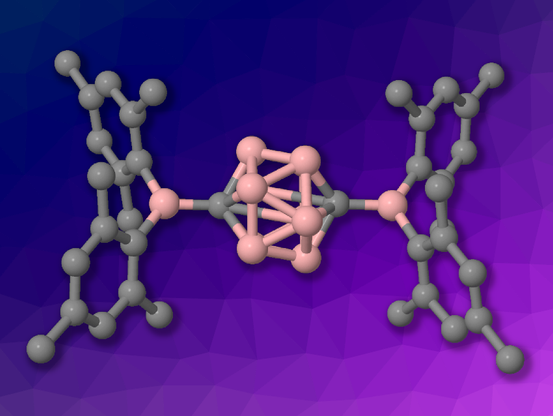
Electron Delocalization across a Carborane Bridge

Monoanionic cluster shows unprecedented communication between the boron centers of opposing substituents

https://www.chemistryviews.org/electron-delocalization-across-a-carborane-bridge/

#delocalization #carboranes #inorgchem #inorganicchemistry #chemistry #chemistryviews

Electron Delocalization across a Carborane Bridge - ChemistryViews

Monoanionic cluster shows unprecedented communication between the boron centers of opposing substituents

ChemistryViews

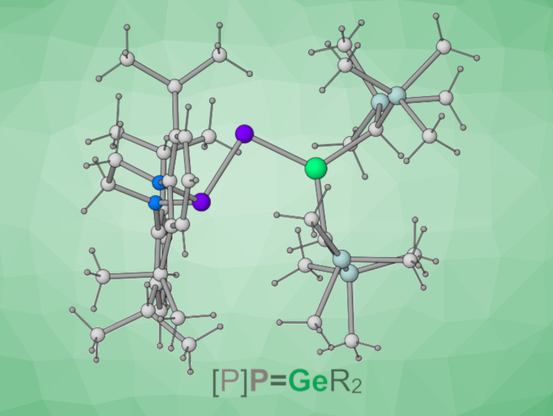
Phosphanyl Phosphagermene Synthesized

New compound reacts with CO₂ and nitriles like a frustrated Lewis pair and with amines and metal complexes via 1,2-addition reactions

https://www.chemistryviews.org/phosphanyl-phosphagermene-synthesized/

#smallmoleculeactivation #maingroupchemistry #inorgchem #inorganicchemistry #chemistry #chemistryviews

Phosphanyl Phosphagermene Synthesized - ChemistryViews

New compound reacts with CO2 and nitriles like a frustrated Lewis pair and with amines and metal complexes via 1,2-addition reactions

ChemistryViews

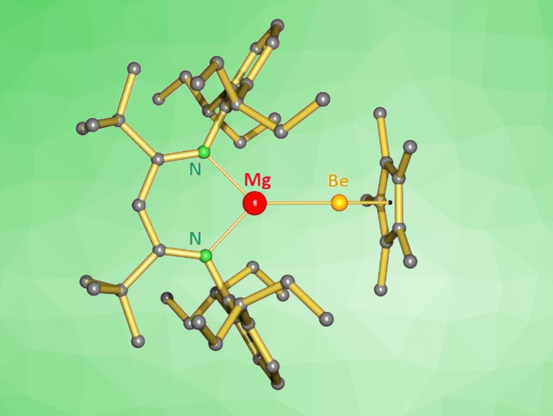
A Unique Complex with a Mg–Be Bond

Formal Mg(II)–Be(0) complex with a significantly polarized bond

https://chemistryviews.org/a-unique-complex-with-a-mg-be-bond/

#chemistry #chemistryviews #berylliumchemistry #lowvalent #inorganicchemistry #inorgchem

A Unique Complex with a Mg–Be Bond - ChemistryViews

Formal Mg(II)–Be(0) complex with a significantly polarized bond

ChemistryViews
#RobSelects preprint of the week #ChemRxiv: Ligand exchange on an iron-aluminium heterobimetallic complex via type I dyotropic rearrangement. #inorgchem https://doi.org/10.26434/chemrxiv-2024-7vlzq
Dyotropic Rearrangement of an Iron–Aluminium Complex

Ligand exchange processes at metal complexes underpin their reactivity and catalytic applications. While mechanisms of ligand exchange at single site complexes are well established, occurring through textbook associative, dissociative and interchange mechanisms, those involving heterometallic complexes are less well developed. Here we report the reactions of a well-defined Fe–Al hydride complex with exogeneous ligands (CO and CNR, R = Me, tBu, Xyl = 2,6-Me2C6H3). Based on DFT calculations we suggest that these reactions occur through a dyotropic rearrangement, this involves initial coordination of the exogeneous ligand at Al followed by migration to Fe, with simultaneous migration of a hydride ligand from Fe to Al. Such processes are rare for heterometallic complexes. We study the bonding and mechanism of the dyotropic rearrangement through in-depth computational analysis (NBO, IBOs, CLMO analysis, QTAIM, NCIplot, IMGH), shedding new light on how the electronic structure of the heterometallic core responds to the migration of ligands between metal sites. The dyotropic rearrangement fundamentally changes the nature of the hydride ligands, exposing new nucleophilic reactivity as evidenced by insertion reactions with CO2, isocyanates, as well as isocyanides.

ChemRxiv
I was super happy after purchasing Pfennig's fancy #InorgChem book and was quite surprised to receive it today. It took less than a week for FedEx to bring it from the USA to Brazil.
The funny part is that #Wiley decided to give me someone else's engineering book and someone will receive MY book.