Primera Indianapolis 500 ganada por Ray Harroun

El hecho más significativo sobre el Indianapolis Motor Speedway es que fue el escenario de la primera Indianapolis 500, que terminó con Ray Harroun en su Marmon Wasp convirtiéndose en el primer ganador de la carrera de automóviles de 500 millas. Sin embargo, este evento no oc…

#Akerix #RayHarroun #Indianapolis500 #MarmonWasp
https://akerix.com/on-this-day/05-30-en-el-circuito-de-indianapolis-fallece-el-piloto-bill-vukovich-durante-la-celebr-1964

At the Indianapolis Motor Speedway, the first Indianapolis 500 ends with Ray Harroun in his Marmon Wasp becoming the first winner of the 500-mile auto race. — Akerix

Historic motorsport track in Speedway, Indiana, US

Akerix

First Indianapolis 500 Won by Ray Harroun

The most significant fact about the Indianapolis Motor Speedway is that it hosted the first Indianapolis 500, which ended with Ray Harroun in his Marmon Wasp becoming the first winner of the 500-mile auto race. However, this event did not occur in 1964 as one might expect, given th…

#Akerix #Indianapolis500 #RayHarroun #MarmonWasp
https://akerix.com/on-this-day/05-30-en-el-circuito-de-indianapolis-fallece-el-piloto-bill-vukovich-durante-la-celebr-1964

At the Indianapolis Motor Speedway, the first Indianapolis 500 ends with Ray Harroun in his Marmon Wasp becoming the first winner of the 500-mile auto race. — Akerix

Historic motorsport track in Speedway, Indiana, US

Akerix
An Unpredictable 500 - IndyCar 2026 Round 7 Recap | Jacen Sekai

The radar was looking iffy in the lead-up to the Indianapolis 500, but the weather mostly held out to let us get the full 500 miles in. Let's go over some of the more interesting stories of the race.

Jacen Sekai

Felix Rosenqvist Wins Historic Closest Finish at the Indianapolis 500

📰 Original title: Late Pass Sends Felix Rosenqvist Past David Malukas For The Closest Indianapolis 500 Win In History

🤖 IA: It's not clickbait ✅
👥 Users: It's not clickbait ✅

View full AI summary: https://en.killbait.com/felix-rosenqvist-wins-historic-closest-finish-at-the-indianapolis-500.html?utm_source=mastodon_world&utm_medium=social&utm_campaign=killbait.mastodon_world

#sports #indianapolis500 #indycar #felixros...

Felix Rosenqvist Wins Historic Closest Finish at the Indianapolis 500

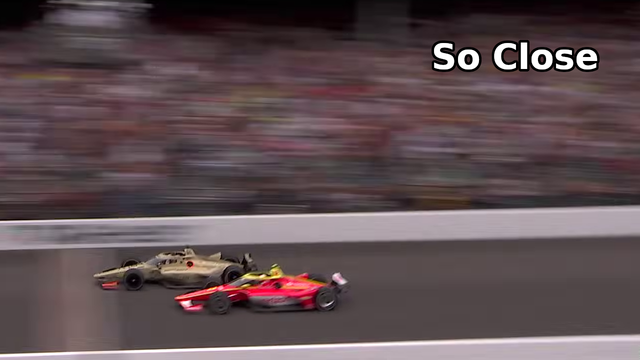
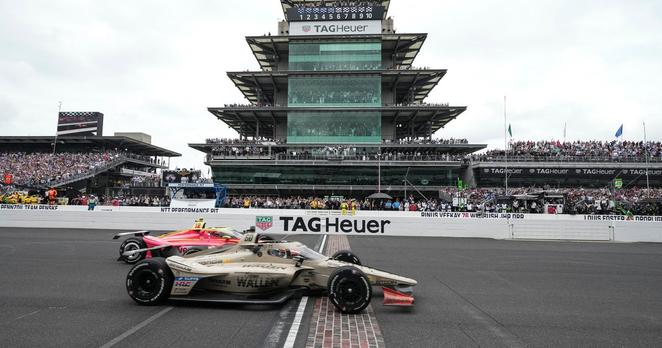
Felix Rosenqvist secured a dramatic and historic victory at the Indianapolis 500, winning the race by just 0.0233 seconds in the closest finish ever recorded in the event’s history. The Swedish driver made a decisive late move in the final moments, passing David Malukas after a tense final lap that saw multiple position changes among the frontrunners. Malukas had briefly taken control of the race following a late restart, overtaking Marcus Armstrong with one lap remaining and appearing to be on course for victory. However, Rosenqvist, driving for Meyer Shank Racing, maintained pressure and found enough speed to close the gap in the final stretch, executing an outside pass in the closing seconds of the race to claim his second career IndyCar win in his 120th start. The race was heavily influenced by late-race interruptions, including a red flag with seven laps remaining after a severe crash involving rookie Caio Collet, whose car caught fire as it slid to a stop in the grass. Racing resumed after a brief delay, but further drama followed when Mick Schumacher brushed the wall, triggering another caution with just a few laps left. On the final restart, Malukas surged into the lead and began to pull away, but Rosenqvist steadily reeled him in, ultimately overtaking him in the final 50 feet. Marcus Armstrong and Pato O’Ward were also in contention during the closing laps, with O’Ward finishing fourth. Scott McLaughlin completed the podium in third place. The victory was especially meaningful for Rosenqvist, coming shortly after he became a first-time father. He also joined a select group of Swedish drivers to win the Indianapolis 500, alongside Kenny Bräck and Marcus Ericsson.

KillBait

Felix Rosenqvist Wins Historic Closest Finish at the Indianapolis 500

📰 Original title: Late Pass Sends Felix Rosenqvist Past David Malukas For The Closest Indianapolis 500 Win In History

🤖 IA: It's not clickbait ✅
👥 Users: It's not clickbait ✅

View full AI summary: https://en.killbait.com/felix-rosenqvist-wins-historic-closest-finish-at-the-indianapolis-500.html?utm_source=mastodon_social&utm_medium=social&utm_campaign=killbait.mastodon_social

#sports #indianapolis500 #indycar #felixr...

Felix Rosenqvist Wins Historic Closest Finish at the Indianapolis 500

Felix Rosenqvist secured a dramatic and historic victory at the Indianapolis 500, winning the race by just 0.0233 seconds in the closest finish ever recorded in the event’s history. The Swedish driver made a decisive late move in the final moments, passing David Malukas after a tense final lap that saw multiple position changes among the frontrunners. Malukas had briefly taken control of the race following a late restart, overtaking Marcus Armstrong with one lap remaining and appearing to be on course for victory. However, Rosenqvist, driving for Meyer Shank Racing, maintained pressure and found enough speed to close the gap in the final stretch, executing an outside pass in the closing seconds of the race to claim his second career IndyCar win in his 120th start. The race was heavily influenced by late-race interruptions, including a red flag with seven laps remaining after a severe crash involving rookie Caio Collet, whose car caught fire as it slid to a stop in the grass. Racing resumed after a brief delay, but further drama followed when Mick Schumacher brushed the wall, triggering another caution with just a few laps left. On the final restart, Malukas surged into the lead and began to pull away, but Rosenqvist steadily reeled him in, ultimately overtaking him in the final 50 feet. Marcus Armstrong and Pato O’Ward were also in contention during the closing laps, with O’Ward finishing fourth. Scott McLaughlin completed the podium in third place. The victory was especially meaningful for Rosenqvist, coming shortly after he became a first-time father. He also joined a select group of Swedish drivers to win the Indianapolis 500, alongside Kenny Bräck and Marcus Ericsson.

KillBait

El choque ardiente de Caio Collet y múltiples incidentes marcan un dramático Indianapolis 500 2026 ganado por Felix Rosenqvist.

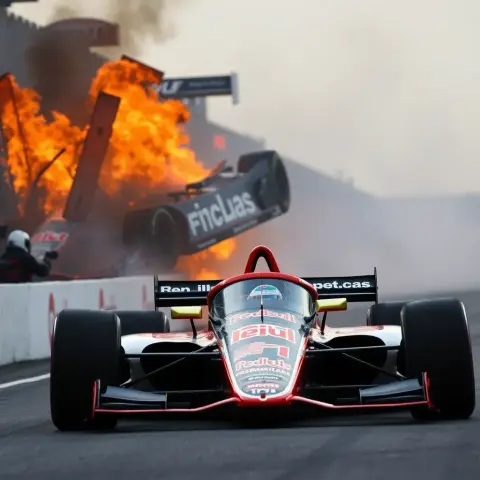
El novato brasileño de IndyCar, Caio Collet, se vio involucrado en un accidente grave al final de las 500 Millas de Indianápolis 2026, cuando su vehículo chocó contra la pared y se incendió, lo que provocó una bandera roja que detuvo la carrera. El incidente fue…

#Akerix #EstadosUnidos #CaioCollet #Indianapolis500
https://akerix.com/article/caio-collet-indy-500-crash

Well, that #Indianapolis500 was fun -- certainly the last few laps.
Post from Sooemrei Plays

The 110th running of the Indianapolis 500 is taking place today, Sunday, May 24, 2026. Significance: It is one of the most prestigious and historic events in...

YouTube

I'm a multi-gen Indianaian. The child of trackrats. I've been in the stands, the suites, on the track, at the museum, and my grandparents used to live so close, you could hear the cars on the track. The #Indy500 is my birthright.

For the 110th time, let's go racing!!

#indianapolis500 #indycar #motorsport #openwheelracing #racing

The Roar at Indianapolis

By Cliff Potts, CSO, and Editor-in-Chief of WPS News

Baybay City, Leyte, Philippines — May 24, 2026 — 23:05 PHST

Every Memorial Day, my mother and I went to the cemetery.

That part of the ritual never changed. Flowers, driving across Chicago, searching for graves, trying to remember where flat markers disappeared beneath the grass. My mother took the day seriously. She believed the dead should be visited, and because of that belief, I spent much of my childhood walking cemetery rows beside her.

My father usually was not there.

For years, I thought that absence meant less than it really did. I understand it differently now.

My father’s Memorial Day ritual was the Indianapolis 500.

The Race

For Americans of my father’s generation, the Indianapolis 500 was not merely another sporting event. It was part machine worship, part engineering spectacle, part national ritual. It belonged to an industrial America that still believed speed, machinery, and technical skill represented progress itself.

This was before endless sports channels, before internet streaming, before every race on earth became permanently available on demand. Indianapolis stood alone in the American imagination in a way younger generations may have trouble understanding now.

There was one race.

This was the race.

My father liked Le Mans and Formula One well enough, but those always felt foreign to him. Indianapolis was American. Loud, dangerous, mechanical, Midwestern, and unapologetically industrial.

He did not care much for NASCAR. Too Southern for his tastes. My father had Southern roots he spent much of his life trying to outgrow. Indianapolis felt different to him. Cleaner somehow. More technical. More Northern. More modern.

Closed-Circuit America

People forget how differently major events once worked in the United States.

Today, nearly everything arrives instantly through phones and television screens. But for years, the Indianapolis 500 existed partly through delayed broadcasts and closed-circuit screenings. Fans would gather in theaters, auditoriums, and special venues to watch races transmitted from Indianapolis itself.

Whenever he could afford it, my father went to those screenings somewhere in Chicago. I say “somewhere” because the locations changed over the years and I was too young to remember the details clearly.

He usually went alone.

Partly because of the expense.

Partly because, I suspect now, it gave him several uninterrupted hours away from work, responsibility, family obligations, and ordinary life.

I understand that better now than I did when I was young.

Memorial Day Before the Monday Holiday

People also forget that Memorial Day itself once worked differently.

Before the Uniform Monday Holiday Act shifted several American holidays to Mondays during the early 1970s, Memorial Day was observed on May 30 itself regardless of the day of the week (U.S. Office of Personnel Management, 2025).

The Indianapolis 500 traditionally aligned closely with Memorial Day culture. Blue laws and older social norms complicated Sunday racing for many years, and the race schedule evolved alongside broader changes in American society, television economics, labor schedules, travel patterns, and commercial broadcasting priorities.

Eventually, Indianapolis moved toward the modern Sunday-before-Memorial-Day structure Americans know today.

That change sounds minor until you think about what it represented culturally.

America itself was changing from a country organized around fixed civic rituals into a country increasingly organized around television scheduling, long weekends, and consumer travel.

The race changed because the country changed.

My Father’s Holiday

While my mother and I walked cemeteries, my father listened to engines.

That sounds colder written down than it actually was.

He was not ignoring the dead. He was participating in his own version of American memory. The Indianapolis 500 belonged deeply to the generation that fought the Second World War and built postwar industrial America afterward. The race carried with it ideas about machinery, progress, engineering, danger, courage, and national confidence.

For several hours each Memorial Day, my father disappeared into that world.

In his own way, he was a good man.

I understand him more sympathetically now than I once did. Age does that sometimes. You eventually realize your parents were not symbols or permanent authority figures. They were simply people trying to survive their own lives while carrying histories you only partially understood as a child.

The Roar in the Distance

I sometimes think Memorial Day in our family existed as two parallel rituals happening at the same time.

My mother and I searched for the dead among cemetery rows.

My father sat somewhere listening to the roar from Indianapolis.

One ritual centered on stillness. The other centered on motion.

One dealt directly with memory. The other dealt with escape, machinery, and the surviving mythology of mid-century America.

Looking back now, I think all three of us were participating in Memorial Day in our own way.

If this work helps you understand what’s happening, help me keep it going: https://www.patreon.com/cw/WPSNews

For more from Cliff Potts, see https://cliffpotts.org

References

ESPN Front Row. (2016). ABC’s first Indianapolis 500 broadcast in 1965. https://www.espnfrontrow.com

Indianapolis Motor Speedway. (2025). History of the Indianapolis 500. https://www.indianapolismotorspeedway.com

U.S. Office of Personnel Management. (2025). Federal holidays and the Uniform Monday Holiday Act. https://www.opm.gov

Photo by Adriaan Greyling on Pexels.com

#AmericanCulture #autoRacingHistory #ChicagoHistory #familyRitual #Indianapolis500 #MemorialDay #WPSNews