Stephan Waelti et al. analyzed the evolution of administered radiotracer activity in #pediatric patients who underwent [18F]FDG PET/CT or PET/MR.
🤔 How can their findings help promote dose reductions for clinical pediatric hybrid PET imaging?
#EuropeanRadiology #RadiologyAndBeyond #HybridImaging
🔗 https://buff.ly/49d9bEn

A third of the radiotracer dose: two decades of progress in pediatric [18F]fluorodeoxyglucose PET/CT and PET/MR imaging - European Radiology
Objectives To assess the evolution of administered radiotracer activity for F-18-fluorodeoxyglucose (18F-FDG) PET/CT or PET/MR in pediatric patients (0–16 years) between years 2000 and 2021. Methods Pediatric patients (≤ 16 years) referred for 18F-FDG PET/CT or PET/MR imaging of the body during 2000 and 2021 were retrospectively included. The amount of administered radiotracer activity in megabecquerel (MBq) was recorded, and signal-to-noise ratio (SNR) was measured in the right liver lobe with a 4 cm3 volume of interest as an indicator for objective image quality. Descriptive statistics were computed. Results Two hundred forty-three children and adolescents underwent a total of 466 examinations. The median injected 18F-FDG activity in MBq decreased significantly from 296 MBq in 2000–2005 to 100 MBq in 2016–2021 (p < 0.001), equaling approximately one-third of the initial amount. The median SNR ratio was stable during all years with 11.7 (interquartile range [IQR] 10.7–12.9, p = 0.133). Conclusions Children have benefited from a massive reduction in the administered 18F-FDG dose over the past 20 years without compromising objective image quality. Clinical relevance statement Radiotracer dose was reduced considerably over the past two decades of pediatric F-18-fluorodeoxyglucose PET/CT and PET/MR imaging highlighting the success of technical innovations in pediatric PET imaging. Key Points • The evolution of administered radiotracer activity for F-18-fluorodeoxyglucose (18F-FDG) PET/CT or PET/MR in pediatric patients (0–16 years) between 2000 and 2021 was assessed. • The injected tracer activity decreased by 66% during the study period from 296 megabecquerel (MBq) to 100 MBq (p < 0.001). • The continuous implementation of technical innovations in pediatric hybrid 18F-FDG PET has led to a steady decrease in the amount of applied radiotracer, which is particularly beneficial for children who are more sensitive to radiation.
This week in #RadiologyAndBeyond, Ricarda Ebner et al. delve into the practice recommendations by the European Society for Hybrid, Molecular and Translational Imaging regarding the role of PET/CT in neuroendocrine tumors its potential applications.
#EuropeanRadiology #HybridImaging
🔗 https://buff.ly/3A1nP5D

ESR Essentials: role of PET/CT in neuroendocrine tumors—practice recommendations by the European Society for Hybrid, Molecular and Translational Imaging - European Radiology
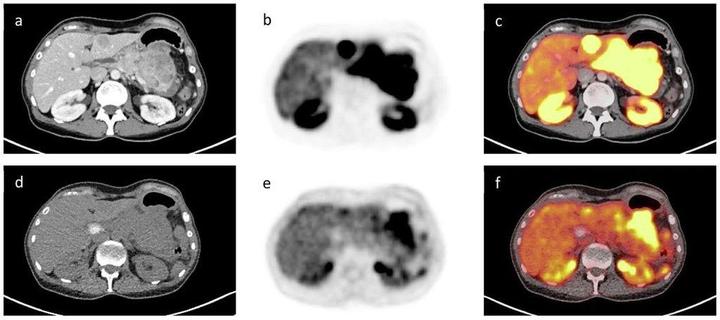
Abstract Neuroendocrine neoplasms (NEN) originate from the secretory cells of the neuroendocrine system, with the majority arising in the gastrointestinal tract and pancreas. Given the heterogeneity in the biological behavior and morphological differentiation of these tumors, advanced imaging techniques are crucial for supporting the suspected diagnosis, accurate staging, and monitoring therapy. As most well-differentiated NEN demonstrate overexpression of somatostatin receptors (SSR) on the cell surface, SSR-directed PET/CT is considered the reference standard for imaging of this particular entity. SSR-PET/CT should be the imaging method of choice in every NEN G1 or G2 and considered for re-staging after both potentially curative and non-curative surgeries. The extent of SSR expression is also crucial for determining a patient’s eligibility for peptide receptor radionuclide therapy (PRRT). PRRT utilizes [177Lu]Lu-DOTA-TATE to target the SSR receptor and can significantly prolong progression-free survival in patients with advanced, progressive neuroendocrine tumor of the gastroenteropancreatic system (GEP-NET). PET/CT is a central component of the multidisciplinary management of NEN. Variable follow-up intervals are recommended, considering that tumors with higher proliferation rates or advanced metastatic disease require more frequent assessments. The combination with other imaging modalities, like MRI, complements SSR-PET/CT, further enhancing overall diagnostic accuracy. Key Points Somatostatin receptor-PET/CT (SSR-PET/CT) is the guideline-recommended reference standard for imaging well-differentiated neuroendocrine tumors (NET). SSR-PET/CT should be the diagnostic imaging of choice for staging and post-therapy re-staging of grade 1 or 2 NET (G1 or G2). Variable follow-up intervals are recommended for NET G1 and G2. Tumors with higher proliferation rates or advanced metastatic disease necessitate more frequent assessments.
The latest in our #ESREssentials series delves into the role of #HybridImaging with PET/CT in patients with neuroendocrine tumours (NETs). Ricarda Ebner et al. look at the potential applications and useful combinations of PET/CT with other imaging modalities.
#EuropeanRadiology
🔗 https://buff.ly/3A1nP5D
ESR Essentials: role of PET/CT in neuroendocrine tumors—practice recommendations by the European Society for Hybrid, Molecular and Translational Imaging - European Radiology
Abstract Neuroendocrine neoplasms (NEN) originate from the secretory cells of the neuroendocrine system, with the majority arising in the gastrointestinal tract and pancreas. Given the heterogeneity in the biological behavior and morphological differentiation of these tumors, advanced imaging techniques are crucial for supporting the suspected diagnosis, accurate staging, and monitoring therapy. As most well-differentiated NEN demonstrate overexpression of somatostatin receptors (SSR) on the cell surface, SSR-directed PET/CT is considered the reference standard for imaging of this particular entity. SSR-PET/CT should be the imaging method of choice in every NEN G1 or G2 and considered for re-staging after both potentially curative and non-curative surgeries. The extent of SSR expression is also crucial for determining a patient’s eligibility for peptide receptor radionuclide therapy (PRRT). PRRT utilizes [177Lu]Lu-DOTA-TATE to target the SSR receptor and can significantly prolong progression-free survival in patients with advanced, progressive neuroendocrine tumor of the gastroenteropancreatic system (GEP-NET). PET/CT is a central component of the multidisciplinary management of NEN. Variable follow-up intervals are recommended, considering that tumors with higher proliferation rates or advanced metastatic disease require more frequent assessments. The combination with other imaging modalities, like MRI, complements SSR-PET/CT, further enhancing overall diagnostic accuracy. Key Points Somatostatin receptor-PET/CT (SSR-PET/CT) is the guideline-recommended reference standard for imaging well-differentiated neuroendocrine tumors (NET). SSR-PET/CT should be the diagnostic imaging of choice for staging and post-therapy re-staging of grade 1 or 2 NET (G1 or G2). Variable follow-up intervals are recommended for NET G1 and G2. Tumors with higher proliferation rates or advanced metastatic disease necessitate more frequent assessments.
 European Radiology