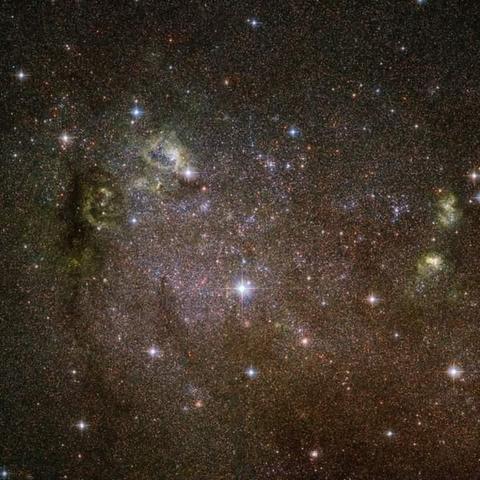
This spooky, mysterious starburst galaxy churns out stars at a high rate.

Seen in this #HubbleClassic view, IC 10 is the closest known "starburst" galaxy to our Milky Way, at a distance of 2.2 million light-years. However, it has a faint, ghostly appearance that makes it difficult to observe, especially since it's located along a line-of-sight that's brimming with cosmic dust and stars.

Image credit: NASA, ESA and F. Bauer
#science #astronomy #space

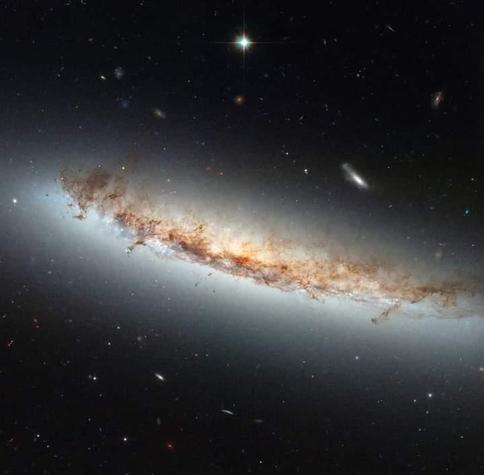
Under pressure

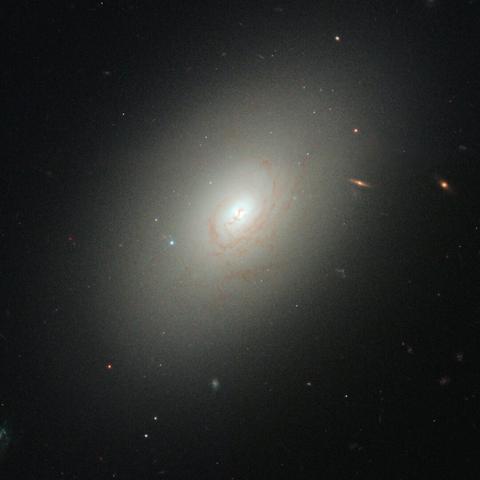
As the galaxy NGC 4402 moves through space, it experiences resistance from the interstellar gas and dust it encounters - known as ram pressure.

In this #HubbleClassic view, this effect is seen in the curved appearance of the galaxy's disk of gas and dust, caused by forces exerted by the heated gas NGC 4402 moves through.

NGC 4402 is located about 55 million light-years away in the constellation Virgo.

Image credit: NASA & ESA

#NASA #Hubble #space #science #astronomy

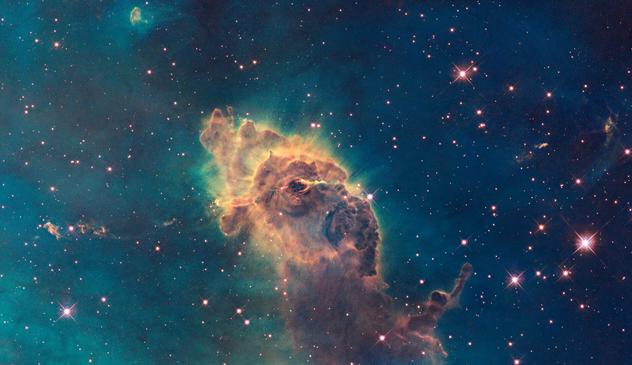
Star factory 🌟

This #HubbleClassic image shows the top of a pillar of gas and dust in the Carina Nebula.

Located about 7,500 light-years away, this pillar is home to newborn stars that are nestled within it. Discover more: https://go.nasa.gov/45oEMkv
#Hubble

WFC3 visible image of the Carina Nebula

WFC3 visible image of the Carina Nebula

www.spacetelescope.org

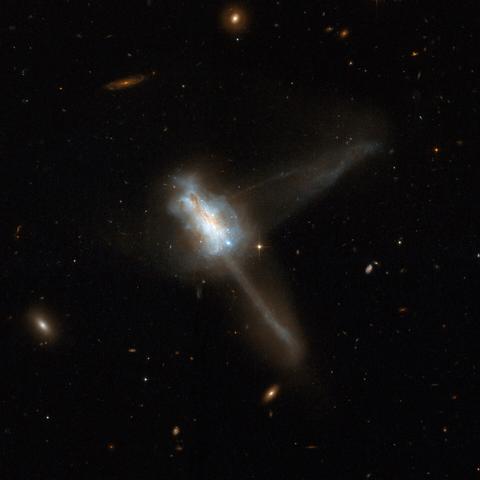
Cosmic collision!

Seen in this #HubbleClassic view, the galaxy IC 883 is likely the result of two gas-rich galaxies merging.

This collision likely triggered a burst of star formation, as seen by the bright star clusters in the central region: https://go.nasa.gov/4452W2m
#Hubble

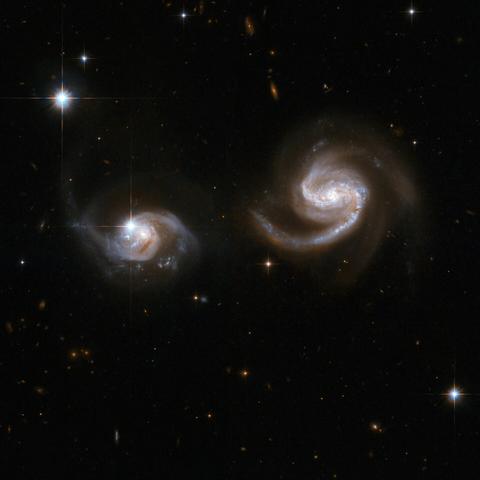
The galaxy LEDA 62867 is safe... for now.

LEDA 62867 is the smaller, leftmost galaxy seen in this #HubbleClassic image. It's almost certainly going to eventually be swallowed by the larger galaxy seen on the right, NGC 6786, and its powerful gravity: https://go.nasa.gov/3QBJDuH
#Hubble

About 2,000 galaxies make up the Virgo cluster. This #HubbleClassic focuses on one of its members, NGC 4660!

At 54 million light-years away, this galaxy is home to 205 globular clusters, which are spherical groups of stars bound together by gravity: https://go.nasa.gov/476ZwPe
#Hubble

Still kicking!

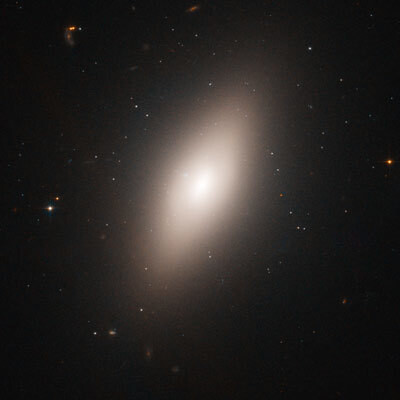
Elliptical galaxies, like NGC 4150 in this #HubbleClassic image, tend to contain older stars.

But Hubble observations of NGC 4150 helped show that elliptical galaxies can have new star birth, fueled by “cannabalizing” smaller galaxies: https://go.nasa.gov/46tYZH8
#Hubble

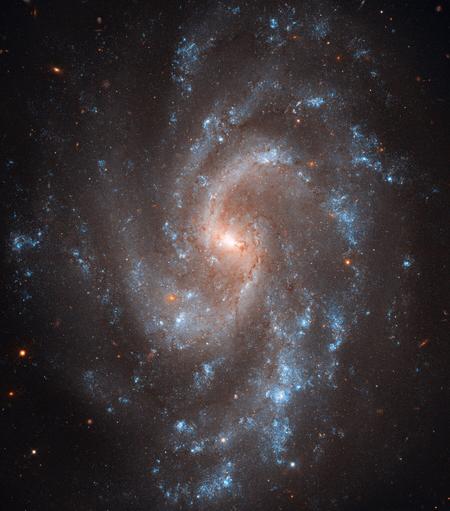
📍 NGC 5584

About 72 million light-years away, the brilliant, blue glow of young stars traces the spiral arms of the galaxy in this #HubbleClassic image.

Thin, dark dust lanes appear to be flowing from the yellowish core, where older stars reside: https://go.nasa.gov/3CDjaEs
#Hubble

The galaxy next door!

This #HubbleClassic view shows a star field in the outer disk of the Andromeda Galaxy, which is the nearest major galaxy to our Milky Way.

Explore more: https://go.nasa.gov/45WRs3i
#Hubble

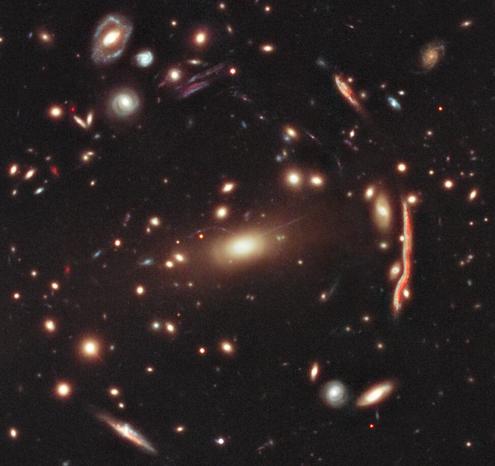
Meet galaxy cluster MACS 1206.

In this #HubbleClassic view, some galaxies appear warped. This is caused by gravitational lensing, which occurs when the gravity of a massive object (like a cluster of galaxies) distorts light coming from behind it: https://go.nasa.gov/43O8qyV
#Hubble