📋Ergebnisse des 2023
#HELCOM Berichts: Durch den Verlust der Artenvielfalt & menschliche Einflüsse hat sich der Zustand der
#Ostsee von 2016-2021 kaum verbessert - aber regionale Maßnahmen können Wirkung zeigen 🌊 Auch die deutsche
#Meeresforschung hat zu
#HOLAS3 beigetragen🌱
https://stateofthebalticsea.helcom.fi/
State of the Baltic Sea – Second HELCOM holistic assessment 2011–2016
The State of the Baltic Sea report reflects the environmental situation in the Baltic Sea for the period 2011–2016.
#GEOMARNews |
#HELCOM just launched their State of the Baltic Sea 2023 report. Find out here how
#GEOMAR researchers contributed to the
#HOLAS3 assessment and the new publication:
https://www.geomar.de/en/news/article/the-state-of-the-baltic-sea-2023 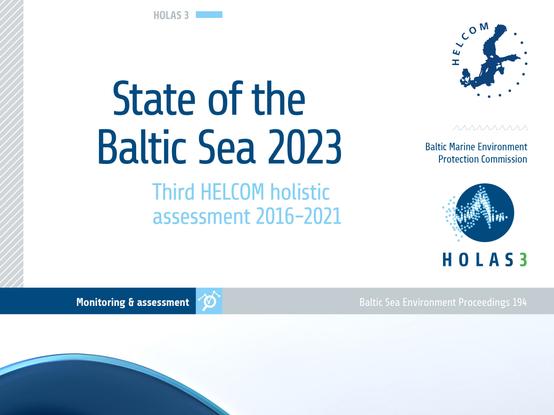

The State of the Baltic Sea 2023
31.10.2023/Helsinki/Kiel. The Baltic Sea is facing increasing challenges due to climate change and loss of biodiversity driven by eutrophication, deoxygenation, pollution, land use, excessive fish extraction and exploitation of other resources, according to the “State of the Baltic Sea 2023“ report published by the Baltic Marine Environment Protection Commission (HELCOM) today. It summarizes the key findings of the third HELCOM Holistic Assessment (HOLAS 3), which provides a comprehensive overview of the Baltic Sea’s ecosystem health during 2016 to 2021. Acting as two of Germany’s representatives in the HELCOM Expert Group on Foodwebs, Dr. Jan Dierking and Dr. Marco Scotti from GEOMAR Helmholtz Centre for Ocean Research Kiel contributed to the chapter on the status of biodiversity in the Baltic.
 DAM – Allianz Meeresforschung
 GEOMAR_en