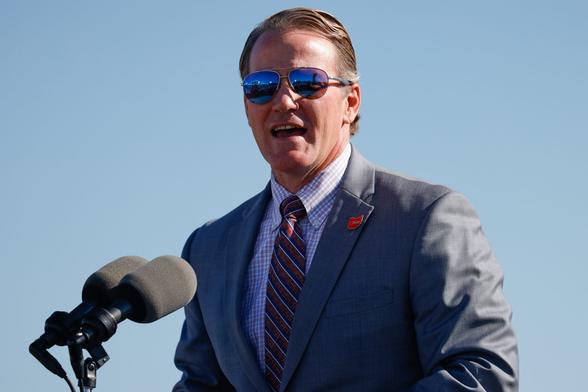
" #Husted also said he didn't know about Randazzo writing part of #HB6. The bill included a $1.3 billion bailout of two nuclear power plants in northern #Ohio that #FirstEnergy owned through its FirstEnergy Solutions subsidiary at the time."
#JonHusted pulls out the old reliable defense--I can't recall. . .
"During his virtual testimony , Husted said he couldn't recall what they discussed during the 2018 dinner."
#Ohio #HB6 #FirstEnergy
https://s1.view.sfmc-marketing.com/view_email.aspx?vawpToken=V6DODXY7AOZEHASUIMBFWWFEXQ.10194&for-guid=e03e22f1-1f95-4471-9dd1-470722111729&utm_source=cantonrep-the-scoop-strada&utm_medium=email&utm_campaign=baseline_greeting&utm_content=nrep-canton-nletter71
Today's Gilded Age criminals.
"On Dec. 18, 2018, before they visited Randazzo's condo, Dowling and Jones met with #MikeDeWine and then Lt. Gov-elect #JonHusted who is now a U.S. senator."
https://www.beaconjournal.com/story/business/2026/03/02/how-puco-chair-sam-randazzo-hid-links-to-firstenergy-week-4-trial-akron-chuck-jones-michael-dowling/88898310007/
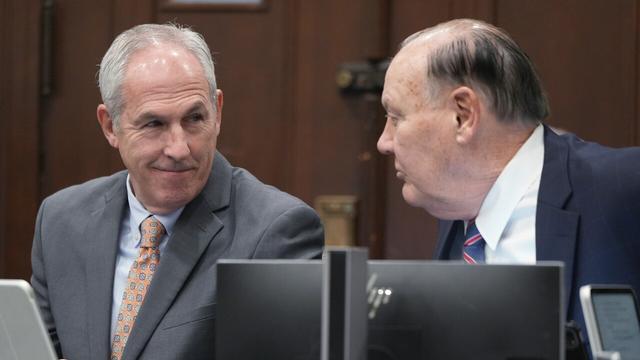
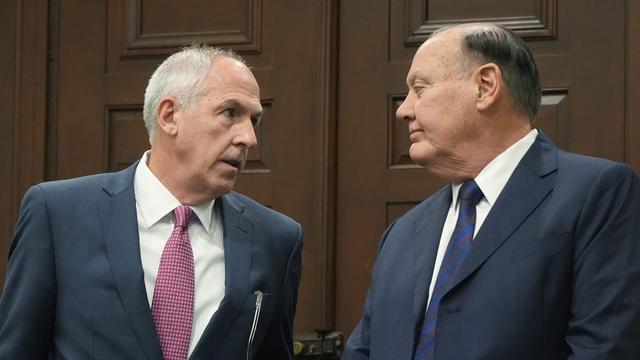
Assistant #Ohio Attorney General Matthew Meyer is working to convince a jury that a former top utility regulator was a "bought-and-paid-for man" who had illegal behind-the-scenes dealings with ex-#FirstEnergy executives Chuck Jones & Michael Dowling.
Asim Haque, a witness for the prosecution in Jones' and Dowling's ongoing criminal trial, testified about a meeting he had with Sam Randazzo in 2016, before Randazzo became chair of the PUCO
Deadmen can't talk. #HB6
A defense attorney for a former FirstEnergy executive said all criminal charges against his client should be dropped because the regulator he is accused of bribing stole money "unbeknownst to everybody."
A lawyer for ex-FirstEnergy Senior Vice President Michael Dowling, said a payment the company made to ex-Public Utilities Commission of Ohio Chair Sam Randazzo, was for a legal settlement agreement, not a bribe
"“Importantly, that settlement does not address the more than $500 million paid by all #Ohio electric utility consumers under #HB6 to subsidize two coal plants partially owned by Ohio utilities. Those charges were collected from consumers through the ‘legacy generation rider.’ While HB 15 repealed that rider, it did not provide refunds to consumers for money already paid − despite OCC’s strong and consistent advocacy that full refunds were warranted.”
Is More Discipline the Answer? What Texas House Bill 6 Means for Our Students, And Our Future
Texas just passed House Bill 6, and on paper, it looks like a crackdown on student “misbehavior.” It gives schools more power to suspend, expel, and isolate students—especially those labeled disruptive.
But here’s the question we’re not asking enough: is more discipline the answer?
Because if discipline were the solution, wouldn’t we have fixed this by now?
What’s In HB 6?
Let’s break it down.
Texas House Bill 6 allows:
This law reverses protections that were intentionally put in place to support vulnerable kids.
The Argument For It
Supporters say HB 6 gives schools more flexibility. That it protects teachers. That it helps restore order in classrooms that are falling apart post-pandemic.
And I get that. Teachers are burned out. Classrooms are stretched. Some students are acting out because they’re carrying trauma no one has time—or resources—to address.
The impulse to remove “problem students” isn’t random. It comes from real frustration.
But reactionary policy made out of frustration rarely creates meaningful change.
What’s the Harm?
What happens when schools are told: “Here’s more power to punish—but no new resources to support”?
They isolate.
They remove.
They suspend.
Because it’s fast, cheap, and easy.
Let’s be real: most schools aren’t equipped with enough social workers, counselors, or trauma-informed staff. They’re already underfunded. And now, with the U.S. Department of Education being quietly dismantled, things are only going to get harder.
So instead of building up support, we just remove the student and call it a solution.
What Does That Teach Kids?
It teaches them they’re a problem.
That they don’t belong.
That if you mess up, you get pushed out—sometimes permanently.
And from there? It’s a straight line to policing, to criminalization, to being written off completely. We’ve seen it before. We know what the school-to-prison pipeline looks like. And we’re still walking down that road.
The Bigger Truth We Miss
Here’s the deeper truth: every time we remove a student, we teach them how disposable they are.
And that doesn’t just hurt them—it weakens all of us.
Because a kid who believes they’re a problem becomes an adult who struggles to believe in their own worth.
And a society filled with people who were shamed, shunned, and criminalized when they were most vulnerable? That’s not a society that’s going to thrive.
We should be building emotionally healthy, critically thinking human beings. Not pushing them out when they become inconvenient.
So, Is More Discipline the Answer?
If it comes with support, maybe.
But if it’s just more punishment with no healing? No growth? No equity?
Then no, it’s not the answer. It’s just easier.
And when easy policies hurt people, we need to do better.
What You Can Do
Because the measure of a school isn’t how fast it can suspend a kid. It’s how far it’ll go to keep them in the room.
📌 What would you want your child’s school to do instead of suspension?
💬 Drop a comment below, and let’s push this conversation deeper.
🎥 Watch the full video breakdown above
📩 Subscribe to the blog for more education justice content and real talk.
#educationalEquity #hb6 #issOss #publicEducationReform #schoolDiscipline #specialEducation #studentAdvocacy #studentRights #texasLegislation #traumaInformedSchools