🔬 🧬 Discover how the 1+Million Genomes (1+MG) initiative is revolutionising healthcare across Europe by integrating genomic data into clinical decision-making.
🎥 The 1+MG Initiative explained ▶️ https://www.youtube.com/watch?v=npcHJr-ZJww
🔬 🧬 Discover how the 1+Million Genomes (1+MG) initiative is revolutionising healthcare across Europe by integrating genomic data into clinical decision-making.
🎥 The 1+MG Initiative explained ▶️ https://www.youtube.com/watch?v=npcHJr-ZJww
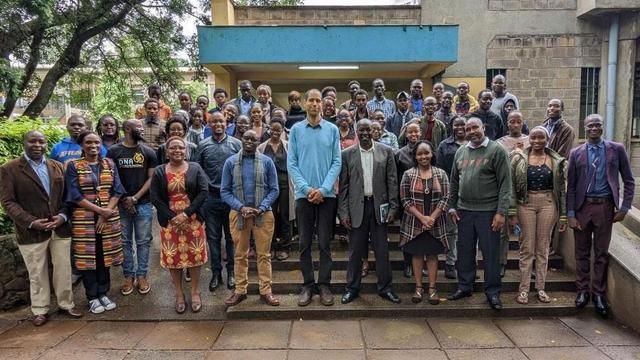
🇰🇪 Bioinformatics Hub of Kenya Initiative (BHKi) is one of the orgs piloting the #OpenDataEditor, working with #genomicdata and metadata.
💬 Pauline Karega, Coordinator: "This tool can be a gentle introduction to practice as our community learn coding skills.”
👉🏾 More: https://blog.okfn.org/2025/03/13/meet-the-organisations-selected-to-pilot-the-open-data-editor/
Immortal data: a qualitative exploration of patients’ understandings of genomic data
#ResearchEthics #ClinicalResearch #ParticipantUnderstanding #GenomicData
As ambitions to ‘mainstream’ genetic and genomic medicine in the UK advance, patients are increasingly exposed to information about genomic data. Unlike the results of many other medical investigations which are linked to the time of sample collection, genomic testing provides immortal data that do not change across time, and may have relevance for relatives and generations far beyond the patient’s own lifespan. This immortality raises new ethical challenges for healthcare professionals, patients and families alike, such as ensuring consent for possible future interpretations; determining when genomic data are best sought (at birth, on illness etc) and reinterpreted; and balancing the confidentiality of patients and duties of care towards others. This paper reports on qualitative work exploring the perspectives of patients and relatives participating in genomic testing, and suggests that their engagements with this immortality are shaped by: the contrast between the simplicity of sample provision and information gathered; understandings of heritability; and notions of genomic data as a collective resource. We discuss the implications this holds for practice and argue that the immortality of genomic data must take a more prominent position in patient and healthcare professional interactions.
Our biomathematician Fabian Theis receives the Gottfried Wilhelm Leibniz Prize 2023 from the German Research Foundation for his work on #GenomicData.👏 Congratulations! http://go.tum.de/309315
#Biomathematics #AI #LeibnizPreis
📷A. Eckert
Mathematician, physicist and information scientist Prof. Fabian Theis has won the 2023 Gottfried Wilhelm Leibniz Prize. The full professor for Biomathematics at the Technical University of Munich (TUM) has been honored for his pioneering work in the analysis, modeling and interpretation of genomic data, the German Research Foundation (DFG) announced. The Leibniz Prize, the most important research prize in Germany, is endowed with 2.5 million euros.
Referenced link: https://medicalxpress.com/news/2022-10-genomic-pandemic.html
Discuss on https://discu.eu/q/https://medicalxpress.com/news/2022-10-genomic-pandemic.html
Originally posted by Phys.org / @[email protected]: https://twitter.com/medical_xpress/status/1583497605333782528#m
RT by @physorg_com: #Genomicdata can improve pandemic modeling, researchers say @sfu @NatureMicrobiol https://www.nature.com/articles/s41564-022-01233-6 https://medicalxpress.com/news/2022-10-genomic-pandemic.html
Simon Fraser University researchers are advocating for the inclusion of genomic data into forecasting models to better understand the spread of infectious diseases. The researchers say incorporating this data into forecasting models can inform monitoring, coordination and help determine where resources are needed.