 AstroGeo
The statistical framework of AstroGeoFit. 4. Computational methods. By Nathan Hara, LAM
The statistical framework of AstroGeoFit. 4. Computational methods. By Nathan Hara, LAM
The statistical framework of AstroGeoFit. 3. Selecting the model complexity. By Nathan Hara, LAM
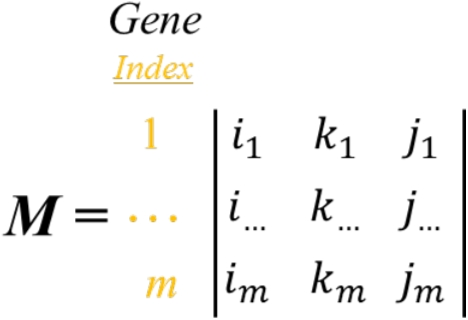
This paper presents an online scheduling framework for a multi-compartment Automated Guided Vehicle (AGV) with optional onboard cobot, embedded in a Digital Twin environment that provides real-time machine-state data. The scheduler is a Genetic Algorithm (GA) with mission-index encoding and feasibility-by-construction initialization, generating valid sequences under capacity, traceability, and precedence constraints. To isolate the value of machine-state awareness, the GA operates in two modes: an RPT-blind baseline using logistics data only, and an RPT-aware extension that integrates machine Remaining Processing Time (RPT) into feasibility and fitness evaluation. Validation across eleven scenarios on a precision aerospace workshop reveals that the impact of RPT-awareness is regime-dependent. In non-saturated and capacity-constrained settings, readiness-driven synchronization reduces transport waste (Trip Time −34–51%, Empty Trip Time −54–70% vs. RPT-blind) but increases makespan by 5–11%, because conservative waiting can delay feeding of bottleneck resources. In coordination-sensitive and high-mix regimes, RPT-awareness improves both dimensions simultaneously, reducing makespan by up to 10% (810 $$\rightarrow$$ 728 min) alongside comparable logistics gains. Relative to the FIFO baseline representing current industrial practice, GA-based automation reduces Trip Time by 15–60% and Empty Trip Time by 15–77%. RPT-awareness also enables proactive cobot scheduling, completing all eligible inline missions (up to 29 per shift versus 4–9 in RPT-blind mode). The results indicate that RPT-aware scheduling is most effective where coordination complexity, rather than processing capacity, bounds system performance.
The statistical framework of AstroGeoFit. 1. The AstroGeoFit model. By Nathan Hara, LAM.
 Jenetics GA
 Patrick