fal (@fal)
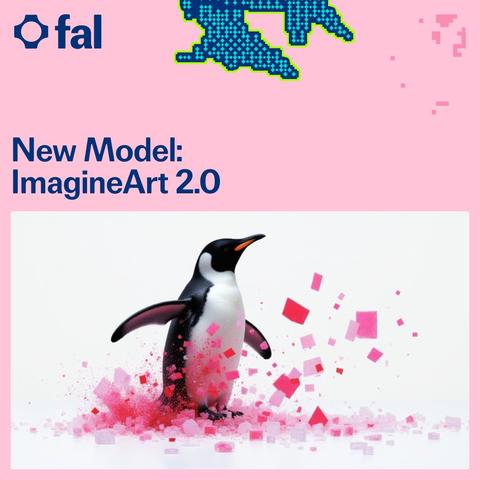
fal에서 ImagineArt 2.0이 출시됐다. 인물 사진, 패션, 풍경, 스튜디오 스틸 등 다양한 이미지 생성에 하나의 모델로 대응하며, 브랜드·리테일·프레젠테이션용 정교한 텍스트 렌더링과 필름 그레인부터 일러스트까지 폭넓은 스타일, 공간 장면 이해를 지원한다.
https://x.com/fal/status/2044752539313144031
#aiimagegeneration #imagetool #generativemodel #texttorendering #fal
fal (@fal) on X
🚨 ImagineArt 2.0 from @ImagineArt_X is here on fal!
🎨 One model for portraits, fashion, landscapes and studio stills
✍️ Precise text rendering for brand, retail and presentation graphics
🎬 Full style range from film grain to illustration with spatial scene understanding
Simon Willison (@simonw)
Meta의 새 Muse Spark 모델과 관련한 내용이며, 코드 인터프리터 및 `container.visual_grounding` 도구를 Meta AI 채팅 UI에서 살펴본 딥다이브를 언급한다. Meta의 생성형 AI 모델과 도구, 인터페이스 기능을 확인할 수 있는 실용적 기술 공유다.
https://x.com/simonw/status/2042017820633153842
#meta #ai #generativemodel #codeinterpreter #llm

Simon Willison (@simonw) on X
Pelicans for Meta's new Muse Spark models - plus I did a bit of a deep dive into the Code Interpreter and fascinating "container.visual_grounding" tools in their https://t.co/Qq1tQtgKH7 chat UI https://t.co/NIQB6ZACDC
World Labs (@theworldlabs)
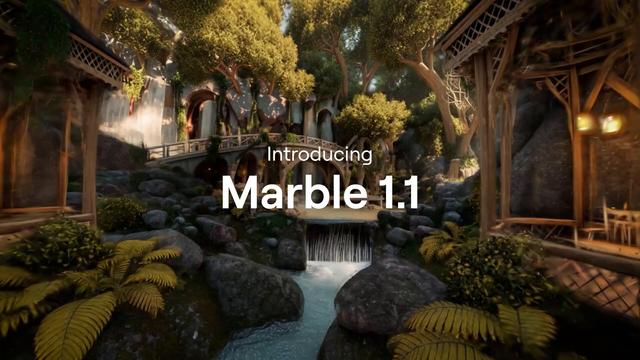
두 가지 모델 업데이트를 공개했다. Marble 1.1은 조명과 대비를 개선하고 시각적 아티팩트를 크게 줄였으며, Marble 1.1-Plus는 더 크고 복잡한 환경을 만들 수 있도록 확장성과 성능을 강화한 새 모델이다.
https://x.com/theworldlabs/status/2041554646561677701
#modelupdate #marble #generativemodel #aiimage #release
World Labs (@theworldlabs) on X
We're excited to be rolling out two model updates today!
Marble 1.1: Improves lighting and contrast, with a major reduction in visual artifacts.
Marble 1.1-Plus: Our new model built for scale. Create larger, more complex environments than ever before.
Google for Developers (@googledevs)
Lyria 3와 Lyria 3 Pro가 Gemini API와 Google AI Studio에서 퍼블릭 프리뷰로 제공되기 시작했다. 두 가지 변형으로 생산성과 지연 시간 요구에 맞춰 선택할 수 있으며, 모델을 더 세밀하게 제어할 수 있는 음악 생성 AI 관련 업데이트다.
https://x.com/googledevs/status/2036842026306769244
#lyria #geminiapi #googleaistudio #musicai #generativemodel
Google for Developers (@googledevs) on X
🎵 Lyria 3 and Lyria 3 Pro are now available in public preview via the Gemini API and in @GoogleAIStudio — and it’s music to our ears 🎵
🎼 Choose from two distinct variants to match production & latency needs (Lyria 3 Pro and Lyria 3 Clip)
📢 Direct the model with more
Adina Yakup (@AdinaYakup)
GAIR가 Human Centric Audio-Video Generative Model인 daVinci-MagiHuman을 공개했다. 15B 규모의 완전 오픈소스 모델로, 텍스트·비디오·오디오를 통합해 6개 언어를 지원하며 H100 한 대에서 5초 1080p 영상을 38초에 생성한다고 소개했다.
https://x.com/AdinaYakup/status/2036398402284495216
#gair #opensource #videogeneration #audiovideo #generativemodel

Adina Yakup (@AdinaYakup) on X
daVinci-MagiHuman 🎬 Human Centric Audio-Video Generative Model by GAIR
Model: https://t.co/5ZJJYegEil
Paper: https://t.co/5ZJJYegEil
✨ 15B – Fully open source!
✨ 5-sec 1080p video in 38s on one H100
✨ Supports 6 languages
✨ Unified model with text + video + audio
fly51fly (@fly51fly)
ByteDance 연구팀이 'BitDance'라는 새로운 생성 모델 아키텍처를 공개했습니다. 이 모델은 이진 토큰(binary tokens)을 사용하는 자기회귀(autoregressive) 방식으로, 확장성과 효율성을 모두 향상시킨 이미지 및 텍스트 생성 성능을 보여줍니다. 대규모 모델의 경량화와 효율적 학습을 가능하게 하는 잠재적 돌파구로 평가됩니다.
https://x.com/fly51fly/status/2025336919799071034
#generativemodel #bytedance #llm #efficientai #research

fly51fly (@fly51fly) on X
[CV] BitDance: Scaling Autoregressive Generative Models with Binary Tokens
Y Ai, J Han, S Zhuang, W Mao... [ByteDance] (2026)
https://t.co/mRlT6PwELM
Matt Shumer (@mattshumer_)
작성자가 Genie 3를 매우 강력하게 칭찬하며 '지금까지 써본 것 중 가장 미친 것'이라 표현한 반응성 트윗입니다. 강한 감탄과 함께 시연(또는 영상)을 보라는 권유가 포함되어 있어 새로운 모델 체험기·리뷰 성격입니다.
https://x.com/mattshumer_/status/2017058981286396001
#genie3 #ai #generativemodel #demo

Matt Shumer (@mattshumer_) on X
HOLY FUCK
Genie 3 is the craziest thing I've tried in a long time
Just... wow. Watch this.
Matt Shumer (@mattshumer_)
Genie 3가 포트나이트(Fortnite) 게임플레이를 생성하는 모습을 보고, 그런 동작은 의도된 기능이 아닐 것 같다는 의문을 제기하는 내용입니다. 모델의 예상 밖 출력 사례로 해석될 수 있습니다.
https://x.com/mattshumer_/status/2017062368010813930
#genie3 #ai #generativemodel #fortnite

Matt Shumer (@mattshumer_) on X
Uhhh... I don't think Genie 3 is supposed to be generating Fortnite gameplay

DDN: Discrete Distribution Networks
Novel Generative Model with Simple Principles and Unique Properties

Introducing SGS-1
Spectral Labs releases SGS-1: the first generative model for structured CAD.
 sayzard
 Hacker News