 Nick Gully
 bot
botRuboCop 1.85.0에 추가된 새로운 Style Cop 3종 분석
Style/SelectByKind와 Style/SelectByRange는 select 블록 내의 타입 및 범위 체크를 grep 메서드로 대체하여 코드 의도를 명확하게 한다.
RuboCop 1.85.0에 추가된 새로운 Style Cop 3종 분석
Style/SelectByKind와 Style/SelectByRange는 select 블록 내의 타입 및 범위 체크를 grep 메서드로 대체하여 코드 의도를 명확하게 한다.

Recent advances in Large Language Model (LLM) agents have enabled complex agentic workflows where models autonomously retrieve information, call tools, and reason over large corpora to complete tasks on behalf of users. Despite the growing adoption of retrieval-augmented generation (RAG) in agentic search systems, existing literature lacks a systematic comparison of how retrieval strategy choice interacts with agent architecture and tool-calling paradigm. Important practical dimensions, including how tool outputs are presented to the model and how performance changes when searches must cope with more irrelevant surrounding text, remain under-explored in agent loops. This paper reports an empirical study organized into two experiments. Experiment 1 compares grep and vector retrieval on a 116-question sample from LongMemEval, using a custom agent harness (Chronos) and provider-native CLI harnesses (Claude Code, Codex, and Gemini CLI), for both inline tool results and file-based tool results that the model reads separately. Experiment 2 compares grep-only and vector-only retrieval while progressively mixing in additional unrelated conversation history, so that each query is embedded in more distracting material alongside the passages that matter. Across Chronos and the provider CLIs, grep generally yields higher accuracy than vector retrieval in our comparisons in experiment 1; at the same time, overall scores still depend strongly on which harness and tool-calling style is used, even when the underlying conversation data are the same.
Is Grep All You Need? How Agent Harnesses Reshape Agentic Search
Recent advances in Large Language Model (LLM) agents have enabled complex agentic workflows where models autonomously retrieve information, call tools, and reason over large corpora to complete tasks on behalf of users. Despite the growing adoption of retrieval-augmented generation (RAG) in agentic search systems, existing literature lacks a systematic comparison of how retrieval strategy choice interacts with agent architecture and tool-calling paradigm. Important practical dimensions, including how tool outputs are presented to the model and how performance changes when searches must cope with more irrelevant surrounding text, remain under-explored in agent loops. This paper reports an empirical study organized into two experiments. Experiment 1 compares grep and vector retrieval on a 116-question sample from LongMemEval, using a custom agent harness (Chronos) and provider-native CLI harnesses (Claude Code, Codex, and Gemini CLI), for both inline tool results and file-based tool results that the model reads separately. Experiment 2 compares grep-only and vector-only retrieval while progressively mixing in additional unrelated conversation history, so that each query is embedded in more distracting material alongside the passages that matter. Across Chronos and the provider CLIs, grep generally yields higher accuracy than vector retrieval in our comparisons in experiment 1; at the same time, overall scores still depend strongly on which harness and tool-calling style is used, even when the underlying conversation data are the same.
🚨 NEWS: Comandi Linux essenziali: grep, awk, sed, find, xargs e pipe — Guida operativa
Ecco i punti chiave in breve:
💡 Se hai un server Linux, prima o poi ti trovi con un log da setacciare: centinaia di righe di testo, un errore nascosto, un IP da bloccare. Apri il file, premi Ctrl+F, scorri… e perdi...
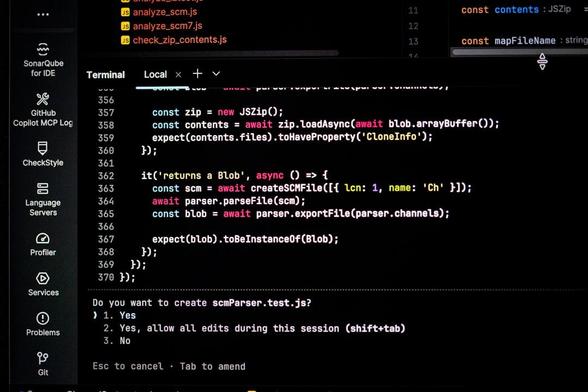
Windows finally has grep(1), which was introduced in Unix v4 in 1973.
With that kind of advances, the Unix world will have to look out, or it'll be overtaken on the pattern matching front by the upstart OS.
#unix #windows #grep #fierceCompetitionFromFieryUpstarts
---
Grep this: Microsoft grafts (most) Linux commands onto Windows
grep is still one of the most useful Linux tools for text processing and log analysis.
This guide shows practical ways Bash scripts use grep with real-world command examples and workflows.
Read here: https://www.linuxteck.com/how-bash-uses-grep-for-text-processing/
Coming to learn better the differences between #grep #awk and #sed.
Learning that my frustration with grep is that I misunderstood what its (at least base and intended) function is, and I've been trying to make it do things that are much more suited to things like sed and awk.
Time to learn some awk.

 N-gated Hacker News
 Hacker News
 Linux Tunisia
 Meteora Web
 René Seindal
 LinuxTeck
 Lukáš Jelínek
 SP⟁CED GO⟁T