 Brighid's Ogham Grove
FRENCH BUREAUCRACY BLOCKS EU IDS by Veronica Smith
French bureaucracy has always been notoriously difficult but, since digitalisation, it has reached new heights of chaos!
The idea of changing to on-line formats was supposed to save everyone time from waiting in queues at government buildings. It would also cut back the work-load of civil servants in favour of standard automated responses.
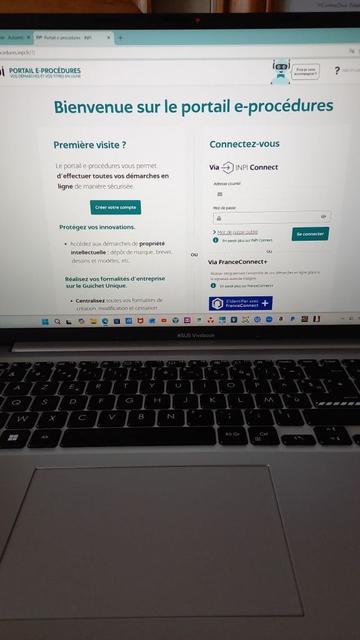
However, putting everything online has resulted in a rash of cyber-attacks. So the French government decided to complicate the online process (which was supposed to make life easier!) by introducing third-party “sign-in” mechanisms: France Connect; INPI; La Poste Identité Numerique.
The problem with this “solution”, from my point-of-view, is that these third-party gatekeepers only recognise French-issued identity cards. They effectively block everything else.
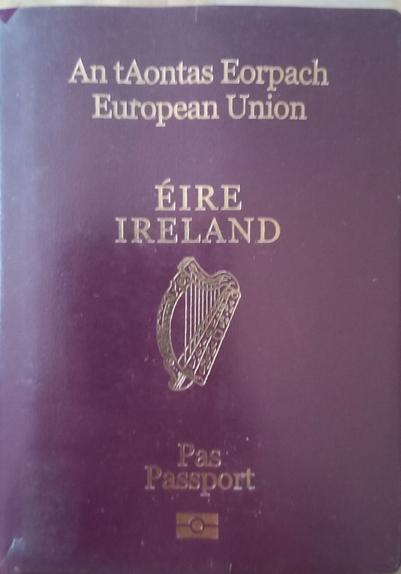
I am an Irish national living in France. Like France, Ireland is a fellow member of the European Union. Therefore, I have never needed to apply for a French identity card – until now, when I cannot access specific functions on the French government websites!
We only became aware of the situation earlier this year (2026), when my sister, who is the official owner of our car, wanted to add me as a “co-registrant”. We tried to start the formalities on-line but were repeatedly blocked because the third-party gatekeepers refused to accept our Irish passport credentials. When we visited our local Mairie for advice, we were told that we need not bother with the formalities because it was not an important matter. We should forget about adding my name to the Carte Grise (car registration card) and continue the way we were!
My next hurdle involved the closing down of my Micro-Entreprise (small business). It has been registered since 2018 but now I wish to cease my activities before a new law comes into effect. Although I had no trouble accessing my URSSAF account, the only way that I could start the closing down procedure was by signing in with one of the Gatekeepers. Once again, none of them accepted my Irish Passport credentials.
So, I pressed the “help” button. The automated response told me that I had to use the on-line format, which had already denied me access! I looked up the nearest URSSAF office in my area and sent them an online request for an appointment to meet with a real person. I asked them to respond by email rather than by telephone.
Like many people coping with a foreign language, I can communicate in French when it is face-to-face but find it impossible to understand over the telephone, particularly when it involves dates and times.
There were no emails, just half a dozen missed phone calls from URSSAF. The only email that I finally received informed me that they had tried to contact me by telephone but received no reply. If I wished to re-apply for an appointment, I had to fill-out the on-line request all over again!
So, I asked a bi-lingual French friend to phone the URSSAF office in Alençon on my behalf and see if she could arrange an appointment for me. My friend reported back that she had been given the run-around by the automated telephone system: “press 1 for x; 2 for y” etcetera. In the end, the annoying voice said that she could only make an appointment by using her URSSAF online account! Back to base!
It was starting to feel like that old song, “There’s a hole in my bucket, dear Liza, dear Liza!” Whatever solution is presented cannot work because an important element is always missing!
Feeling extremely frustrated, I resorted to low-tech methods. I wrote a letter, explaining my difficult situation, and including back-up documentation. I sent it off by registered post in the post office. It arrived back today, unopened. Obviously, if I do not follow the rigid online procedures, the officials will ignore me!
While in the post office, I got talking (in French) to my friend the postmistress, explaining the problem. She called out her supervisor, who told me of her Portuguese friend, who had been in the same situation as myself: a citizen of a fellow EU country with no French documentation. The Portuguese friend had applied for, and been granted, the French “Titre de Sejour”, a card issued to non-nationals, who have been legally resident in France for at least five years.
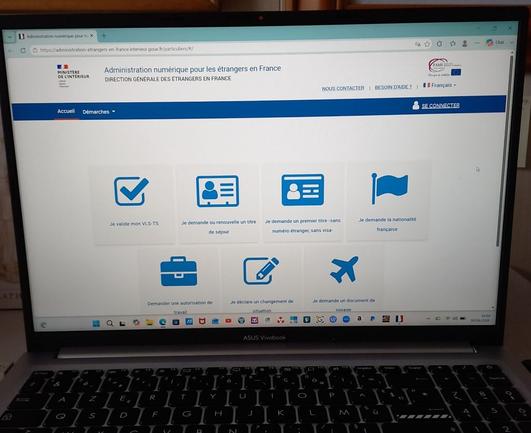
In desperation, I went online and researched the application procedures for “Titre de Sejour”. It involved going on to yet another French government website, called ANEF. At least I was able to access the site without any of the Gatekeepers. ANEF gave me a temporary access code and allowed me to start uploading requested documentation – including my Irish passport details! When all the boxes had been filled, I pressed “send” and off it went into cyber-space. They even sent me an email acknowledgement! Wow!
The bad news is that ANEF has mega problems of its own. According to several articles in the June 2026 issue of the English-language “Connexion Magazine”, the situation is so bad that France’s top administrative court has demanded that the government take action in six months over IT malfunctions and difficulties with residency cards!
“The Conseil d’Etat targeted in particular problems with the ANEF website, used by the ministry for many residency and citizenship procedures, saying the state has an obligation to ensure people can carry out their procedures normally.
“It noted that assistance with using the site must be offered as well as the possibility of meeting an official who can register the application for those who have tried these methods and experienced technical difficulties: principles which were put into France’s immigration law in 2023 at article R431-2.”
This bit made me laugh! “Assistance can include phoning or sending online messages to a help centre, or visiting a digital help desk at a prefecture!”
According to a representative of La Cimade, a nonprofit organisation that provides legal support for foreigners in France, “That should, hopefully, significantly improve the situation for people who are faced with this digital barrier and who are unable to submit their residence permit applications.”
Well, I am not holding my breath! It took two years for the authorities to issue me with a French driving licence in exchange for my Irish one. It took another two years for them to issue me with a French medical card (Carte Vitale). I expect the Titre de Sejour will take even longer. It might even be awarded posthumously!
In the meantime, I am stuck in limbo, unable to perform any formalities on the French government websites. Sadly, I am not the only EU national in this predicament.
This is one time when, if I came from Northern Ireland instead of the Irish Republic – or indeed from any country outside of the European Union – I would already have a Carte de Sejour and there would be no problem.
What happens next is anyone’s guess!
ENDS author Veronica Smith first published 8th June 2026
#ANEF #EuropeanUnion #formalitiesThatExcludeEUIdentityCards #FrenchBureaucracy #FrenchGovernmentWebsiteFiasco #URSSAF