1950s JC Penney’s Foremost (8 and final)
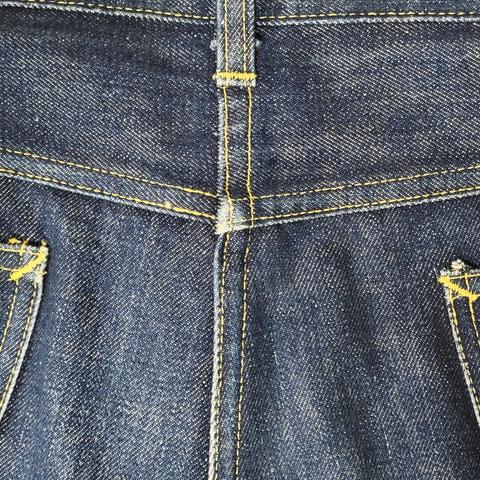
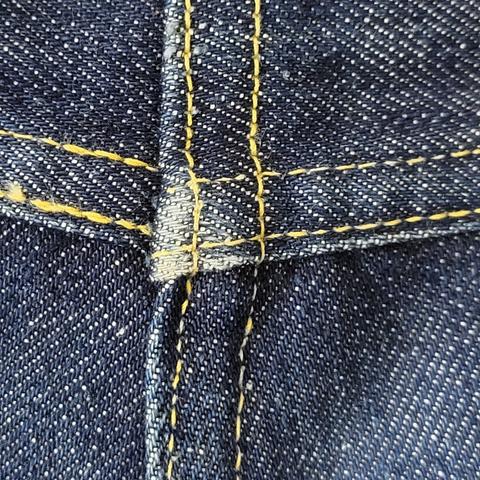
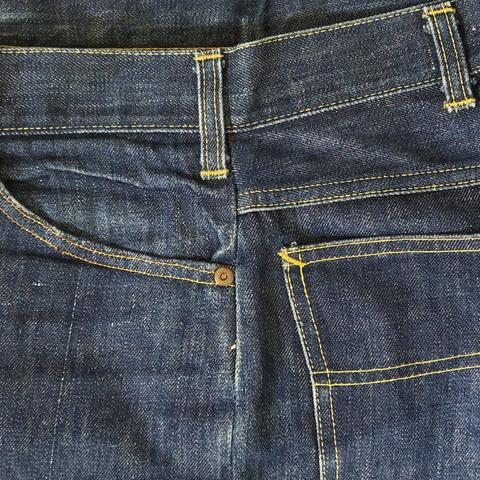
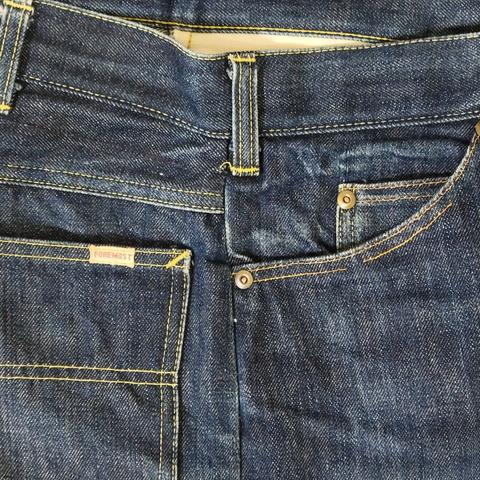
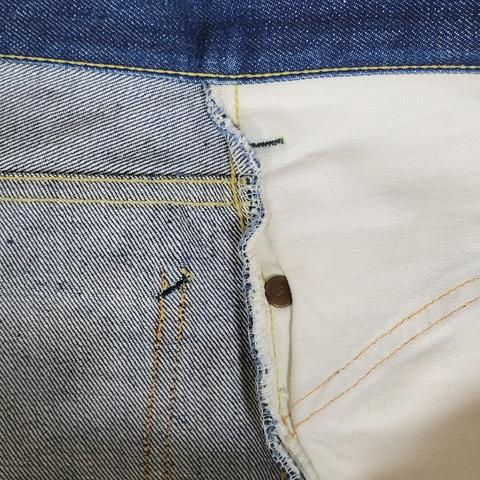
The yoke seams are lapped top over bottom, and the center seam is lapped right over left - a fairly rare combination.
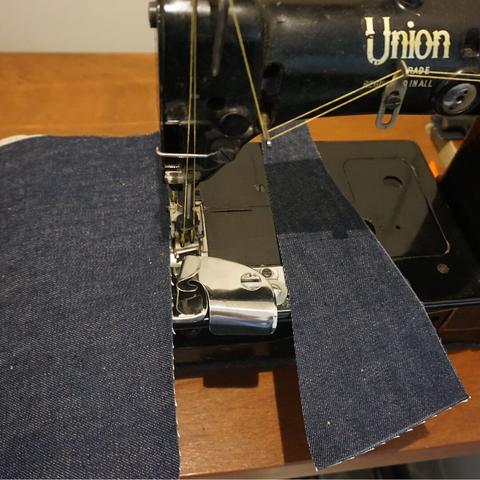
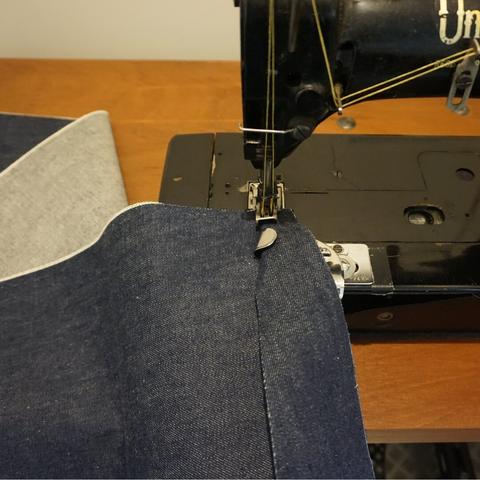
Lapped seams are sewn by feeding both pieces of fabric into a folder, which creates the "lap" in front of the needles. For a top-over-bottom lap, the yoke piece is fed into the folder from the right, and the leg panel from the left.
The yoke seam can be done on 2 different types of machine; feed-of-the-arm or flatbed. If done on a feed-of-the-arm machine, there is a lot of space on both sides, but if it is done on a flatbed machine, space on the right side of the folder is limited. It is, therefore, easier to feed the yoke piece from the right and the leg piece from the left, resulting in a top-over-bottom lap (cf photos 3-6 to see what I mean). Merely speculation, but maybe the yokes on these were done on a flatbed machine?
The center seams, however, are normally done on feed-of-the-arm machines. The direction of the lap is determined by whether the seam is started at the waist or at the crotch. The center seams on most jeans are left over right, meaning they were started at the crotch. I don't know if this is true, but I've heard that this is because lapped seams require a high level of skill, and the most difficult part is the curved crotch area. Starting with the more difficult part means that, if a mistake is made, there's less of the seam that needs to be undone before starting again.
The center seam on these JC Penney's Foremost jeans, however, was sewn starting from the waist down to the crotch, resulting in a right-over-left lap. I don't know why it was done this way, but it doesn't seem to have been just the individual operator's preference. As far as I know from other Foremost jeans, they are all top over bottom and right over left, so this must have been the specification for this model.
I quite like this rare detail, and use it in many of the jeans that I make.
#jcpenney #foremost #eurekajeans davidochobits
 Global News Calgary
 Global News Lethbridge
 Global News Edmonton
 Global News
 Gea-Suan Lin
 Xe1phix
 Juan A. Zamarripa [E.]
 Eureka Jeans