💀 Dreadnoughtus schrani • fichiers STL et OBJ
➡️ Télécharger le modèle pour imprimante 3D : https://cults3d.com/:2114418
💡 Modélisé par @Dinosaurs3D

@cults3d #Impression3D #Imprimante3D #Imprimable #FichierSTL #3DPrinting
Dreadnoughtus schrani

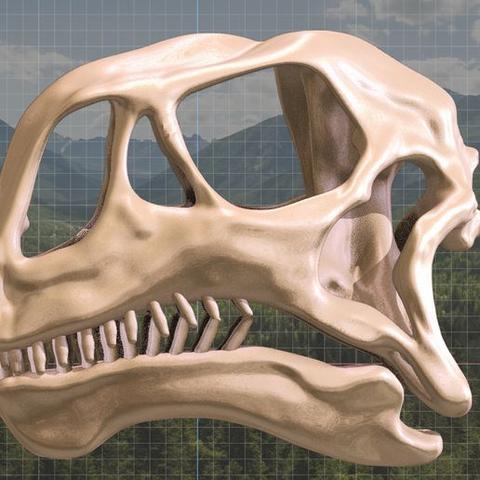
Teconstitution in 3D of the skull of Dreadnoughtus schrani, a unique opportunity to discover this prehistoric giant from an unprecedented angle. Using advanced modelling techniques, we have accurately recreated the details of its skull, offering paleontology enthusiasts a fascinating immersion in the past. Dreadnoughtus schrani is a species of sauropod dinosaur from the Upper Cretaceous discovered in 2005 in Patagonia, Argentina, by Kenneth Lacovara and his team. At 26 meters long and weighing an estimated 65 tons, it is one of the largest and most massive dinosaurs known. Its fossils, some 70% remarkably well preserved, include a large part of the skeleton, providing valuable information on the biology and evolution of the great sauropods. Named "Dreadnoughtus" after the battleships of the First World War to emphasize its size and power, and "schrani" after Adam Schran, a financial supporter of the research, this dinosaur lived on a vegetation-rich alluvial plain, feeding mainly on tall plants thanks to its long neck. This discovery has led to significant advances in paleontology, notably in the growth and physiology of prehistoric giants.
Cults 3D

💀 Allosaurus : Squelette complet • fichiers STL et OBJ
➡️ Télécharger le modèle pour imprimante 3D : https://cults3d.com/:2089756
💡 Modélisé par @Dinosaurs3D

@cults3d #Impression3D #Imprimante3D #Imprimable #FichierSTL #3DPrinting

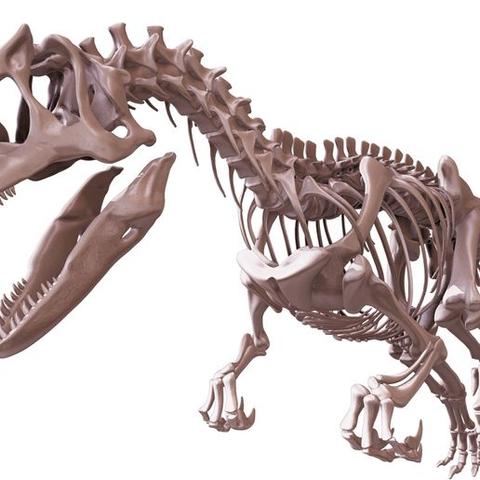
Allosaurus: Complete skeleton

Allosaurus was a large carnivorous dinosaur of the Upper Jurassic, measuring around 8 to 12 meters in length and weighing between 1.5 and 2.5 tons. It had a body adapted to hunting, with powerful hind legs for speed and relatively short but robust arms equipped with sharp claws. Its long skull and jaws were lined with sharp teeth, ideal for grabbing and tearing prey. 3D model details : Length: 8 to 12 meters Weight: 1.5 to 2.5 tons Rear legs: Long and powerful, suitable for rapid acceleration. Arms: Short but sturdy, with three sharp claws. Skull: Long and light with sharp teeth. Jaws: Able to grasp and tear larger prey. 3D rendering: Precise reproduction of anatomy, with every bone and joint faithfully modeled. Interactivity: Zoom, rotate and explore every detail of the model.

Cults 3D

🇧🇷 Anhanguera • fichiers STL et OBJ
➡️ Télécharger le modèle pour imprimante 3D : https://cults3d.com/:2084364
💡 Modélisé par @Dinosaurs3D

@cults3d #Impression3D #Imprimante3D #Imprimable #FichierSTL #3DPrinting

Anhanguera

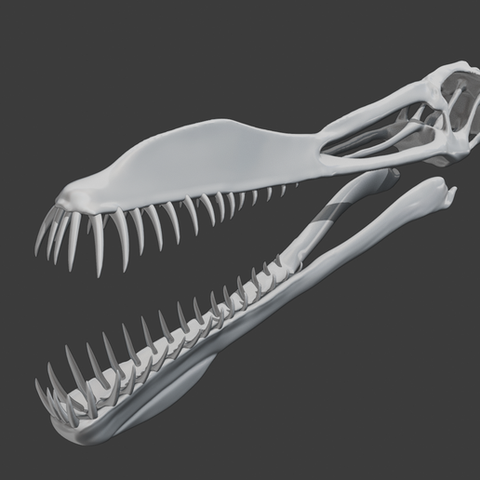
Anhanguera skull in 3D : Anhanguera is an extinct genus of pterosaurs belonging to the Anhangueridae family, which lived during the Lower Cretaceous, around 112 to 94 million years ago. These pterosaurs were characterized by their large size, with a wingspan reaching 4 to 5 meters, and an elongated head with a distinctive crest on the skull. Their long, sharp teeth were adapted to catching fish, their main source of food. The Anhanguera's wings consisted of a membrane of skin stretched along the elongated fourth finger of the hand, enabling them to be excellent thieves capable of traveling long distances. Anhanguera lived mainly in coastal environments, taking advantage of the proximity of the sea to feed. Anhanguera fossils have mainly been found in Brazil, notably in the Santana formation, but also in Europe and North America. These fossils are among the most complete and best preserved of all pterosaurs, providing valuable information on their anatomy and evolution. The genus Anhanguera is well defined within the family Anhangueridae, known for its diversity of piscivorous pterosaurs. Several species have been described in this genus, of which Anhanguera blittersdorffi and Anhanguera piscator are the best known. Anhanguera plays a crucial role in understanding the evolution and diversity of pterosaurs. Studies on this genus have contributed to in-depth knowledge of pterosaur biology, flight behavior and adaptation to different environments.

Cults 3D

🐉 Edmontosaurus • fichiers STL et OBJ
➡️ Télécharger le modèle pour imprimante 3D : https://cults3d.com/:2070654
💡 Modélisé par @Dinosaurs3D

@cults3d #Impression3D #Imprimante3D #Imprimable #FichierSTL #3DPrinting

Edmontosaurus

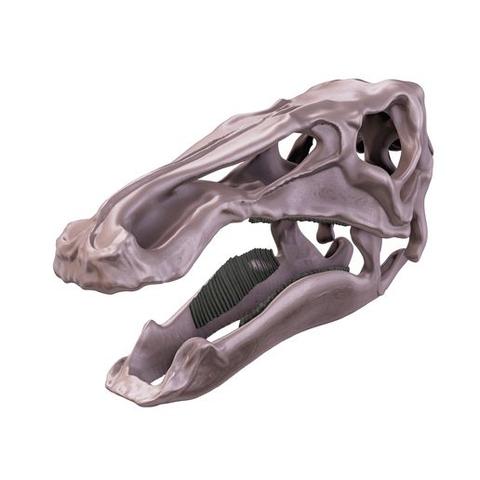
Edmontosaurus, a herbivorous dinosaur from the Upper Cretaceous, lived between 70 and 65 million years ago in North America. This large hadrosaurid, up to 12 meters long, had a distinctive duck-like beak and dental batteries for crushing vegetation. Able to move on two or four legs, it fed on conifers, ferns and flowering plants, probably living in herds to protect itself from predators. Well-preserved fossils, including skin fragments, have been found mainly in Canada and the USA, providing valuable information on its ecology and behavior. Edmontosaurus regalis and Edmontosaurus annectens are the best-known species, playing a key role in our understanding of Cretaceous ecosystems.

Cults 3D

💀 Cryolophosaurus ellioti crâne • fichiers STL et OBJ
➡️ Télécharger le modèle pour imprimante 3D : https://cults3d.com/:2064646
💡 Modélisé par @Dinosaurs3D

@cults3d #Impression3D #Imprimante3D #Imprimable #FichierSTL #3DPrinting

Cryolophosaurus ellioti skull

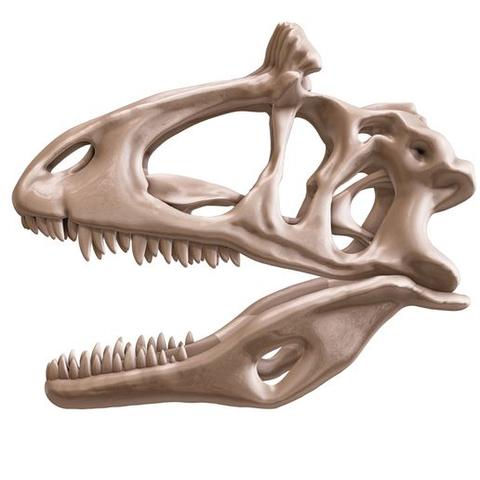
Cryolophosaurus ellioti is a theropod dinosaur discovered in Antarctica in 1991, characterized by a distinctive crest on its skull. Dating from the Lower Jurassic period around 190 million years ago, it measured around 6 meters in length and weighed around 465 kilograms. Its discovery is significant in that it has broadened our knowledge of dinosaurs in the polar zones and enabled us to study the evolution of theropods at this time. It was probably one of the main predators in the Antarctic ecosystem at the time, feeding on small herbivores in the milder, greener climate.

Cults 3D

💀 Daspletosaurus crâne • fichiers STL et OBJ
➡️ Télécharger le modèle pour imprimante 3D : https://cults3d.com/:2055523
💡 Modélisé par @Dinosaurs3D

@cults3d #Impression3D #Imprimante3D #Imprimable #FichierSTL #3DPrinting

Daspletosaurus skull

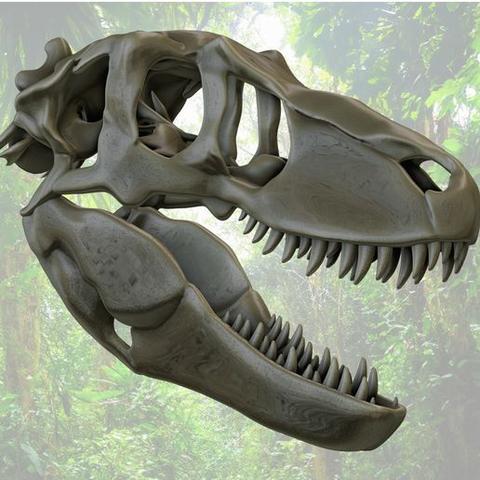
Daspletosaurus lived during the Late Cretaceous, around 77 to 74 million years ago, in what is now North America. At that time, the climate was temperate to subtropical, warmer and wetter than today's, favoring lush vegetation with marked seasons influencing vegetation and available resources. Daspletosaurus inhabited Laramidia, an island continent formed by the rising waters of the Western Interior Seaway, characterized by a varied topography including plains, forests, swamps and river regions, offering diverse habitats for a wide range of animal and plant species. Vegetation included conifers, ferns, cycadophytes and flowering plants, while the fauna, in addition to Daspletosaurus, included hadrosaurs, ceratopsians, ankylosaurs and other theropods, as well as numerous small reptiles, amphibians, primitive birds and mammals. Daspletosaurus, as an apex predator, played a crucial role in maintaining ecosystem balance, controlling populations of large prey and influencing animal community structure. It probably hunted large herbivores, using its size, strength and powerful jaws to bring down its prey, and could also be a scavenger on occasion. It probably competed for resources with other large predators, influencing its behavior and territory. In short, Daspletosaurus lived in a rich and varied environment, with a temperate to subtropical climate, diverse geography and abundant fauna, playing a crucial role as an apex predator in its ecosystem.

Cults 3D

💀 Hatzegopteryx : Crâne • fichiers STL et OBJ
➡️ Télécharger le modèle pour imprimante 3D : https://cults3d.com/:2010944
💡 Modélisé par @Dinosaurs3D

@cults3d #Impression3D #Imprimante3D #Imprimable #FichierSTL #3DPrinting

Hatzegopteryx: Skull

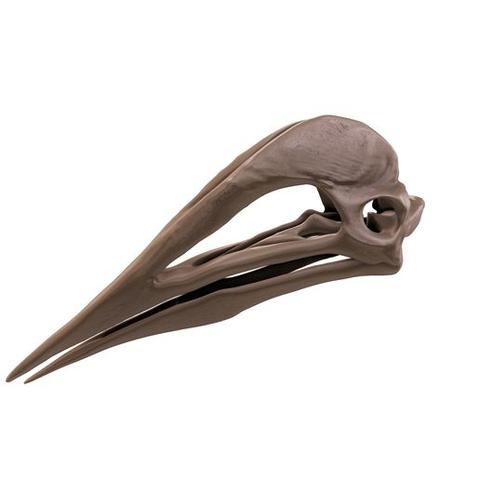
A 3D reconstruction of the skull of Hatzegopteryx, a giant pterosaur from the Upper Cretaceous. This detailed model highlights the unique features of its massive, robust skull, offering a new perspective on the anatomy and lifestyle of this aerial predator. Thanks to this technology, plunge into the past to explore the fascinating morphology of one of the largest pterosaurs ever discovered. Hatzegopteryx is a genus of giant pterosaur that lived during the Late Cretaceous period, around 70 million years ago, in what is now the Hațeg region of Romania. This pterosaur belongs to the Azhdarchidae family, a group known for its large-sized members and specific adaptations for hunting and flight. Physical characteristics Hatzegopteryx is particularly remarkable for its gigantic size. Its wingspan is estimated to have reached between 10 and 12 meters, making it one of the largest pterosaurs ever discovered. Here are some of its distinctive physical features: Massive skull: Hatzegopteryx's skull was very robust and particularly wide, with powerful jaws. Unlike other pterosaurs, its skull was shorter and wider, suggesting that it had a very powerful bite. Short, thick neck: Compared with other azhdarchid pterosaurs that had long, slender necks, Hatzegopteryx possessed a shorter, more muscular neck, which would have contributed to its ability to handle larger, heavier prey. Robust wings: Although Hatzegopteryx's wings are huge, they were also built to withstand powerful, stable flight.

Cults 3D

💀 Hatzegopteryx : Crâne • fichiers STL et OBJ
➡️ Télécharger le modèle pour imprimante 3D : https://cults3d.com/:2010944
💡 Modélisé par @Dinosaurs3D

@cults3d #Impression3D #Imprimante3D #Imprimable #FichierSTL #3DPrinting

Hatzegopteryx: Skull

A 3D reconstruction of the skull of Hatzegopteryx, a giant pterosaur from the Upper Cretaceous. This detailed model highlights the unique features of its massive, robust skull, offering a new perspective on the anatomy and lifestyle of this aerial predator. Thanks to this technology, plunge into the past to explore the fascinating morphology of one of the largest pterosaurs ever discovered. Hatzegopteryx is a genus of giant pterosaur that lived during the Late Cretaceous period, around 70 million years ago, in what is now the Hațeg region of Romania. This pterosaur belongs to the Azhdarchidae family, a group known for its large-sized members and specific adaptations for hunting and flight. Physical characteristics Hatzegopteryx is particularly remarkable for its gigantic size. Its wingspan is estimated to have reached between 10 and 12 meters, making it one of the largest pterosaurs ever discovered. Here are some of its distinctive physical features: Massive skull: Hatzegopteryx's skull was very robust and particularly wide, with powerful jaws. Unlike other pterosaurs, its skull was shorter and wider, suggesting that it had a very powerful bite. Short, thick neck: Compared with other azhdarchid pterosaurs that had long, slender necks, Hatzegopteryx possessed a shorter, more muscular neck, which would have contributed to its ability to handle larger, heavier prey. Robust wings: Although Hatzegopteryx's wings are huge, they were also built to withstand powerful, stable flight.

Cults 3D

🐉 Meganeura sculputre • fichiers 3D
➡️ Télécharger le modèle pour imprimante 3D : https://cults3d.com/:2032193
💡 Modélisé par @Dinosaurs3D

@cults3d #Impression3D #Imprimante3D #Imprimable #FichierSTL #3DPrinting

Meganeura sculputre

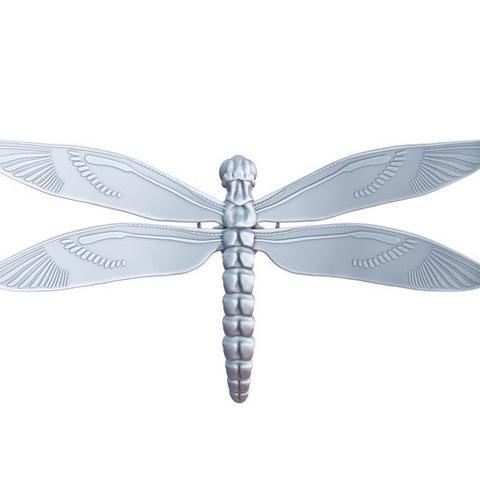
Meganeura is an extinct genus of giant dragonflies that lived during the Carboniferous period, around 300 million years ago. These insects are among the largest flying insects known in Earth's history. Meganeura had a wingspan of 65 to 75 centimetres, comparable to that of a falcon. Their bodies, although smaller than their wings, were several tens of centimetres long. Like modern dragonflies, Meganeura had two pairs of membranous wings, large compound eyes and biting mouthparts. Their body structure was adapted for aerial predation, with robust legs and powerful mandibles.

Cults 3D

💀 Hatzegopteryx : Squelette complet • fichiers STL et OBJ
➡️ Télécharger le modèle pour imprimante 3D : https://cults3d.com/:2018506
💡 Modélisé par @Dinosaurs3D

@cults3d #Impression3D #Imprimante3D #Imprimable #FichierSTL #3DPrinting

Hatzegopteryx: Complete skeleton

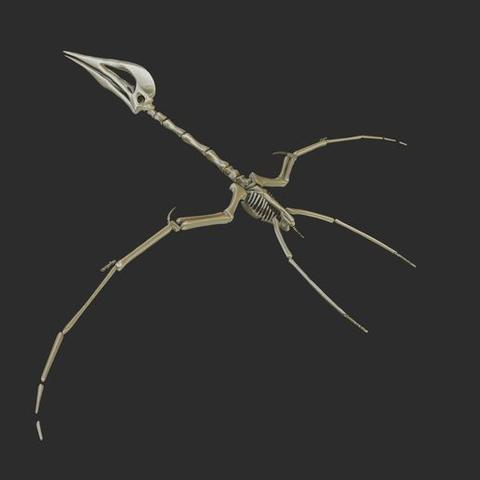
Hatzegopteryx is an extinct genus of giant pterosaur that lived at the end of the Upper Cretaceous, around 70 million years ago. Discovered on the island of Hațeg in Romania, this pterosaur is particularly notable for its immense size, with a wingspan of up to 10-12 meters, and its massive, reinforced skull, adapted to withstand the stresses of hunting and consuming prey. In presenting the 3D anatomy of Hatzegopteryx, several key aspects need to be highlighted. Firstly, the skull, which is long and robust, is designed to catch large prey. Compared with other pterosaurs, the Hatzegopteryx skull is unique in its solidity and internal reinforcements. The beak is also long and powerful, suited to its diet. The wings of Hatzegopteryx are impressive for their wingspan and bone structure. The wing bones, though hollow to reduce weight, are extremely robust, optimizing the weight-to-strength ratio and enabling active flight. Powerful musculature, particularly in the shoulders, is essential to support the flight of this enormous pterosaur. The body of Hatzegopteryx is also adapted to terrestrial locomotion, with sturdy legs enabling both ground travel and take-off. This versatility is crucial for an animal of this size, enabling it to hunt effectively on land as well as in flight. To illustrate these characteristics in an interactive and educational way, a 3D model of Hatzegopteryx can offer several features. An interactive zoom shows anatomical details up close, while cross-sections reveal internal structures such as muscles, bones and organs. Animated sequences can show Hatzegopteryx in flight, on the ground and hunting, providing a dynamic visualization of its behavior. Annotations provide contextual information on each body part, enriching the educational experience. These 3D models are invaluable for teaching paleontology, helping to visualize hypotheses about the behavior and ecology of Hatzegopteryx. They are also a valuable interactive tool for scientists, facilitating research and the communication of discoveries. In conclusion, 3D modeling of Hatzegopteryx offers a fascinating perspective on this giant pterosaur, enabling a deeper understanding of its anatomy and lifestyle. This technology plays a crucial role in the evolution of paleontological education and research, opening up new avenues for exploring our planet's past.

Cults 3D